Wednesday, August 07, 2013

Tips for contacting professional photographers for help


Ways to connect

You can reach out to photographers in so many ways. First I think it is important for you to know some basic etiquette for connecting.


Introduce yourself

Tell the person who you are and why you want to connect. "hi my name is—after reading about you I noticed we have a few things in common" or "hi my name is—I have been following your blog and really liked your post on ..."

Give the person a reason they should want to connect with you!

Tell them about you. When you reach out to someone and tell them very little and they go and click on your profile it needs to help them.


If on Linked-in I highly recommend a professional headshot. This goes a really long way to show you are a real person, rather than a blank avatar. The blank avatar makes you look like a creeper.

You really need your profile to be up to date and helpful to those you are reaching out to for connecting. Make it easy for people to see why they should respond positively to you.


The point of the about me section is to show yourself as an authentic person and a great way for people to want to connect with you. We are not interested in a sales pitch. Things about your hobbies and interests go a long way to help people want to connect. If you were an Eagle Scout this helps others who have this background connect on a different level with you.


The about section is all about you and a great way to introduce yourself to others. Fill this out as best you can or otherwise many of those requests for connecting will be ignored.


@ email


If you choose to email a photographer, be sure you follow a similar protocol.  Keep the letter short and to the point. 


I think three simple questions you need to answer in the email in some way:

  • Who are you?
  • Why are you contacting me?
  • What do you want me to do?
Connect the dots for the recipient. Don't make them have to figure out what you are saying.

Be willing to pay

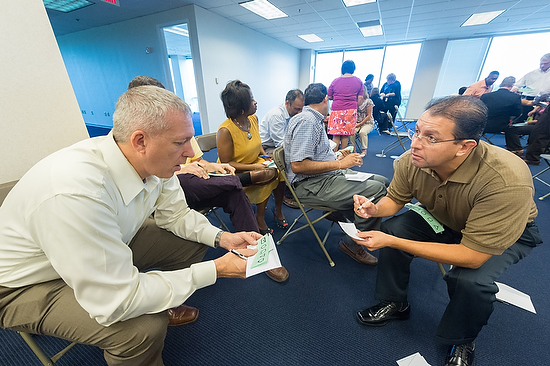
There are many places to go for someone to critique your work. There are camera clubs, workshops and seminars where photographers will give you some of their time.

The expectation of a private consultation where you are getting career advice is something you should be willing to pay. Free advice is often worth what you pay for it.


It would be great to spend half hour each week having coffee with Malcolm Gladwell, Seth Godin or Jeffery Gitomer for free. You know this might actually happen for a couple people and most likely they are already good friends with them.


Good mentors are hard to come by and getting good advice that can save you time and money in your career is worth every penny.


Unless the person you are contacting is on staff with a regular salary, they make their living through photography—shooting or consulting.

Good mentors have connections which this alone can change your life forever. A few years ago I had a young college student who was about to graduate ask me for an internship. We talked for a while and the next day she sent me a thank you note for taking the time to talk with her. She also thanked me for some very specific points from our conversation.


Needless to say I was impressed with her character. I was not in a position at the time to pay her and I let her know I would give her time to ask any questions each week. She went with me just about everywhere for about two months.


My client Chick-fil-A was as impressed with her as I was and offered her a job as a writer. 


She paid me for my time by helping me and due to her investment landed an incredible job.

Stanley and Knolan Benfield in Kona Hawaii for workshop on lighting.
Workshops

Early in my career I went to numerous workshops with NPPA and ASMP. There were two major workshops where I shelled out about $5,000 per week to study with two of the icons in the industry.

I went to the Maine Workshop and studied with Steve McCurry from National Geographic. The total cost of flying, hotel, food and the workshop was just under $5,000.  I learned a great deal from that week and not just from Steve, but from others in the class with me.


A few years later I took another class at the Maine Workshop with Jeff Smith studying location lighting. Again I learned so much from Jeff and the classmates.


I offer personal workshops for people who are interested in this profession. I charge $125 an hour with a two hour minimum for whatever they want to learn from me. I have taught people one-on-one how to organize their images. I have done personal workshops on using hot shoe flash off camera for portraits. I have taught people business practices and/or marketing.


If you know of another professional photographer that you would like to learn from, then approach them and if they don't offer workshops propose to them they do for you.    


If you are not willing to make an investment in your career, why should anyone else want to either?

Monday, August 05, 2013

I am switching to USB Flash Drives and I advise you to do the same


Apple kills Flash for websites

I have a Love/Hate relationship with Apple. When the rolled out their iTouch, iPhones and iPads they refused to support Flash. In affect killing it as a platform.

If your website used Flash, you either updated your website to html5 or just started over. You couldn't afford to have people come to your website looking to hire you and not be able to see your work or maybe your contact information.

Apple may kill Optical Drives

Apple may have similarly sealed the fate of the optical disc drives back in October 2010 by leaving out the optical drive in their Macbook computers. Soon, it will go the way of the floppy disk.

Today most people are connecting to the internet for software rather than buying CDs. Adobe even went so far as to move most all of their software to the cloud. There is just less need for optical drives than a few years ago.

It's a common misconception that burned digital media's shelf-life is infinite. Unlike pressed original DVDs and CDs which are near invulnerable to degradation, burned media have a relatively short life span, typically between 2 to 5 years depending on the quality of the media and the handling of the discs. Had this not been the case there might not have been the move away from them.

USB Flash Drive as an alternative

What will you use going forward instead of the optical drive? The USB Flash Drive or deliver your images through the cloud with online galleries or something like DropBox.

I ordered my USB Flash Drives from http://www.usbmemorydirect.com/ and had my logo put on them.  The more you order the cost per unit does go down quite a bit.

Over a year ago I was getting ready to do this and asked USB Memory Direct for a quote and they sent this to me:

Below are additional pricing options for our classic styles.

Quote 7/24/2012

I wrote back to them late July this year and asked for a quote for quantity of 50 for the 4G drive.  The price went up a little.  

Quote 7/29/2013

I ordered my on July 31st and they arrived at my house on August 5th. They didn't promise them before August 12th, so I was pleasantly surprised on the quick turn around.

While I will continue with some clients to deliver on DVDs, I am seeing these to slowly being phased out.

You don't have to order in bulk

While buying a couple hundred will save you on unit cost USB Memory Direct will print on quantities as low as 20.  My recommendation is to buy the size you most likely will use the most in a larger quantity and then a few in larger capacities in smaller quantities.  Hey buy 100 2G, then maybe 50 4G and then 20 8G size in an order.

My recommendation is to start small and test the supplier for turn around time, quality and durability.

USB Flash Drive Benefits

There are a few benefits to using the USB over the DVD or CD. Speed to put images on the USB is so much faster than burning a disc.

Another benefit is I believe the USB is a much more stable platform than the DVD. I have gone back to earlier DVDs that worked a few years ago and today do not. I have never had this problem with a USB, but with all digital if it isn't in three places it doesn't exist.

Once the images have been taken off by the client and put on their computer or network then the USB can be used for other things. They may use this over and over and every time they do they are reminded of me. It gives me a similar impact of a postcard I send to them that they put up in the office.

USB Flash Drive as deliverable and not archival

I am sure the images are about as safe on a USB Flash Drive as an SSD drive for example. But the best solutions for archival is a system that has the images in three locations.

My use of the USB Flash Drive is to be able to give clients their images using this rather than DVD due to optical drives being less standard on computers.  

Getting and keeping attention of the audience requires a Total Package

I just read this article this morning "What You Can Learn From The World’s Best Violinist (And His $32 Pay Day)" and it made me think about how often photographers really think it is all about their images.


I have to photograph a lot of meetings and even being in a room I find many people checked out. They are a captive audience, but still those running the meeting have to do even more to get their attention.

As photographers we often think our images alone will get jobs for us and as long as we continue to produce great images they will hire us over and over. Well I hate to break it to you, that just isn't the case.

This is an interview I updated recently with Greg Thompson on what corporations look for when hiring photographers. Listen and see how many things he mentions other than photos that are important and why they are important.


It is the total package that is more important than any of the individual parts.


So how do you turn people's heads and keep their attention?

Parts of the Total Package for the photographer
  1. Distilled message: You need to have a strong understanding of who you are and what you are wanting from others.
    1. Elevator Speech
    2. Know who your audience is — Not everyone is your audience.
  2. Eye catching
    1. Your images need to be strong enough to engage the viewer
    2. Your image needs to be good. Well groomed and in fashion can really help.
    3. Presentation - Your materials from business cards, estimates, invoices, emails all need to be visually solid
  3. Ideas  —  You need to have ideas of what you can do for your audience. The more specific this is to your client the better. 
  4. Voice and Tone  —  No question that many people rise to the top due to the quality of their voice. Having James Earl Jones (Darth Vadar's voice) is quite commanding. You need to speak clearly and develop a tone that engages depending on what the message is about.
  5. Relationship focused  —  people detect if you are using them. You need to genuinely be interested in the audience to engage them.
  6. A collaborator  —  someone who is looking to help your clients reach their goals which intern helps you to reach yours.
  7. Pricing — You pricing needs to be clear and understandable from the client's perspective and meets their needs and maybe even create desire
  8. When and Where? — You need to target your audience to find them when they have the time to give to you.

You may think of more things to add to the list. The point is simple, you cannot make it as a professional photographer as a career with great images alone.


Friday, August 02, 2013

Photographers—What are you trying to accomplish?

Hurricane Sandy destruction in New Jersey
When a crisis happens you will quickly realize how you go to your strengths. I remember many people who took personality tests like Myers Briggs and when they went through a disaster is when it really confirmed their traits.

Disasters is what often brings out our very best. If we could boil down how we want to act in these situations we would most likely get to the essence of what we think we are trying to accomplish every day.

What do you want to accomplish? 

I highly recommend photographers think about this so they can pick their true North for setting their compass, otherwise you will be wandering around and stay lost.

Stanley’s Mission Statement
My goal is to provide storytelling images while building life-long relationships and great experience from beginning to end with my clients.  I want to always look to create remarkable moments by exceeding expectations.
I have changed this mission statement numerous times, but no matter when you asked me the essence of the mission statement stays the same. you see I have internalized it. How I might phrase it today has a lot to do with my experiences up to that moment.

Shooting products all day long verses covering a hospital in West Africa might have me in a different mood and affect how I word it, but I am always seeing myself as helping others tell their story through photos.

The pediatric ward at the Baptist Medical Centre in Nalerigu, Ghana. 
The Disney corporation's mission statement is:
We create happiness by providing the finest entertainment for people of all ages, everywhere.
While every cast member [employee] may not quote this word for word but most have internalized it and would say something about creating happiness.

How this plays out every day at Disney is in four keys for every situation:


The order they put these in priority are:

  1. Safety
  2. Courtesy
  3. Show
  4. Efficiency

All are important, but if someone might get hit by the headless horseman riding on horse down the street then the cast member will pull them out of the say. Yes this means safety was a priority over the show.

All four are important and number four is not the least important, just in crisis people's safety takes priority. Even in the everyday food service they want to be sure the food is safe to avoid crisis.

Here are what I think are my core keys.

Stanley's Core Values
1. Relationships
2. Dependable
3. Creative
4. Passionate
Core values are 3-5 terms that describe the forces that drive you to form and grow your organization. If you are the founder, they are the same as or closely related to your personal  values. Your values tell you not only who you are as an organization, but who you are not.

How this plays out when I hire an assistant for the day, I talk with them about my core values.  I emphasize we want to protect those relationships with the client and subject more than getting the shot.

I have process in place which makes my deliverables very dependable. This is more important that the skin tones are correct as well as exposure before I go and give the client something as a surprise, which is more about WOW factor in creativity. You cannot WOW if you do not give them what they expect and for me this is being dependable.

I do all this is passion. I love what I do and I want everyone to experience the desire for getting the absolute best the team can produce.

Because I have thought about what I want to accomplish and be known for I am more likely to achieve my goal than the photographer who hasn't taken the time to decide in the big picture what are they doing today.

If I get to the photo shoot and the client has an emergency, it is easy to do what I can to help them. I have established the relationship is more important than the pictures at that moment.


Disney has taken on creating happiness. If families come and forget where they have parked their car is it their fault? No it isn't, but they don't want the family to go home and someone ask them how it was and the first thing out of their mouth is that "Bob" forgot where the car was parked and how many hours it took to find the car.

Disney cast members came up with their own solution. They had always told the people getting on the trams they picked them up in say Daffy 40 & 41 three times before they leave the tram to enter the park. When they get on they tell them, half way through and then before they get off.

Even after doing that the people would forget. So when the park visitor asks for help they ask them what time they came in. They have recorded the times they filled each section and name of that section.

What are situations that happen all the time with your customers that isn't your fault, but it is your problem?

If you don't have the bigger picture in place as to what you are about and your core values, how will you grow your business when you need to have everyone working with you representing you consistently as a company?