Showing posts with label Don Rutledge. Show all posts

Monday, June 27, 2016

Stanley talks about Don Rutledge's photos

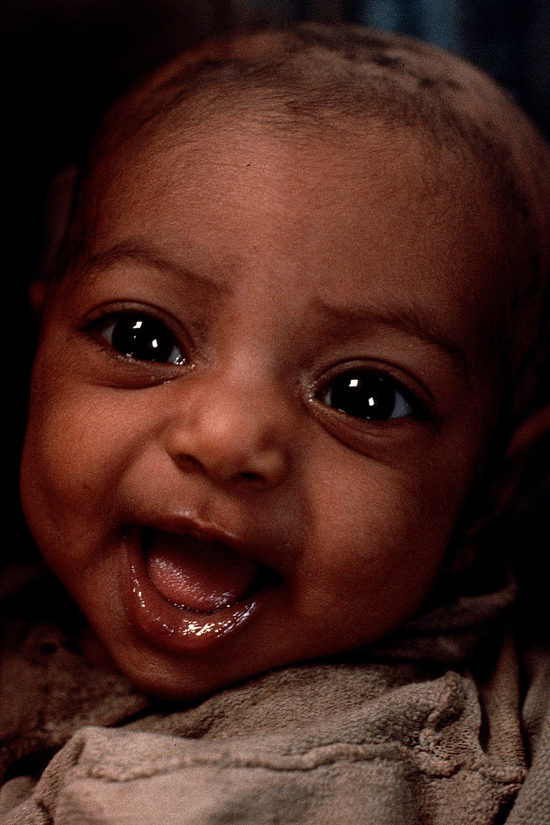
photo by: Don Rutledge
In my last blog post I talked a little about understanding how to create photos that communicate. In this post I am showing your my mentor Don Rutledge's photos and sharing some of the comments that Don told me as we talked about some of his iconic images.

A mother brings here child to see the doctor.  In the background is a cow that she brought for the doctor. [photo by: Don Rutledge]


To read my thesis I put it online in my blog as separate posts:

Chapter One 

Chapter Two 

Chapter Three 

Chapter Four 

Conclusion 

Wednesday, July 30, 2014

Depth-of-field is more than Aperture

[Photo 1] Egypt—Missionary Mike Edens (left) worked closely with Egyptian Baptist pastors trying to enhance their discipleship and pastoral ministries. These pastors—(left to right) Mikhail Shehata Ghaly and Anwar Dakdouk—took MasterLife discipleship training in Cyprus during 1984. [photo by Don Rutledge]
Technically Depth-of-field—is the distance between the nearest and farthest objects in a scene that appear acceptably sharp in an image.
Don Rutledge
I have never met a photographer who understood more about packing more into a frame to tell a story than Don Rutledge.

The reason is it takes a lot more ability to take a photo of what appears to be clutter and compose it in such a way that you capture a story than it does to isolate by either getting closer or zooming in and isolating a subject.

What Don Rutledge taught me and yet I still haven't begun to execute it as well as he did was to use the environment around the subject to provide context and tell a better story.

He taught me to spend time with a person before I take a photo of them. Spend time getting to know their story, this way once you know them you start to see things around them and their body language that help inform the audience through visual clues as to who the subject is as a person and how they interact with people in their world.

[Photo 2] Cincinnati, Ohio, 1968: Children with a trophy of the streets. [photo by Don Rutledge]
Don taught many photographers not to just watch the edges of the photograph but pay attention to the "Depth-of-field" when making the photograph. He wanted to use the thing in the foreground and background more than any other photographer I knew to help tell the story.

In Photo 1 you can see down the street and around the men as they walk down the street in Egypt. While most everyone is laughing as if a joke was just told—notice the woman just behind the men. Her expression tells another story.

I can picture this woman being similar to the woman in Matthew 9:20, “If I can just put a finger on his robe, I’ll get well.” Jesus turned—caught her at it.

She is not apart of the men's group but has an interest in them.

In Photo 2 you see not just the rat being held by the boy but his friend and the place of their discovery. His friends body language adds so much to the context as does the alley where they found it.

[Photo 3] This is early morning in Mississippi for Luvenia and Bailey King. King sleeps as his wife puts breakfast on the table. [photo by Don Rutledge]
To get this type of "Depth-of-field" Don invested time with his subjects. In 1979 Don spent a month living with the King family in Mississippi. He added just enough money to the family budget to not add any financial stress on the family, but also not to change their living standards so he could cover what it was like living below the poverty line in America.

This photo [Photo 3] became a favorite photo of many from the story. The photo captures Bailey King and shows how thin he is and how hard his wife also worked to provide for the family. It is not a photo just about Bailey, but his wife as well Luvenia.

[Photo 4] Appalachian migrant family in Ohio during 1968. [photo by Don Rutledge]
Here in Photo 4 you can see a father who is obviously concerned and then you see his children in the background. The children are like all children and pull the viewer into the story of a migrant worker who will travel wherever finding work to provide for their family. Many photographers would crop just above the father's head and left out the boy in the window. The reason is they most likely would not have seen the boy.

Don had a patience about him that let him truly be in the moment. He could see things that most missed. I think Don really and truly had more empathy for his subjects than just about any other photographer I have known.

[Photo 5] Africa—Sally Jones (white coat) felt emotions well up inside as she shared this moment with concerned mothers at the Southern Baptist feeding and health care center's clinic in Ethiopia.
Many photographers might crop in much tighter on Sally Jones in Photo 5 here. Don goes wide and gets really close to be sure you see her expression. I remember often seeing the contact sheets of moments like this when Don was editing. He would show me the moment before and after where sometimes the lady in the background was only there for one of maybe 10 frames. She adds so much by helping pull you to the background after you have already seen Sally. There are more mothers outside is what this helps to convey.

[Photo 6] Israel—Missionary kid Sommer Hicks plays on the rocks of the sea of Galilee with her dad, Ray Hicks, in the background. [Don Rutledge]
So often photographers get so focused on the main subject they forget that those around the subject can sometimes give us insights into them. Here we get a glimpse of how normal life is for Ray Hicks in Photo 6 when we see how much fun his daughter is having at the sea of Galilee. Don shot it in a way to bring Ray into the photo and give a context that Don did so well time and time again.

Please take a look how often Don uses depth in his photos to tell stories. Here are two coverages of Russia that Don did in the 1980s. Don shot these for a magazine which would only use on average maybe 8 to 12 photos, but look at the true depth of his coverage. I remember seeing these coverages up on so many light tables and Dan Beatty commenting on how he could tell so many stories whenever Don returned.


Wednesday, January 16, 2013

Master's Thesis on Don Rutledge: Conclusion


                                                           CONCLUSION
Don Rutledge (photo by: Ken Touchton)
            To a non-Christian, Don would have been considered crazy for taking the positions with Southern Baptist.  Going to the Home Mission Board was definitely a step down in pay and prestige for Don Rutledge.  Why would someone leave a super position to take a drastic cut in pay and work with people who generally did not understand photojournalism?  Why would Don repeat the cut in pay and prestige and leave the Home Mission Board to go the Foreign Mission Board?  The answers to these questions only come from one source and that source is God.
            Don turned down positions with Life magazine, Associated Press and many others.  The Associated Press job would allow Don to travel the country doing any feature story that he wanted to do.  The AP job also would require him to go with the President of the United States on any over seas coverages.  Don turned down what most would have not thought twice about taking as jobs.[54] 
Siberia—Working with outsiders means listening and being heard, according to Eduard Genrich, of Second Baptist Church in Novosibirsk. People here say they are encouraged and helped by outsiders, but taken advantage of by some. (photo by: Don Rutledge)
            Don did not follow the normal direction that most Americans seek.  He did not climb the ladder as most would.  In our culture we are trained to continue to go up vertically.  We move through our school years doing this and most continue to do the same in the corporate ladder climb.  However, Don learned to follow his Lord——Jesus.  Whenever Don decided, there was no brass ring to grab.  In hindsight Don's life is a testimony to how the Lord takes care of his children. 
John Howard Griffin as a black man in New Orleans in 1956. (Photo by: Don Rutledge)

John Howard Griffin getting dressed in a hotel in 1956. (Photo by: Don Rutledge)

John Howard Griffin looking at movies playing. When going in as a black man he would have a separate entrance. (Photo by: Don Rutledge)
John Howard Griffin as a black man and polishing shoes for a white man. (Photo by: Don Rutledge)
            Don's life has been a testimony to other photographers who are not Christian.  He is asked often to speak at conferences for the National Press Photographers, Atlanta Press Photogra­phers, The Southern Short Course and also speaks for numerous camera clubs around the country.
            This writer concludes that Don has exemplified better than most that following your Lord does not mean giving yourself to a lesser life.  Those that earlier criticized Don for leaving Black Star to work with Southern Baptist have called him over and over asking if there are any openings for them to serve.[55]

New York City, NY 1966:  Lady on roof top. (photo by: Don Rutledge)
            For those who want to follow in Don's footsteps they need to be warned that the road that Don has paved, still has pot holes and other problems that will require one to still proceed with caution.  They must realize Don focused on relationships with all those around him.  They must build strong relationships. 

            While working with Don at the Foreign Mission Board this writer observed how the administrative assistants and those that worked in the file area of photography were often teasing Don.  After one trip, Don's office was completely rolled with toilet paper.  Another time one of the girls in the office had everyone dress like Don.  Don always wore the same style shirts and this made it easy to tease him. 

            Another time Don came back to discover his desk stacked in mail.  Virginia Adams, administrative assistant in communications department, had made up labels with Don's name and address.  Virginia asked everyone to bring in all their junk mail.  She then put the labels on all that mail.

Boy in mirror. (Photo by: Don Rutledge)
            One does not build this type of relationships by looking out for themselves alone.  Don was not around a great deal at the Foreign Mission Board, but he knew how to put all at ease around him.  He was well known for the stories that he told.  Don always had a story to tell and keep people laughing. 

Brazil
            Don ability with people is strongly related to his relationship with Christ.  No matter how good one is with the camera or with words, they must understand that Don's success is due to his diligence and patience given to him by Jesus Christ.  You will never hear Don preaching or grabbing shirt collars to witness.  Due to Don's life many have come to see the compassion that Christ has for the world.  Looking at Don's photographs allows one to see the world in a Christian perspective.  One does not have to work with a Christian institution to do what Don does so well.  One only need a Lord that they call their master to understand how he does it all——his Lord enables him.

China


[54] Interview with Rutledge.
[55] Rutledge.


Master's Thesis on Don Rutledge: Chapter One


Figure 1 Harley Shields is a Southern Baptist Home Missionary whose work place is Selawik, Alaska. Don photographed him in 1978.
This writer has en­joyed seeing the world ap­proximately 137 coun­tries and all of the United States with­out ever leav­ing his own home.
Most of the travel­ing was done with the help of The Commission Magazineand Missions USA. Both of the maga­zines have won some of the highest awards in the country. The Commission Magazine has placed third in magazines in the “Pic­tures of The Year” contest sponsored by the Na­tional Press Photographers Association in 1989 and 1990. Missions USA has earned similar awards. These Southern Baptist magazines are in a league with National Geographic and Life Magazine for their photography and design.

The reason for their success can be tied greatly to Don Rutledge. For this reason this writer is doing his thesis on Don Rutledge for publication.

Don has worked for Black Star photo agency in New York for more than thirty years. During this time he has also worked for the Home Mission and the Foreign Mission Boards of the SBC. He has won more than 400 awards for his work. He has been published in many magazines and books around the globe. His work has taken him throughout all fifty states, all of Canada and to 135 coun­tries.

Today, Rutledge is mentor to many professional photographers and students. All of the photojournalists in the Southern Baptist Convention point to Don as being the reason they are where they are today. All of them hope one day to make the impact he has already made for Southern Baptists and the cause of missions.

Having worked with Don Rutledge for many years, this writer has devel­oped a great appreciation for him. He has come to understand that the common thread that binds all those in minis­try is working with people. Don works with people so well that he has made major changes in magazines by his soft encourag­ing voice. Wherev­er Don goes he makes many friends.
Figure 2 Every year Carl Holden, a home missionary, takes his young people tubing from his church, Central Baptist.
Don's ability with people is a gift. Don puts people at ease with or without his camera. This is a talent envied by photo­jour­nalists the world over. Those in the field of Christian photojour­nalism understand where this gift came from. They under­stand how Don's faith is lived out through his camera.

As one looks at Don's photographs, one feels as if he is in the room with the people. Don becomes a part of the woodwork wherev­er he goes. He blends in so well that people are able to be them­selves. His subjects look as though Don were not present. They are not reacting to his presence but are free to be them­selves. Don has allowed God to be so much a part of his work, that when one speaks of how Don is a part of the woodwork, one can picture how the Holy Spirit works through him.

Figure 3 In 1967 Don Rutledge went inside the Artic Circle and captured this Eskimo child play­ing.
His reputation often precedes Don, now that people know of his integrity without ever meeting him. They can see a man who gives dignity to his sub­jects. Often many pho­togra­phers today will exploit their sub­jects. They pho­to­graph a handi­capped per­son and exag­gerate his handicap so that one never really sees the per­son. Don's pho­tos call one to feel a part of the per­son. Don says the eyes are the windows to the soul. He re­veals the inner­most part of people in a brief instant that is frozen on film. The more one looks at the photo­graph, the more one sees. He packs so much information into a photo­graph that one can go back over and over it and see some­thing new every time. Don in­cludes small details in his photo­graphs like a good writer who pulls his reader into the situa­tion.

Don studied to be a psy­chologist and worked on his doctorate in the field. He also studied for the minis­try and was a pastor for a short period. He still is using his psychology in pho­to­graphing people, and his pictures continually reach audi­ences of over 1.5 million people week by week.

Don's work has helped people see the work of mission­aries around the world. By doing this he has helped the mission board reach the world for Christ.

Growing up as a home missionary kid helped this writer realize the impor­tance of relationships in ministry. This writer felt the call to the ministry and went a traditional route of majoring in social work and then planning to go on to the semi­nary to become a pastor. While in college this writer discovered photog­raphy and the power of the camera as a communication tool. Knolan Benfield, Jr., was a photogra­pher who worked on Missions USAmagazine, and he intro­duced this writer to Don Rutledge. This writer was intrigued by the work that Don did on the maga­zine.

After talking with Don, this writer felt redi­rect­ed in his call to be a minister who used the camera as a central part of his ministry. Many who are Christian photojour­nalists have struggled with the call. In many ways, the Chris­tian photojour­nalist is a preacher. The photo­journalist's illus­trations are not done with words in the pulpit but with photo­graphs on the printed page.

As one will see, Don's work is powerful and his style can be seen in the work of most photojournalists who work for the Southern Baptists. They will tell you they hope someday to be like Don.

Don dreams of publications combining words and pictures effectively to communicate the concerns God has placed on his heart. This driving force in Don is the Holy Spirit convicting him of the message of missions. His photographs have one common theme: Love. They have moved people to become in­volved in missions. God has called them into missionary service after they looked at the mission field through the “eyes of Don.” Don's work has helped to meet the needs of people the world over.

When considering the skills of Don Rutledge one can see that he could have become very wealthy from his photography if he had not worked with Southern Baptists. In his three months before coming to work with Southern Baptists, he made more than he would make in the next two years working with Southern Baptists. His decision to be a minister with a camera meant choosing the narrow road. Don chose to follow Jesus Christ. Due to his follow­ing Christ, his work as a Christian photojour­nalist has help spread the gospel around the world.

[1]Howard I. Finberg, The Best of Photojournalism 16: The Year in Pictures, (Philadelphia: Running Press Book Publishers, 1991), 232.
stanleylearystoryteller.com

Tuesday, January 15, 2013

Master's Thesis on Don Rutledge: Chapter Four

FOREIGN MISSION BOARD, 1980 TO 1993
         When Dr. Keith Parks went to the Foreign Mission Board in 1975, his respon­sibility was to head up the mission support division.  Establishing one of the finest communications departments possible was one of the goals that Dr. Parks had set for himself and the Foreign Mission Board.  Taking a look around the denomination he discovered that the finest photojour­nalism work being done was done by Don Rutledge.  However, now Don was working for the Home Mission Board. 
         During this time while Dr. Parks was trying to give direction to the communi­cations department, Everette Hullum and Don Rutledge were asked to give a workshop at the Foreign Mission board.  During the workshop Don and Everette talked about working as a team and how they did coverages.  Don remembers that Dr. Parks sat in on the workshop.
         Later around 1979, Dr. Keith Parks heard through the grape vine that Don Rutledge may be interested in leaving the Home Mission Board.  It was then, that Dr. Keith Parks approached Don to come to the Foreign Mission Board.[41]  He also tried to get Everette Hullum but was unable to do so.
         "I feel that he [Don Rutledge] brought a new standard and new level of photojournalism here [Foreign Mission Board] to The Commission as well as other products," said Dr. Parks.  "The significant detail about Don is not only his sensitivity but that he gives so unselfishly.  Many others have come on our staff fairly new and fairly young and Don has given a lot of time training them, giving them tips and working with them.  He has shared his own expertise very unselfishly."[42]  This writer is one of the ones that Don took under his wing and trained at the Foreign Mission Board.  Joanna Pinneo was another of those whom Don helped.  She successfully took the suggestions of Don and moved on to work with Black Star and later with National Geo­graphic.
Figure 32 In Guatamalla, missionary Jane Parker works with the Kechi Indians.
         When Don worked with a person it was usu­al­ly because they initiated the con­tact rather than Don.  This occured as a person went to Don ask­ing for advice and contin­ued to return over and over and put into practice Don's sugges­tions.  Those that did understand and were able to incorporate the sugges­tions of Don into their own direction in photogra­phy did very well. 
Figure 33 Don often talks of the eyes being the
"windows to the soul."
         "We needed a flagship piece at the Board," said Dr. Parks.[43]  They made The Commis­sion maga­zine that flag­ship.  To communicate the message through this piece they determined that they needed on the spot coverage.  In the past they had done this, but had got away from on the spot coverage.  They were relying on the missionaries to send in information that they could from the fields.  They designed the idea of getting informa­tion at the location.  The philosophy of team coverage was the direction taken by the board.  They hooked a writer and a photogra­pher together to work on projects.  They went to the countries to gather the together material to be used in publica­tions.  Some of the material was used for mission studies, for news releases and feature articles.
Figure 14 March 1985, was when Don went to Ethiopia to cover the hunger problem.  Here volunteer nurse Sally Jones holds an Ethipian child and comforts the child in the midst of other babies who are being held by their mothers.
        The team philosophy was not new in Southern Baptist life.  It was basically copied from the Home Mission Board with Don acting as a consultant.  Don also brought ideas from his days with Black Star to the Home Mission Board.  The old saying of two heads are better than one really applies to ef­fective communication.  Besides a writer and pho­tographer working togeth­er the team was actually bigger.  A designer, edi­tor, depart­ment head, librarian and others were included in the planning process all the way to the distribution of the product.  The team concept made everyone on the team become special­ists.  This specialization cause each person to make his contri­bution the best pos­sible.  The photographer concen­trated on the images and the writer could concentrate on the words.  The de­signer worked at combining the two ele­ments to work together to communicate the most effective package possible.
Figure 35 The shows an elderly man who came
to the feeding shelter sponsored by Baptist.  Many
are not only hungry but very sick.
         Before these coverages could take place, issues like budget needs had to be raised and planned into the schedule.  Often planning a year or so in advance was done to work out necessary details.  Often these plans would change at the last moment.  Even with de­tailed planning the team discovered that when they arrived on the field, the mission­aries did not un­derstand what the team was doing.  Due to the miles and cultural patterns in­volved in trying to com­municate with the whole world, many prob­lems had to be faced. 
Figure 36 An Ethopian child is rescued from
starvation by volunteers.  Mary Saunders, one
of the volunteers, comforts the mother of the child.
         All this planning later helped them to re­spond positively in crisis situations.  They covered the Earth­quake in Mexico City, and the mud slide in Colum­bia.  Both of these coverages were released through Associated Press and helped the world see how Southern Baptists were responding to the crisis of the world.  This provided good public relations.  It helped Southern Baptists who never see The Commission magazine or a Baptist state paper see for the first time in their local paper the positive work being done through Southern Baptist missions.
Figure 37 Joy is all that can be seen in the eyes of the young.  Rescued from starvation and given hope once again.
          Don's ability to capture people on film in such a natural way provides a positive con­trast with photographers who wet up posed situa­tions.  Don's photography "has helped in the total scope of communications" for the Foreign Mission Board.[44]

Figure 38 HOPE——In the face of starvation food is provided to many of these people at the shelter, while others take the food and return home.
         Don is a very sensitive person.  He is sensi­tive to other people.  He has a way of gaining their confidence and very subtly working himself into a situation.  He has tremendous spiritual depth.  Therefore his pictures reflect his sensitivity to people as well as his spiritual commitment.  I have never seen him take a picture or seen a picture he has made that in any way it would embarrass people who saw it.  He always did it in such a way that the people who saw it would be as proud of it as he was.  He has such a sensitive touch, and such a high standard and the feeling of wanting the people who were the objects of the picture to be as proud of the picture as he was as the taker of the picture.  Of course, he has such tremendous background in all of his travel and his awareness of Southern Baptist life and other Christian groups, he just brings a quality and a character to the work that many people don't.  It's not just a technical profession to him, it's a spiritual calling.  You really sense that in what he does and how he does it."[45]

Figure 39 With food in hand, the people leave the shelter and grounds to return to their families.
Dr. Keith Parks resigned late in 1992 due to the controversy in the Southern Baptist convention which was making it difficult for him to do the job as he saw it.  Don Rutledge and writer Robert O'Brien went with Dr. Parks on his last trip to Rio.
Figure 40 Surgeon Tim Pennell was able to get five of his colleagues from Bowman Gray School of Medicine to commit weeks of vacation time and thousands of dollars to meet their Chinese counterparts.


          Although Don took hundreds of pictures, I hardly noticed because he did it in such an unobtrusive way.  When he put it all together he had really caught the highlights of the meeting and the impact that he wanted.  I just think that he is a first rate fellow from every measurement professional.  Of course, he can and does meet the highest standards of the secular world, and yet his deep spiritual commitment has caused him to give himself to the spiritual cause he believes rather than selling his skills to the highest bidder.  I just think that quality and character come through in his pictures.[46]

Dan Beatty, the design editor of The Com­mission maga­zine commented,

Don is the one person who has complete­ly influenced the direction of the magazine.  Before Don came we knew that there was a certain way we wanted to present the missions material in the magazine.  None of us had a firm grasp on what direction we should go to achieve our goals.  Don really provided the direc­tion for us to go.  Don never expressed any strong feelings about——in a critique type way——on the mag­azine.  Just Don's presence and constant example of someone who always strives for the best is what guided us along.  He was constantly putting us into contact with different individuals in the field of photojour­nalism and lay­out and design.  He felt these would be good influences on the maga­zine or influ­ences that would help us along the road where we wanted to be with the publication.[47]

Dan was heavily influ­enced by Don and those around Don.  Through Don, Dan was introduced to the people of National Geographic, The Virginia-Pilot and The Ledger-Star, those at Black Star and others.  The awards for best use of pictures by a magazine, given out by the National Press Photographers at the an­nual Pictures-of-the-Year contest, were basical­ly awarded the efforts of Dan Beat­ty.[48]  As a result of Dan receiv­ing this award, most per­sons in photojournalism considered Dan to be at the top of the field.  Dan says,
I would not be doing what I am doing, at the level I am doing it if it hadn't been for Don.  He is an example of con­sistency and integrity in a field where that is not always a constant with the different people that I've met.  He represented something that I wanted to achieve myself.  He has been the biggest influence that I can think of on me personal­ly and the different photographers that I have worked with along with Don.  The thing that impressed me most with Don is his sensitivity and his regard for human beings.  I think that is what made him the asset that Dr. Parks was looking for in communi­cating about Foreign Missions to Southern Baptist and other people as well.  The dig­nity of the human being no mat­ter what the situa­tion is so very impor­tant to Don.  To me that is the real strength of Don's work.[49]


Figure 41 In the Philippines families cluster together for meal.
         Not everyone at the board was so excited when Don came on board.  When he went to the Home Mission Board he was replacing the only photographer.  There was not a photogra­phy depart­ment.  Howev­er, when Don went to the Foreign Mission Board, there was a lab, the photo library, and photographers already working there.  The For­eign Mission Board was in many ways not any further along photographi­cally than the Home Mis­sion board was when he went there in 1966.  Here in 1980 they were shoot­ing their coverages on medium format cameras.  Hasselblads to be specific.  These cumbersome bodies did not let one shoot available light photogra­phy.  The photogra­phy being done was only glorified snapshots. 
Figure 42 Dr. Jerry Bedsole, a career veterinarian mission­ary, doctors the animals of the people in his open-air clinic.
        Survey trips were the way that photography was done.  The photographers would plan a trip and shoot stock photography.  These pictures were for the files and not for any specific story usually.  The pictures did not tell a story at all.  They were scenics of buildings and when peo­ple were includ­ed they all stood facing the camera.  If there were more than two people, generally they just lined them up for the group shot. 
         The magazine was dull and boring.  The technological advances had passed the board years ago in layout 
Figure 43
and design.  The Foreign Mission Board had a larger lab, more photogra­phers and even a larger photo library, but still their work was much poorer than what the Home Mission Board was produc­ing.  Some might say that Don had lost his marbles.  Why leave the Home Mission Board and go to a place like the Foreign Mission Board.  Sounds so familiar to the same reasons that he went from Black Star to the Home Mission Board.
Figure 44 The child is suffering from malnutrition. 
The volunteers often see these faces of hopelessness
and they bring back the hope for the families.
         After going to the Foreign Mission Board, Don ran into problem after problem once again.  The board had just adopt­ed a policy to help those moving to Richmond to be able to get loans through the F.M.B.  But Carl Johnson told Don that although the govern­ing board had approved it he could not let Don use this program.  Interest rates were sky high.  Don took a cut in salary and went from paying a house payment of a couple of hundred dollars to four times as much.  The house wasn't much big­ger.  It was just the nature of the housing market.  Don said he took a major cut in pay when figuring in all the costs of the move.
Figure 45
          Phil Douglas, a layout and design specialist, was putting together a book and had asked Don to contrib­ute to the book some of his work.  The Home Mission Board and the Foreign Mission Board were using and had used Phil Douglas' consulting ser­vices at the time.  Ken Lawson did not think that this was a good idea and refused to let Don's pic­tures from the Foreign Mission Board be used in the book.  The Home Mission Board did coop­erate with the project and let Don's photo's be used.  Many in the com­munica­tions department were giving Don a hard time.  Dr. Keith Parks had as­signed Don directly to the top of the Communi­ca­tions Department head, Johnni Scofield.  This infuriated many in the department.  They felt they had been there longer and deserved the prestige that was being given to Don by Dr. Parks. 
Figure 46 No shoes or protection for their feet, leaves many with feet problems.
         After looking at the two agencies and comparing the acceptance of Don by then the difficulties that he incurred at the two agencies, this writer has drawn a conclusion.  At the Home Board Don was faced with people questioning his knowl­edge of the technical, while at the Foreign Board they were jealous.  He communicat­ed well at both agencies.  The sources of his problems at the agencies were very different. 
Figure 47 A mother brings here child to see the doctor.  In the background is a sheep that she brought for the doctor.
         Those that were being asked by Parks to change their approaches were having to deal with major issues.  Dr. Parks wanted Don to direct the publications.  Perhaps those who followed willingly posses more self-esteem than those who fought the battle of falling. Don did not confront this issue.  He just let his work do the talking.  Slowly many changed their views after seeing the impact of Don's work.
Figure 48 Seeing this landscape gives an idea of how the area looks without any grass, anything growing, a very desolate place.
         The ties that Don had with Black Star and others in the secular world helped many on the staff.  Steve Helber, the Asso­ciated Press Photographer for the state of Virginia, called Don one day asking for some help.  Steve had worked in Atlanta and knew Don from those days in Atlanta.  Don was too busy but suggested that Joanna Pinneo could probably help.  This introduction helped Joanna, then a lab techni­cian in the darkroom at the Foreign Mission Board, get the experience shooting.  Steve Helber took Joanna under his wing and taught her the in's and out's of wire service photogra­phy.  With Steve and Don working with Joanna, soon Joanna was doing coverages for the Foreign Mission Board.
Figure 49 Volunteer Mary Saunders has made a good friend in Ethiopia.
         Don helped Joanna by going over her contact sheets with her.  Slowly things were coming to­gether.  Her background was art and psychology.  Don helped her use this back­ground in photo­journalism.  Steve Helber helped Joanna develop her style of impact.  In the wire ser­vices pictures had to have immediate impact or the editors would not use them in their papers.  This under­standing cou­pled with Don's magazine back­ground helped Joanna get some of the founda­tions that she later built upon to make her one of the most successful pho­tographers in the field today.  Howard Chapnick was grateful for being intro­duced to Joanna through Don.[50]  One can see through Joanna, Don's teaching ability.
         What does Don teach others that they do already know?  Don teaches persons how to see again.  "Why is the sky blue?  Why is one flower red and another yellow?  How do the stars stay up in the sky?  Why is the snow cold?," are questions Don says that children ask and adults forget to ask.  Once these questions are not asked the world becomes humdrum.  Don teaches those around him how to appreciate the small details and how these small details say so much.  Don says, "Photography forces me to continue asking questions which began in my childhood and probing for answers in the maturity of my life.  The 'seeing beyond what the average person sees' fills me constantly with excitement and allows me to keep the dreams of my youth.  It gives my 'seeing' a newness and freshness as I work hard to communicate through photog­raphy the messages I want to convey."[51] 


Figure 50 Volunteer Mike Edens taught these two pastors Mikhail Shehata Ghaly and Anwar Dakdouk MasterLife Discipleship training in Cypress during 1984.
         Black Star gave Don the opportunity to pursue this direction and later the Home Mission Board nurtured this call of Don's.  The desire keeps him going now with the Foreign Mission Board.  As a result of work with these groups, Don has been in all 50 states, all but two of the Canadian Provinces and 137 countries.[52]  This travel has help Don to see how small the world really is.  He has noticed that once he arrives in another country the people are very similar and live very much alike.  The smile still means the same the world over. 
         Often Don is asked to speak to photography conferences.  He advises the photo­journalists who work on the local papers to learn how to work where they are now.  The ability to look good has little to do with where you are located in the world and who you are photographing.  The ability to communicate must be there in the local market.  For the past twenty years this writer/photographer has looked at Don Rutledge's work.  The pictures in Russia look very similar to his pictures in Kentucky.  The differences were smaller than the similarities.  Don's photographs concentrate on the emotions of people.  No matter where you are located in the world, people's emotions stand above languages and cultures.  These small moments of expression communicate across our language barriers.  Foreign Missions has been one of the best places for Don's work to excel.  Here his style of photography was not bound by words or cultures.  Body-language is a very powerful form of communication.  The difference between a "No Comment" on a show like 60 Minutes and the same words in print is obvious.
Figure 51 Missionary Kid, Ellen Duval, loves her cats and books and this is what helps her make home in Indonesia.
         While Don was doing a coverage to show where Lottie Moon grew up in the mountains of Virginia, he was reminded of how small the world had always been.  He discovered that Lottie Moon spoke several languages and that many of the people in the hills of Virginia today speak many languages.  Some of the people Don ran into speak Asian languages like Chinese.[53]
         How does Don continue, year after year, to make photographs where the people appear not to notice Don.  Don's favorite lens for years has been the 28mm lens.  This lens requires Don to get twice as close as he appears to be in the actual photo­graph.  When viewing Don's photographs, realize that he is usually twice as close as he appears.  Don's style of photogra­phy requires the subject to allow Don to enter his personal space.  If someone enters the personal space of most people, they appear uptight and tense.  But if their best friend enters that space they seem warmer and personable.  This immediacy that Don creates with the camera breaks down the walls of culture and status.  People become real when Don photographs them.  Don wants us to see the positive side of people.  This ability comes from years of hard work on the part of a man commited to his calling to ministry, the ministry of helping others the people and the world with "his father's eyes."


[41] Dr. Keith Parks, interview by author, Tape recording, Richmond, Virginia, 26 October 1992.

[42] Ibid.

[43] Ibid.

[44] Ibid.

[45] Ibid.

[46] Ibid.

[47] Dan Beatty, interview by author, Tape recording, Richmond, Virginia, 27 October 1992.

[48] Howard I. Finberg, The Best of Photojournalism 16: The Year in Pictures, (Philadelphia: Running Press Book Publishers, 1991), 232.

[49] Interview with Beatty.

[50] Interview with Chapnick.

[51] Don Rutledge, "Using Photography: To look beyond the backyard fence" unpublished, 1992.

[52] Ibid.

[53] Don Rutledge, Interview by author, Richmond, 1985.