Tuesday, January 15, 2013

Master's Thesis on Don Rutledge: Chapter Four

FOREIGN MISSION BOARD, 1980 TO 1993
         When Dr. Keith Parks went to the Foreign Mission Board in 1975, his respon­sibility was to head up the mission support division.  Establishing one of the finest communications departments possible was one of the goals that Dr. Parks had set for himself and the Foreign Mission Board.  Taking a look around the denomination he discovered that the finest photojour­nalism work being done was done by Don Rutledge.  However, now Don was working for the Home Mission Board. 
         During this time while Dr. Parks was trying to give direction to the communi­cations department, Everette Hullum and Don Rutledge were asked to give a workshop at the Foreign Mission board.  During the workshop Don and Everette talked about working as a team and how they did coverages.  Don remembers that Dr. Parks sat in on the workshop.
         Later around 1979, Dr. Keith Parks heard through the grape vine that Don Rutledge may be interested in leaving the Home Mission Board.  It was then, that Dr. Keith Parks approached Don to come to the Foreign Mission Board.[41]  He also tried to get Everette Hullum but was unable to do so.
         "I feel that he [Don Rutledge] brought a new standard and new level of photojournalism here [Foreign Mission Board] to The Commission as well as other products," said Dr. Parks.  "The significant detail about Don is not only his sensitivity but that he gives so unselfishly.  Many others have come on our staff fairly new and fairly young and Don has given a lot of time training them, giving them tips and working with them.  He has shared his own expertise very unselfishly."[42]  This writer is one of the ones that Don took under his wing and trained at the Foreign Mission Board.  Joanna Pinneo was another of those whom Don helped.  She successfully took the suggestions of Don and moved on to work with Black Star and later with National Geo­graphic.
Figure 32 In Guatamalla, missionary Jane Parker works with the Kechi Indians.
         When Don worked with a person it was usu­al­ly because they initiated the con­tact rather than Don.  This occured as a person went to Don ask­ing for advice and contin­ued to return over and over and put into practice Don's sugges­tions.  Those that did understand and were able to incorporate the sugges­tions of Don into their own direction in photogra­phy did very well. 
Figure 33 Don often talks of the eyes being the
"windows to the soul."
         "We needed a flagship piece at the Board," said Dr. Parks.[43]  They made The Commis­sion maga­zine that flag­ship.  To communicate the message through this piece they determined that they needed on the spot coverage.  In the past they had done this, but had got away from on the spot coverage.  They were relying on the missionaries to send in information that they could from the fields.  They designed the idea of getting informa­tion at the location.  The philosophy of team coverage was the direction taken by the board.  They hooked a writer and a photogra­pher together to work on projects.  They went to the countries to gather the together material to be used in publica­tions.  Some of the material was used for mission studies, for news releases and feature articles.
Figure 14 March 1985, was when Don went to Ethiopia to cover the hunger problem.  Here volunteer nurse Sally Jones holds an Ethipian child and comforts the child in the midst of other babies who are being held by their mothers.
        The team philosophy was not new in Southern Baptist life.  It was basically copied from the Home Mission Board with Don acting as a consultant.  Don also brought ideas from his days with Black Star to the Home Mission Board.  The old saying of two heads are better than one really applies to ef­fective communication.  Besides a writer and pho­tographer working togeth­er the team was actually bigger.  A designer, edi­tor, depart­ment head, librarian and others were included in the planning process all the way to the distribution of the product.  The team concept made everyone on the team become special­ists.  This specialization cause each person to make his contri­bution the best pos­sible.  The photographer concen­trated on the images and the writer could concentrate on the words.  The de­signer worked at combining the two ele­ments to work together to communicate the most effective package possible.
Figure 35 The shows an elderly man who came
to the feeding shelter sponsored by Baptist.  Many
are not only hungry but very sick.
         Before these coverages could take place, issues like budget needs had to be raised and planned into the schedule.  Often planning a year or so in advance was done to work out necessary details.  Often these plans would change at the last moment.  Even with de­tailed planning the team discovered that when they arrived on the field, the mission­aries did not un­derstand what the team was doing.  Due to the miles and cultural patterns in­volved in trying to com­municate with the whole world, many prob­lems had to be faced. 
Figure 36 An Ethopian child is rescued from
starvation by volunteers.  Mary Saunders, one
of the volunteers, comforts the mother of the child.
         All this planning later helped them to re­spond positively in crisis situations.  They covered the Earth­quake in Mexico City, and the mud slide in Colum­bia.  Both of these coverages were released through Associated Press and helped the world see how Southern Baptists were responding to the crisis of the world.  This provided good public relations.  It helped Southern Baptists who never see The Commission magazine or a Baptist state paper see for the first time in their local paper the positive work being done through Southern Baptist missions.
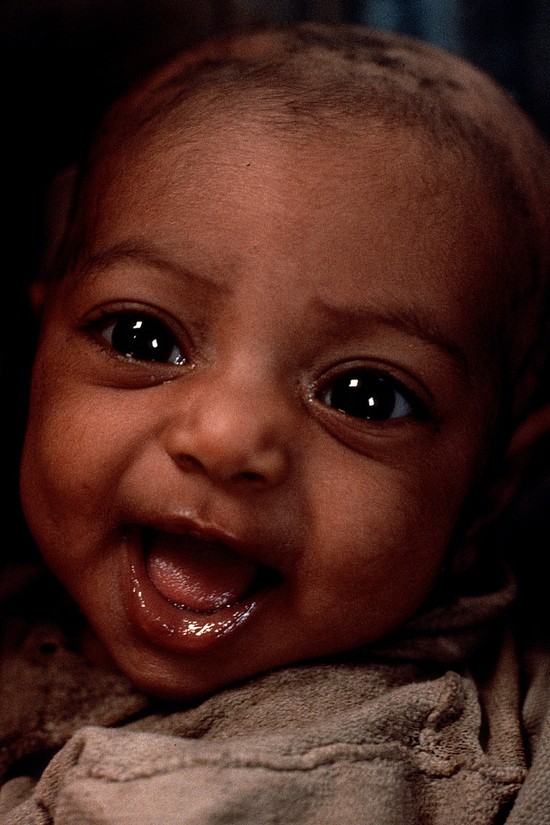
Figure 37 Joy is all that can be seen in the eyes of the young.  Rescued from starvation and given hope once again.
          Don's ability to capture people on film in such a natural way provides a positive con­trast with photographers who wet up posed situa­tions.  Don's photography "has helped in the total scope of communications" for the Foreign Mission Board.[44]

Figure 38 HOPE——In the face of starvation food is provided to many of these people at the shelter, while others take the food and return home.
         Don is a very sensitive person.  He is sensi­tive to other people.  He has a way of gaining their confidence and very subtly working himself into a situation.  He has tremendous spiritual depth.  Therefore his pictures reflect his sensitivity to people as well as his spiritual commitment.  I have never seen him take a picture or seen a picture he has made that in any way it would embarrass people who saw it.  He always did it in such a way that the people who saw it would be as proud of it as he was.  He has such a sensitive touch, and such a high standard and the feeling of wanting the people who were the objects of the picture to be as proud of the picture as he was as the taker of the picture.  Of course, he has such tremendous background in all of his travel and his awareness of Southern Baptist life and other Christian groups, he just brings a quality and a character to the work that many people don't.  It's not just a technical profession to him, it's a spiritual calling.  You really sense that in what he does and how he does it."[45]

Figure 39 With food in hand, the people leave the shelter and grounds to return to their families.
Dr. Keith Parks resigned late in 1992 due to the controversy in the Southern Baptist convention which was making it difficult for him to do the job as he saw it.  Don Rutledge and writer Robert O'Brien went with Dr. Parks on his last trip to Rio.
Figure 40 Surgeon Tim Pennell was able to get five of his colleagues from Bowman Gray School of Medicine to commit weeks of vacation time and thousands of dollars to meet their Chinese counterparts.


          Although Don took hundreds of pictures, I hardly noticed because he did it in such an unobtrusive way.  When he put it all together he had really caught the highlights of the meeting and the impact that he wanted.  I just think that he is a first rate fellow from every measurement professional.  Of course, he can and does meet the highest standards of the secular world, and yet his deep spiritual commitment has caused him to give himself to the spiritual cause he believes rather than selling his skills to the highest bidder.  I just think that quality and character come through in his pictures.[46]

Dan Beatty, the design editor of The Com­mission maga­zine commented,

Don is the one person who has complete­ly influenced the direction of the magazine.  Before Don came we knew that there was a certain way we wanted to present the missions material in the magazine.  None of us had a firm grasp on what direction we should go to achieve our goals.  Don really provided the direc­tion for us to go.  Don never expressed any strong feelings about——in a critique type way——on the mag­azine.  Just Don's presence and constant example of someone who always strives for the best is what guided us along.  He was constantly putting us into contact with different individuals in the field of photojour­nalism and lay­out and design.  He felt these would be good influences on the maga­zine or influ­ences that would help us along the road where we wanted to be with the publication.[47]

Dan was heavily influ­enced by Don and those around Don.  Through Don, Dan was introduced to the people of National Geographic, The Virginia-Pilot and The Ledger-Star, those at Black Star and others.  The awards for best use of pictures by a magazine, given out by the National Press Photographers at the an­nual Pictures-of-the-Year contest, were basical­ly awarded the efforts of Dan Beat­ty.[48]  As a result of Dan receiv­ing this award, most per­sons in photojournalism considered Dan to be at the top of the field.  Dan says,
I would not be doing what I am doing, at the level I am doing it if it hadn't been for Don.  He is an example of con­sistency and integrity in a field where that is not always a constant with the different people that I've met.  He represented something that I wanted to achieve myself.  He has been the biggest influence that I can think of on me personal­ly and the different photographers that I have worked with along with Don.  The thing that impressed me most with Don is his sensitivity and his regard for human beings.  I think that is what made him the asset that Dr. Parks was looking for in communi­cating about Foreign Missions to Southern Baptist and other people as well.  The dig­nity of the human being no mat­ter what the situa­tion is so very impor­tant to Don.  To me that is the real strength of Don's work.[49]


Figure 41 In the Philippines families cluster together for meal.
         Not everyone at the board was so excited when Don came on board.  When he went to the Home Mission Board he was replacing the only photographer.  There was not a photogra­phy depart­ment.  Howev­er, when Don went to the Foreign Mission Board, there was a lab, the photo library, and photographers already working there.  The For­eign Mission Board was in many ways not any further along photographi­cally than the Home Mis­sion board was when he went there in 1966.  Here in 1980 they were shoot­ing their coverages on medium format cameras.  Hasselblads to be specific.  These cumbersome bodies did not let one shoot available light photogra­phy.  The photogra­phy being done was only glorified snapshots. 
Figure 42 Dr. Jerry Bedsole, a career veterinarian mission­ary, doctors the animals of the people in his open-air clinic.
        Survey trips were the way that photography was done.  The photographers would plan a trip and shoot stock photography.  These pictures were for the files and not for any specific story usually.  The pictures did not tell a story at all.  They were scenics of buildings and when peo­ple were includ­ed they all stood facing the camera.  If there were more than two people, generally they just lined them up for the group shot. 
         The magazine was dull and boring.  The technological advances had passed the board years ago in layout 
Figure 43
and design.  The Foreign Mission Board had a larger lab, more photogra­phers and even a larger photo library, but still their work was much poorer than what the Home Mission Board was produc­ing.  Some might say that Don had lost his marbles.  Why leave the Home Mission Board and go to a place like the Foreign Mission Board.  Sounds so familiar to the same reasons that he went from Black Star to the Home Mission Board.
Figure 44 The child is suffering from malnutrition. 
The volunteers often see these faces of hopelessness
and they bring back the hope for the families.
         After going to the Foreign Mission Board, Don ran into problem after problem once again.  The board had just adopt­ed a policy to help those moving to Richmond to be able to get loans through the F.M.B.  But Carl Johnson told Don that although the govern­ing board had approved it he could not let Don use this program.  Interest rates were sky high.  Don took a cut in salary and went from paying a house payment of a couple of hundred dollars to four times as much.  The house wasn't much big­ger.  It was just the nature of the housing market.  Don said he took a major cut in pay when figuring in all the costs of the move.
Figure 45
          Phil Douglas, a layout and design specialist, was putting together a book and had asked Don to contrib­ute to the book some of his work.  The Home Mission Board and the Foreign Mission Board were using and had used Phil Douglas' consulting ser­vices at the time.  Ken Lawson did not think that this was a good idea and refused to let Don's pic­tures from the Foreign Mission Board be used in the book.  The Home Mission Board did coop­erate with the project and let Don's photo's be used.  Many in the com­munica­tions department were giving Don a hard time.  Dr. Keith Parks had as­signed Don directly to the top of the Communi­ca­tions Department head, Johnni Scofield.  This infuriated many in the department.  They felt they had been there longer and deserved the prestige that was being given to Don by Dr. Parks. 
Figure 46 No shoes or protection for their feet, leaves many with feet problems.
         After looking at the two agencies and comparing the acceptance of Don by then the difficulties that he incurred at the two agencies, this writer has drawn a conclusion.  At the Home Board Don was faced with people questioning his knowl­edge of the technical, while at the Foreign Board they were jealous.  He communicat­ed well at both agencies.  The sources of his problems at the agencies were very different. 
Figure 47 A mother brings here child to see the doctor.  In the background is a sheep that she brought for the doctor.
         Those that were being asked by Parks to change their approaches were having to deal with major issues.  Dr. Parks wanted Don to direct the publications.  Perhaps those who followed willingly posses more self-esteem than those who fought the battle of falling. Don did not confront this issue.  He just let his work do the talking.  Slowly many changed their views after seeing the impact of Don's work.
Figure 48 Seeing this landscape gives an idea of how the area looks without any grass, anything growing, a very desolate place.
         The ties that Don had with Black Star and others in the secular world helped many on the staff.  Steve Helber, the Asso­ciated Press Photographer for the state of Virginia, called Don one day asking for some help.  Steve had worked in Atlanta and knew Don from those days in Atlanta.  Don was too busy but suggested that Joanna Pinneo could probably help.  This introduction helped Joanna, then a lab techni­cian in the darkroom at the Foreign Mission Board, get the experience shooting.  Steve Helber took Joanna under his wing and taught her the in's and out's of wire service photogra­phy.  With Steve and Don working with Joanna, soon Joanna was doing coverages for the Foreign Mission Board.
Figure 49 Volunteer Mary Saunders has made a good friend in Ethiopia.
         Don helped Joanna by going over her contact sheets with her.  Slowly things were coming to­gether.  Her background was art and psychology.  Don helped her use this back­ground in photo­journalism.  Steve Helber helped Joanna develop her style of impact.  In the wire ser­vices pictures had to have immediate impact or the editors would not use them in their papers.  This under­standing cou­pled with Don's magazine back­ground helped Joanna get some of the founda­tions that she later built upon to make her one of the most successful pho­tographers in the field today.  Howard Chapnick was grateful for being intro­duced to Joanna through Don.[50]  One can see through Joanna, Don's teaching ability.
         What does Don teach others that they do already know?  Don teaches persons how to see again.  "Why is the sky blue?  Why is one flower red and another yellow?  How do the stars stay up in the sky?  Why is the snow cold?," are questions Don says that children ask and adults forget to ask.  Once these questions are not asked the world becomes humdrum.  Don teaches those around him how to appreciate the small details and how these small details say so much.  Don says, "Photography forces me to continue asking questions which began in my childhood and probing for answers in the maturity of my life.  The 'seeing beyond what the average person sees' fills me constantly with excitement and allows me to keep the dreams of my youth.  It gives my 'seeing' a newness and freshness as I work hard to communicate through photog­raphy the messages I want to convey."[51] 


Figure 50 Volunteer Mike Edens taught these two pastors Mikhail Shehata Ghaly and Anwar Dakdouk MasterLife Discipleship training in Cypress during 1984.
         Black Star gave Don the opportunity to pursue this direction and later the Home Mission Board nurtured this call of Don's.  The desire keeps him going now with the Foreign Mission Board.  As a result of work with these groups, Don has been in all 50 states, all but two of the Canadian Provinces and 137 countries.[52]  This travel has help Don to see how small the world really is.  He has noticed that once he arrives in another country the people are very similar and live very much alike.  The smile still means the same the world over. 
         Often Don is asked to speak to photography conferences.  He advises the photo­journalists who work on the local papers to learn how to work where they are now.  The ability to look good has little to do with where you are located in the world and who you are photographing.  The ability to communicate must be there in the local market.  For the past twenty years this writer/photographer has looked at Don Rutledge's work.  The pictures in Russia look very similar to his pictures in Kentucky.  The differences were smaller than the similarities.  Don's photographs concentrate on the emotions of people.  No matter where you are located in the world, people's emotions stand above languages and cultures.  These small moments of expression communicate across our language barriers.  Foreign Missions has been one of the best places for Don's work to excel.  Here his style of photography was not bound by words or cultures.  Body-language is a very powerful form of communication.  The difference between a "No Comment" on a show like 60 Minutes and the same words in print is obvious.
Figure 51 Missionary Kid, Ellen Duval, loves her cats and books and this is what helps her make home in Indonesia.
         While Don was doing a coverage to show where Lottie Moon grew up in the mountains of Virginia, he was reminded of how small the world had always been.  He discovered that Lottie Moon spoke several languages and that many of the people in the hills of Virginia today speak many languages.  Some of the people Don ran into speak Asian languages like Chinese.[53]
         How does Don continue, year after year, to make photographs where the people appear not to notice Don.  Don's favorite lens for years has been the 28mm lens.  This lens requires Don to get twice as close as he appears to be in the actual photo­graph.  When viewing Don's photographs, realize that he is usually twice as close as he appears.  Don's style of photogra­phy requires the subject to allow Don to enter his personal space.  If someone enters the personal space of most people, they appear uptight and tense.  But if their best friend enters that space they seem warmer and personable.  This immediacy that Don creates with the camera breaks down the walls of culture and status.  People become real when Don photographs them.  Don wants us to see the positive side of people.  This ability comes from years of hard work on the part of a man commited to his calling to ministry, the ministry of helping others the people and the world with "his father's eyes."


[41] Dr. Keith Parks, interview by author, Tape recording, Richmond, Virginia, 26 October 1992.

[42] Ibid.

[43] Ibid.

[44] Ibid.

[45] Ibid.

[46] Ibid.

[47] Dan Beatty, interview by author, Tape recording, Richmond, Virginia, 27 October 1992.

[48] Howard I. Finberg, The Best of Photojournalism 16: The Year in Pictures, (Philadelphia: Running Press Book Publishers, 1991), 232.

[49] Interview with Beatty.

[50] Interview with Chapnick.

[51] Don Rutledge, "Using Photography: To look beyond the backyard fence" unpublished, 1992.

[52] Ibid.

[53] Don Rutledge, Interview by author, Richmond, 1985.

Sunday, January 13, 2013

Master's Thesis on Don Rutledge: Chapter Three


HOME MISSION BOARD, 1966 TO 1980

            When Walker Knight went to the Home Mission Board of the Southern Baptist Convention, in 1959 he was handed photo story packages done by Don Rutledge.  He published some of those photo stories.  Walker Knight became acquainted with Don Rutledge.  When Don traveled to Atlanta for coverages or when passing through town, Don stopped by and visited Walker Knight.  At the time they had Ralph Rogers as a photogra­pher.  Mr. Rogers' direction was portrait and commercial.  When Mr. Rogers' left they were without a photogra­pher.  It was the hope of Walker Knight and Jay Durham that they could secure Don Rutledge to fill the position.[17]  Jay Dur­ham was the Director of Media Services for the Home Mission Board at the time.
Figure 14 Baily King in front of his home in Quinten, Mississippi.
            Don did not drift into missions work.  Don Rutledge's turning from a secular career to express his artistry as a Christian was a conscious decision on Don's part.[18]  This was not the only avenue open for him.  The econo­my did not force this decision.  Actually in the three months before Don went to work for the Home Mission Board, Don made more money than he did in the next two years at the Home Mission Board, even when his salary and travel bud­get were includ­ed.[19]  All this is to say that Don's acceptance of the invitation to come to the Home Mission Board was the fulfilling of his call to the minis­try.
       Walker Knight recommended Don to Jay Durham and L. O. Griffith, the Director of Communica­tions, at the Home Mis­sion Board. They replied that Don wouldn't come to the HMB for our salary. Knight replied, "Let's let Don make that decision." "Okay, they said but will you call him to see if he is interested." Walker called Don, and he was interested, then Jay made the call and he was hired by the Audio Visual Department.  Don agreed to come on a trial basis for a year.  Right from the start there were problems.  These prob­lems all revolved around changes.  Most of the changes were from the old technol­ogy to some­thing better.  The Home Mission Board had been using 4 x 5 cameras, and Don was accustomed to using 35mm cameras.  Earlier Don had an experience with LIFE magazine over this issue.  He had been assigned through Black Star to photo­graph a story at Georgetown College in Kentucky.  The story was about how the actors were made up to look like stained glass.  Don thought this would make a good story and had contacted Black Star who then contacted LIFE.  
Figure 15 "I got what I knew from watchin' and listnin' and thankin' for myself." [Home Missions, December 1979, 2.]
            Everything was going fine until checking into the hotel the night before doing the coverage.  Don called the theater department to confirm a story he was doing.  The director informed him that another LIFE photographer, Don Cravens, was there to photograph the same story for LIFE.  It was not uncommon for this to happen; since LIFE was so large some departments would cover the same story.  Don Rutledge contacted Black Star, and after talking with

Figure 16 The difference from Bailey King and one of his childhood neighbors is that his neighbor only had to buy a guitar and Bailey had to buy land.  That was the differ­ence between him and Johnny Cash. [interview with Don Rutledge, 1985]


them, the decision was made to go ahead and shoot the story and then LIFE would decide on which coverage to use.  Don let Don Cravens shoot the story first.  Don Cravens shot the story on a 4 x 5 camera and took until 4 am in the morning with the actors to shoot.  Don Cravens had to set up lights due to the nature of the camera.  Don shot the following night on 35mm and was done by 12 midnight.   Don was using 35mm cameras which allowed him to use available light and record the natural setting easily.  LIFE used Don Rutledge's pictures in their national and international editions of the magazine.  The pictures were used all over the world by many differ­ent magazines.  Don Cravens' pictures were never used.  It could be that the time involved in shooting a 4 x 5 does not do well with photo­graphing people in everyday life situa­tions.[20]  The 35mm allows for a more candid look to photo­graphs since it does not require as much light for exposure or a bulky tripod.
Figure 17 Most of Bailey's neighbors are all poor and black.  He was one of the few white men in the area.  Bailey also saw himself as equal to his neighbors.  They all had a great deal in common—even though their skin was different.


         L. O. Griffith, the Director of Communica­tions, at the Home Mis­sion Board, was a photog­rapher himself and could not understand why Don could not make the transi­tion from those "ama­teur 35mm cameras" to 4 x 5 cameras.  He liked Don's work, but had a real prob­lem with understanding Don's refusal to shoot with 4 x 5 cam­eras.  The issue of using 35mm versus 4 x 5 had to go all the way to the top of the Home Mission Board to be solved.  Dr. Arthur Rutledge, no relationship to Don, but the Executive Di­rector, had to decide.  Dr. Rutledge stood behind Don, Walker Knight and Jay Dur­ham.  Many other issues just like the camera issue would be repeated at the Home Mission Board.[21]
Figure 18 Luvenia, Bailey's wife keeps an eye on the children.
        Broadman had a contract with the Home Mission Board regarding film strips.  Broadman would produce the film­strips and the Home Mis­sion Board would supply the material.  They came to the Home Mission Board for a major meeting to set things straight.  In a large de­partment meeting Don was told how to set his camera for proper expo­sure and what filters to use in differ­ent lighting situa­tions.  Shortly after this meeting the Broadman group complied with the de­mands of the Home Mis­sion Board.  They were to listen to Don and the photo department and not the other way around.  This did not work.  The Home Mission Board ended up produc­ing the programs by themselves.
Figure 19 This is George, a bowlegged Chihuahua, and Bailey's companion and friend.  He keeps Bailey company since the doctor said Bailey would not work again.
           

          While Don was considering coming to work at the Home Mission Board, Walker Knight hired an associate editor: Dallas Lee.  Dallas Lee and Don Rutledge teamed up as a writer and photogra­pher team.  The idea of two specialists, one being the photographer and the other the writer, was very new for Southern Baptists.  They revolutionized the way of communication for the Home Mission Board.  Walker Knight commented that he "credited Don Rutledge's photogra­phy as changing the whole nature of photography in the Southern Baptist Conven­tion.  We never had a standard before, and Don provid­ed that standard."[22]  Don taught and befriended many photogra­phers throughout the conven­tion.  Many of these have gone on to work for national magazines like National Geo­graphic.  Ken Touchton, Steve Wall, Jim Wright and others went on to major careers in photojournalism after meeting Don.
          Jim Wright was a col­lege student who worked as the only lab technician for the Home Mission Board in the very beginning of Don Rutledge's time at the Home Mission Board.  Jim knew very little about print­ing.  Don had con­tacted the lab Modern Age that Black Star was using in New York.  He had Modern Age print some negatives for Jim Wright to use as guides.   Jim Wright put 
Figure 20 Lacking a formal education did not stop Bailey King from living, it just held him back.
them on the dark room walls as guides.  Jim printed the negatives until he could match the quality of the prints made by Modern Age.  Every good photogra­pher needs an equally good lab techni­cian.  The lab techni­cian is just as creative as the photographer.  Often negatives are difficult to print since they were shot under existing light.  Existing light gives character and mood to the photo­graph, but often it needs a good lab techni­cian to devel­op within the print the quali­ties that en­hance the commu­ni­cation process and play down the distracting ele­ments.  This requires the print­er to understand what the pho­tog­ra­pher was think­ing and to bring out those elements to enhance the mes­sage and to play down the other elements so that the print grabs the viewer and gets their atten­tion.[23]   Jim Wright helped estab­lish qual­ity control in the printing process that is still used today at the Home Mis­sion Board.

Figure 21 All those years of back breaking hard work caught up with Bailey King.  He had a stroke and has been unable to work.
         Dallas Lee was excited by the stories that Don and he were working on together.  He would walk in early and see all that was going on and would assume that Don saw what he saw, and was busy shooting.  He would find out later that Don often would go into a situation and not pick up his
Figure 22 The King children enjoy the water to cool off during those hot days.
cameras until he had been ab­sorbed by the place.  Don would wait long enough to under­stand what wasgoing on rather than im­mediately beginning to shoot.[24]  Don has an abil­i­ty with the cam­era to see situations.  There is al­ways that special mo­ment from every situa­tion that Don would capture.  Henry Cartie-Bresson called this the "decisive moment."  Dal­las Lee said that Don taught him to have pa­tience and to ab­sorb infor­mation before jumping into the story.  This was the "round­ing out" of a jour­nalist: al­lowing the story to tell itself rather than his getting in the way with the journalist's own per­cep­tion of the sto­ry.[25]   Don's ability with peo­ple and his love of people is a driv­ing force of Don's work.[26]
Figure 23

            "Skilled hunters don't crash through the woods with guns blazing or over­load them­selves with unnec­essary gear.  On the con­trary; they move quietly and careful­ly so as not to attract attention or fright­en off the game.  They blend with the envi­ron­ment."[27]  Don's abil­i­ty to blend into the wood­work is best shown in the cov­erage of Bailey King.  Looking at the pic­tures moves one from where they are to the sub­ject.  This immedi­a­cy brings with it an interaction be­tween the reader and the sub­ject that breaks down barriers of time and space.
Figure 24 Luvenia and Bailey King enjoy moments like these that keep them going and keep them close.
            "Being poor ain't so bad.  It's just inconve­nient," said Ba­iley King.[28]  Bailey King was photo­graphed by Don for some three weeks.  Don went to Quin­ten, Missis­sippi, to show how a poor family lived in this coun­try.  Don bathed in the pond like the rest of the family and ate just like they ate.  He con­tribut­ed just enough to cover his cost without changing the level of the family's income while he was there.  Later he gave them money to help the family.  Due to this story photographed by Don and written Phyllis Thomp­son, the King's were pro­vided a brick home by the read­er­ship of the maga­zine.[29]  Just before going to Missis­sippi to do the cover­age on the King family, Don had been reading Hans Kung book On Being a Christian.  After listen­ing to Bailey King, Don heard many of the deep theolog­i­cal con­cepts out of Bailey King's mouth that he had been reading earli­er by Hans Kung.  Con­sidering that Bailey King couldn't read or write, Don realized that God speaks to all people in spe­cial ways.  God seemed to be preparing Don for this sto­ry.  With this prepara­tion, Don not only lis­tened to Bailey as a good journalist, but for the common sense that was gained from every­day life with Bailey King.
Figure 25
            Mr. King lives in a pri­marily black neighbor­hood.  Everyone around him lives in similar clap­board-styled homes.  Poverty is the lifestyle, but that does not make King less of a man.  Don sees to it in his photo­graphs that people will see into the man.  Don uses the camera to move the view­er to a new level.  People who sing in church all hear the music; some get a little deeper and let the words speak to them, but those who lead the music must be func­tion­ing on a spiritual level to move the people beyond the mu­sic.[30]  Don, like all minis­ters, must go ahead of the people and be able to bring the audience to the experi­ence.  Don moved Southern Baptists with this coverage.  As a communicator he had mastered the skills to show Bailey King to Southern Bap­tists.  He did not allow himself to get in the way of the communi­cation.
Figure 26 "On special occasions, people pay $100 for a plate of food, when I'm happy to get a sweet potato.  The pore man spends most 'o his life half­way livin'." [Home Mission, December 1979, 14]
            "The Bi­ble says man, not white man, not black man, not Chinaman.  Jus' man.  So why do some of us thank we are better than others?" —— Bailey King[31]  King had a good under­standing of such a complex idea.  Theologians study for years to come up with the same understandings of the Bible that King put into words.  The gospel is for everyone and not just for the elite.  What better way to commu­nicate the need for us to go and help the poor than for a poor man to humble us all.
            "I been workin' since I's five, and I ain't got no more now'n I had then.  It is hard for me to walk.  But you can't give up jus' 'cause you hurt a little bit.  If you fall on your knees and break down 'round here, you ain't gonna get up no more." --Bailey King.[32]
           As one looks at Don's photographs you notice that often the pic­tures have two or three pic­tures in one pic­ture.  This approach of Don's is what he excels in more than any other dominant style of photograph he does.  Usually when Don uses this composition technique, there is a primary subject in the photo­graph.  Then the sec­ondary element adds a touch of in­formation about the environ­ment.  It also adds that qual­ity called the "slice of life."  By includ­ing these extra elements the photo­graph does not look trite or so much composed as just mak­ing you feel as if you were there yourself.  The photo­graph has much infor­mation and keeps giv­ing in­formation everytime one looks at the photo­graph.
Figure 27
           Many photographers like to keep things simple.  They may use a real tight shot to show the tear in the child's eye.  Don does this also, but his ability to cap­ture the big picture sets him apart from most of his colleagues in the profes­sion.
Figure 28 "People don' wanta fool with nothin'.  But you gotta fool with thangs.  People is worth foolin' with.  All o' them is.  I guess not carin' is 'bout as bad a thang as is." [Home Missions, December 1979, 18.]
           To tell someone's story through pictures one must come to a deep under­standing of the peo­ple he is photo­graph­ing.  He needs to understand the subject matter well enough to simplify the message so it does not get lost in the communi­cation process.  By living for three weeks with the King family, Don was able to get to know the people.  Many other pho­tog­ra­phers have tried to do what Don had done, and usu­ally they have come back too soon with the story.  Often the story others come back with is their own percep­tion of the situation.  Many pho­togra­phers can not get their egos out of the way to listen to the peo­ple.
Figure 29 An Appalachian migrant family in Ohio during 1968.
            While egos are being mentioned, it is impor­tant to note that most people who are pho­tojour­nalist many have rather large egos.  With­out some ego in this busi­ness of pho­tojour­nalism many would not survive.  The ego gives the drive neces­sary in a field so competi­tive.  Photojournalist are called many names by media personel.  Christlike is far from the description given to the media in general.  The differ­ence with Don is that his ego does not show like most jour­nal­ists.[33]  What drives Don is not the ego but the love of God.  Don listens to Christ in his walk and in this way is very different from the secular photo­jour­nal­ist.  "When a bunch of pho­tog­ra­phers, including some big names like Eugene Smith, would get togeth­er, Don was the one who would go for coffee for every­one——he's just that kind of a guy," said Knolan Benfield.[34]  Knolan Benfield was the Di­rec­tor of Photo­graphic Ser­vices for many years at the Home Mission Board and worked very directly with Don.  Don was his manager.  Knolan Benfield is this writer's uncle and the one who introduced Don Rutledge to him.
Figure 30 Angela Fung works in the day care program at Utopia Parkway Baptist Chapel in New York City.
            "The most important thing about Don is that he al­most single-handed­ly raised the level of photojournalism within the convention, and also creat­ed a stan­dard of excel­lence by which ev­ery­body else who worked around him had to be measured or measured themselves.  These two things are enor­mous con­tribu­tions to South­ern Baptist communications efforts.  Just his pres­ence de­mands such a high standard of production from edi­tors, writers, as well as other photogra­phers.  Don does all this with a great deal of humil­ity.  This is also reflect­ed in his willingness to help young photogra­phers.  This all stems from Don's enormous sense of securi­ty within himself.  He is sure of who he is and what he can do.  He knows what his abilities are.  This gives him a solid foundation for helping other people without any threat to his own career or his own fame or notoriety."[35]
            Don has an ability to help one grow in the field of commu­nica­tion.  His gift is in pointing out the weak­nesses in a shoot as well as the strengths.[36]  After the writ­er had been taking his work to be critiqued by Don for several years, the writer no­ticed that Don would look for posi­tive things on which to com­ment and would pass over much of the work.  Slowly, as the writer started to focus in on the positives, the more Don would com­ment.  Finally when the writer became bold and asked Don what was wrong with some of the other photographs, Don spoke more openly.  Don is careful not to criticize.  He looks for the positives in the work of others.
            Knolan Benfield re­mem­bers many times when he thought that Don should just tell the per­son to try another field.  Don would ask oth­ers look at the work and let them state the negatives.  On one occa­sion a photographer came to see Don and, after talking with the man, introduced him to the writer.  After looking at the portfo­lio, the writer made a few sug­gestions for improvement.  Several months later the same man returned with the same portfolio.  No changes had been made.  It was as if the man never listened to Don or the writer.  Don comment­ed later that he could not believe one could have the nerve to show the same portfolio to him twice and not correct the prob­lems.
            Don's graciousness was needed to talk to the Southern Bap­tists who were in leadership at the Home Mission Board and other agencies.  He had a way of gradually getting others to join his team.  He did not put down the work they were doing, but by showing what he was doing, he led others to join in and be a part of the process.
Figure 31 Boys at a Baptist community center in Kentucky in 1970.
          Dallas Lee, naive and still young in his profession, thought that he could just go and photograph and write with the best of them.  After meeting Don, he was hum­bled.[37]  Don has only good things to say about many of his colleagues at the Home Mission Board.  His admiration for the direction that Dr. Arthur Rutledge had taken in home missions not only made Don proud to be Southern Baptist but inspired him to do some of his best work ever up to that point. 
            Don is not able to do alone all that it takes to put out the work of his caliber.  It takes the team approach to make it happen.  Don believed in the photo lab to do its best in printing his work to make it stand out and make people stop and look.  Don always had professional labs print his work.  While with Black Star He tried to develop a style of his own.  One day he walked into the lab that he used and a lab technician was out front.  He asked Don if he was Don Rutledge.  The man wanted to talk to Don.  He had been printing Don's work for many years and admired it.  Don did not want the man to know that he was not aware of his style.  So he asked the man what he liked about his style.  The man said he liked the way he treated people with dignity.  He noticed that Don was a very religious man and had a deep apprecia­tion for social issues.  This man told Don so much about himself, that at that moment Don realized that what he had been working so hard to do was succeed­ing.  He also realized how much one knows about him by just looking at the photo­graphs. 
            The main theme in all of Don's work is LOVE.
            If I speak in the tongues of men and of angels, but have not love, I am only a resounding gong or a clanging cymbal. If I have the gift of prophecy and can fathom all mysteries and all knowledge, and if I have a faith that can move mountains, but have not love, I am noth­ing. If I give all I possess to the poor and surren­der my body to the flames, but have not love, I gain nothing.
            Love is patient, love is kind. It does not envy, it does not boast, it is not proud. It is not rude, it is not self-seeking, it is not easily angered, it keeps no record of wrongs. Love does not delight in evil but rejoices with the truth. It always protects, always trusts, always hopes, always perseveres.
            Love never fails. But where there are prophecies, they will cease; where there are tongues, they will be stilled; where there is knowledge, it will pass away. For we know in part and we prophesy in part, but when perfection comes, the imperfect disappears. When I was a child, I talked like a child, I thought like a child, I reasoned like a child. When I became a man, I put childish ways behind me. Now we see but a poor reflection as in a mirror; then we shall see face to face. Now I know in part; then I shall know fully, even as I am fully known.
            And now these three remain: faith, hope and love. But the greatest of these is love.[38]
            While working with Black Star Don was able to communicate this message through his photographs and did not necessarily need to work at the Home Mission Board to accom­plish this task.  Today many Christian photojournalists work in secular positions all over the country communicating the Christian message through their pictures.  One group that the writer and many others are a member of is Christians in Photojournalism. 
            Why did Don leave Black Star and come to the Home Mission Board, take a cut in pay and status to work with people who frequently produced inferior quality products?  This question points very directly to the pioneering spirit that Don has about him and his work.  Photojournalism is a relatively new profession.  LIFE did not transpire until 1936, and this is the magazine that developed the picture story and basically fashioned the field of photojournalism.  Staying with the major magazines would have proven very lucrative for Don. 
            Walker Knight knew that photojournalism was the direction needed.  However, few Christian photojournalists existed who could have made the dreams of Walker Knight and others become a reality for Southern Bap­tists.  Don Rutledge was able to do this.  His studies at a very con­servative Bible college and his upbringing in the Baptist life coupled with his skills as a photojournalist made him a prime candidate to deal with many of the issues that he was to take on while working for the South­ern Baptists. 
            Many of the leaders in the Southern Baptist Convention have one thing in common.  They were pastors at one time or another.  This common con­nec­tion helped Don in ways that other photojournalists after him have not had.  This ability to understand those with whom he was working when dealing with difficult issues helped him commu­nicate effectively.  While in college studying psychology, Don learned a valuable insight into the human nature from one of his professors.  When it comes to logic and emo­tion on any given issue, emotion usually wins out in the argu­ment.[39]  Walker Knight re­al­ized that by writing alone he was preaching to people, but with the photographs people saw for themselves the con­dition of people and how they were living.  The photograph argued through emotion.  Don let his work speak for itself and used very few words in meetings to make his points.  If people liked Don's work and respected his opinion and asked for the opinion, then Don spoke.  On a few rare occasions Don gave his opinion when not asked.
            After coming to the Home Mission Board in 1966, Don made a major impact upon the publication work being done by the agency.  The coverages done by Don and the writers that he worked with had a major effect on Southern Baptists.  People were writing to complain and to complement the magazine.  Due to Don's abilities, the Home Mission Board was making a difference in Southern Baptists.  Walker Knight had moved in the direction that he saw as his calling and Don Rutledge visually helped to make it possi­ble.[40]


    [17] Mr. Walker L. Knight, interview by author, Tape recording, Atlanta, Georgia, 22 November 1992.
    [18] Ibid.
    [19] Don Rutledge, Interview by author, Richmond, Virginia, 5 November 1985.
    [20] Ibid.
    [21] Don Rutledge, Interview by author, 15 January 1993.
    [22] Interview with Knight.
    [23] Interview with Rutledge.
    [24] Mr. Dallas Lee, interview by author, Tape recording, Atlanta, Georgia, 7 January 1993.
    [25] Ibid.
    [26] Interview with Knight.
    [27] Dave LaBelle, The Great Picture Hunt, (Bowling Green: Kentucky, Western Kentucky University, 1991), 15.
    [28] Phyllis F. Thompson, "Somebody, A Poor Man," Home Missions, December 1979, cover.
    [29] Rutledge.
    [30] Dr. Leafblad, Fall 92 lectures in Introduction to Church Music.
    [31] Thompson, 6.
    [32] Ibid. 8.
    [33] Interview with Lee.
    [34] Knolan Benfield, Interview by author, 30 May 1992.
    [35] Everett Hullum, interviewed by author, Tape recording, Atlanta, Georgia, 5 January 1993.
    [36] Ibid.
    [37] Interview with Lee.
    [38] 1 Corinthians 13:1-13 New International Version.
    [39] Interview with Rutledge.
    [40] Interview with Knight.