Monday, February 06, 2017

Hawaii High School State Rodeo at The Parker Ranch

Nikon D5, Nikon 28-300mm f/3.5-5.6G ED VR, ISO 560, ƒ/4.5, 1/4000
Today I had a lot of fun shooting the Hawaii High School Rodeo at Parker Ranch Arena in Waimea on the Big Island of Hawaii.

The reason it was fun is I brought the camera and lens that let me get the action shots I wanted. I didn't bring my long glass, but rather what I call my go to lens for capturing just about anything. That lens is the Nikon 28-300mm f/3.5-5.6G ED VR. In this first photo I shot it at the focal length of 58mm. I wanted to capture the girl doing barrel racing, but also capture the Parker Ranch sign.

Nikon D5, Nikon 28-300mm f/3.5-5.6G ED VR, ISO 500, ƒ/4.8, 1/4000
I was introduced to Cowboy art by Don Rutledge. We went to the Cowboy museum in Oklahoma City where I saw for the first time the work of Remington and Russell. They not only painted, but did sculptures.

Nikon D5, Nikon 28-300mm f/3.5-5.6G ED VR, ISO 1250, ƒ/5.6, 1/4000
What Don taught me with the help of Remington and Russell's work was that the expression makes the photo. The expression of the animals and the people in the frame of the picture.

Nikon D5, Nikon 28-300mm f/3.5-5.6G ED VR, ISO 1250, ƒ/5.6, 1/4000
What I love about Rodeos is that the cowgirls and cowboys must work as a team with an animal. The more they know about their animal and how it likes to get clues from the people on what to do the better the show.

Nikon D5, Nikon 28-300mm f/3.5-5.6G ED VR, ISO 800, ƒ/5.6, 1/4000
I setup the Nikon D5 the same way I do for all sports shoots. Here is the blog post that goes into a lot of detail for all the settings.

Nikon D5, Nikon 28-300mm f/3.5-5.6G ED VR, ISO 1000, ƒ/5.6, 1/4000
Now to me the crazy sport is bull riding. These bulls weigh as much as a car and can crush you just as quickly as a car. That is why the sport is just about 8 seconds long. If you can just ride for 8 seconds you are in the competition.

Nikon D5, Nikon 28-300mm f/3.5-5.6G ED VR, ISO 1400, ƒ/5.6, 1/4000
Most of the time I see the bull riders being kicked off the bull in less than 8 seconds.

Nikon D5, Nikon 28-300mm f/3.5-5.6G ED VR, ISO 2200, ƒ/8, 1/4000
The cowgirls have an event where they are to lasso the cow. Two of the cowgirls did so in less than 4 seconds. WOW! I was really impressed at these high school girls being so good.

Nikon D5, Nikon 28-300mm f/3.5-5.6G ED VR, ISO 1800, ƒ/5.6, 1/4000
The cowboys have a similar event where they lasso the cow and then with a teammate they wrestle the cow to the ground and tie their feet. This is a skill they use in the fields to capture the cows to give the shots, brand them and other things to take care of their herd.

Nikon D5, Nikon 85mm ƒ/1.8G, ISO 100, ƒ/3.5, 1/1600
It was just fun to see the high school kids having so much fun and learning a skill in the process of playing games.

Nikon D5, Nikon 85mm ƒ/1.8G, ISO 100, ƒ/1.8, 1/8000
Asking the cowgirls if I can take a picture of them with their horse was always greeted with a big smile. They were proud of their horses and the bond they had built with them.

Nikon D5, Nikon 85mm ƒ/1.8G, ISO 100, ƒ/1.8, 1/1250
I cannot recommend enough finding a rodeo near you and spending the time to capture the action with your camera.

Thursday, February 02, 2017

Headshots

Nikon D5, Nikon 85mm ƒ/1.8G, ISO 100, ƒ/8, 1/100
Still shooting those headshots. Here is the diagram for what I did above.


I highly recommend the Lastolite Triflector kit silver/sunfire.

I captured all the photos using the CamRanger which was transferring the images wirelessly from my Nikon D5 to the Macbook Pro.


Here is my digital workflow:

Here is an Instagram video showing the setup as well for you.

A video posted by Stanley Leary (@stanleyleary) on

Here is one more for you to see.


Wednesday, February 01, 2017

Be an Anticipator and not a Procrastinator

Nikon D750, Nikon 85mm ƒ/1.8G, ISO 100, ƒ/4, 1/200
Meet recording artist Sydney Rhame. She was a contestant on The Voice a couple years ago. Here she is singing "Photograph". By the time Sydney had gotten on the voice she had already been performing for many years. She actually started singing at age six and then started performing at age eight.


Recording artist are practicing all the time. They work hard for years for their "break."


I spent some time setting up for Sydney. I had not only setup the studio like this for her to make some headshots, I had also scouted around to get colors to match her clothing.

Nikon D4, Sigma 120-300mm ƒ/2.8 DG OS HSM | S, ISO 320, ƒ/2.8, 1/640
I found some fall foliage that I could use in the background to compliment her hair.

Nikon D4, Sigma 120-300mm ƒ/2.8 DG OS HSM | S, Sigma TC-2001 2x, ISO 12800, ƒ/5.6, 1/1250
To get to the big games like the Chick-fil-A Kickoff these players put in many practice days and games spanning years of preparation.

Most Folks

I am finding that more people are procrastinators in their work than are anticipators. People wait until they are near a deadline to actually start working on a project.

In school teachers have projects that they tell us about long before they are due, but most of us wait until the night before. Now after we have done a few of these and found out that doesn't leave us enough time we may actually start it a little sooner–like a day or two earlier.

Word vs Photograph

Throughout my career there has been a healthy tension between writers and photographers. One thing you will hear photographers saying to writers is I can't call the subject and change the ƒ-stop.

A writer can more easily make changes in their part of a project at the last second whereas a photographer has to reshoot to make a change.

When I started out I would just pick up a small camera bag and run out the door for the newspaper. Today I realize that the more I plan and prepare for a photo shoot the better the results.

Today I ask a lot more questions when I get a project. Why are you needing these photos or video? What are you looking for from the project? What is it that the audience to do once they have seen the project?

The questions go on more than just these few questions. Once I am comfortable with the direction and style they are wanting I can then plan for what gear I need for the shoot. Sometimes this requires me renting gear.

For most of my projects today travel is involved. I must book flights, hotels, rental cars, assistants and more.

Nikon D5, Nikon 85mm ƒ/1.8G, ISO 100, ƒ/1.8, 1/160
Advantage of Anticipating

When you anticipate as I must do for assignments there is a lot of dialogue with a client. Much of this is in written form between me and the client. The great thing about this process for me is I have a paper trail showing how I was proactive and getting their approval before executing anything.

When you talk through a treatment with a client in as much detail as possible when the assignment is given then you give yourself and the client the advantage of keeping the costs down and pushing the quality up.

Since I am working in an artistic field for a career then the one thing that keeps you receiving a paycheck is being in demand. Believe it or not but the busiest photographers I know are the ones who are Anticipators and not the Procrastinators.

Some things you can do that are disciplines of an Anticipator:

  • Going to clients with project ideas
  • Responding quickly to phone calls, emails and texts
  • Asking questions when client gives you a project–Immediately and not closer to the deadline
  • Delivering the photos quickly–Photos processed for client without quality suffering
  • Creating estimates and invoices quickly
  • Raising concerns and issues before the client realizes a concern–While there are somethings you cannot anticipate you are always trying to take ownership as if the success or failure of this project can make the client be super successful or put them out of business
They say if you want something done, ask a busy person, even though this idea is somewhat paradoxical. 

The reason is that people with hectic schedules have, by necessity, gotten really good at realistically estimating how long things take. The thing that is interesting is once you know someone like this you are prone to go to them to help you. The one thing you hope never happens is that they say no. The reason they will say no is that they know if they can deliver your request or not.

If you find yourself busy and having to occasionally turn down people it is a good sign that you are most likely an Anticipator. However, if you are desperately trying to find work you might just be a Procrastinator.

How to turn yourself from a Procrastinator to an Anticipator

One of the best things I learned in my time at Georgia Tech working on the communications staff was from our art directors. They had reversed engineered the timeline for producing print projects like view books and magazines. 

I would be part of the meetings with the clients going over new projects. The art director then took a couple of minutes and walked through the deadlines, starting backwards. 

When do you need this project? Then they would start with that date and then say well the printer needs two weeks from the time they have it to turn it around without any rush fees. Before this the graphic artist will need two weeks to layout the piece and then have you sign off on it. This includes two reviews. By the way your review time puts on hold the project. So if you take 24 hours to approve or make changes then that is how much the project is delayed. If you take a week to get it approved then that means we need to move up the date for you to get materials to us.

Now before the graphic artist can start work the writer and photographers have to create their content. The good news is often the photography and writing can be done simultaneously.  They both need two to three weeks. For them to stay on schedule the subjects they need to work with need to be available as well or that also impacts the schedule. 

Based on this we need six to eight weeks to produce your project. When working with most new clients we were often only three to four weeks from their deadlines. Most of the time we had to move their deadlines out due to make things go faster often meant rush fees from printers and or hiring more writers, photographers and or graphic designers to tag team.

The question you must know the answer to for any project is how long do you need to produce your very best portfolio quality of work?

Anticipators are really those people who are gifted at time management and know how to get the very best quality of work and understand the time they need to make it happen. They are also good at executing their plans and producing quality work which creates a demand that creates an even higher demand because they are know for being busy.

Monday, January 30, 2017

Monday Devotional for Photographers – Full-time Ministry

Nikon D5, Sigma 35mm ƒ/1.4 DG Art, ISO 100, ƒ/1.4, 1/2500
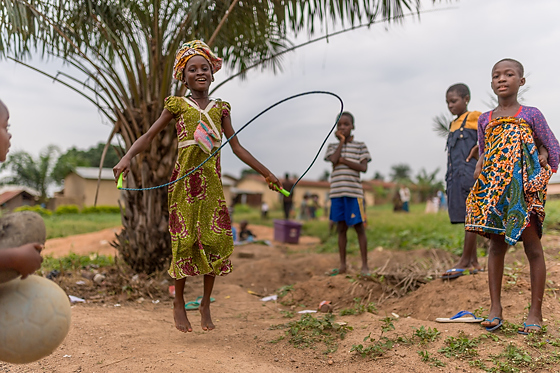
Capturing moments like this one in Togo, West Africa is what I thought many years ago would be my full-time career today.

In high school during a youth retreat I responded to what I believed was a call to full-time christian ministry. My church licensed me into the ministry. This was the first step down a process which I thought would have me doing ministry/missions full-time. Full-time meaning I would pay all my bills from being on staff of a missions agency.

I received this call while a senior in high school. My father, a pastor/missionary, gave me counsel. My father mentored me and guided me to avoid some of the mistakes that he made. Together we determined that I needed an education path.

You will open more doors with a master of divinity degree. This is required for most pastor and missionary positions. Before you can get masters you need a bachelor’s degree. This is where my father gave me some of the wisdom from his experience. He said there is basically two areas that he worked in a great deal that a master of divinity don’t prepare you very well.

Nikon D5, Sigma 120-300mm ƒ/2.8 DG OS HSM | S, Sigma TC-2001 2x, ISO 64000, ƒ/5.6, 1/2500

Most ministers and missionaries are the leaders of an organization and having a business degree would really help you with the administrative responsibilities. The second area was that as a counselor.

I decided to major in social work and then the plan was to go to seminary.

Well while in college I discovered photography and more specifically photojournalism. My senior year while on spring break I was offered a job as a photojournalist for a newspaper. I really didn’t see this as a departure from ministry but rather a call to a specialist role in ministry.

I met Don Rutledge my senior year in college and he would become my mentor. Rather than telling that entire story here you can read more here. Basically Don was a photojournalist who worked for the Southern Baptist Foreign Mission Board as the main photographer for The Commission Magazine.

Just a year and half later I would get a phone call from Don Rutledge telling me about a photographer position on their staff.

I would spend five years working on the staff before they went through financial crisis and cut my position.

This was a great time it seemed to go ahead and attend seminary. This was one of the best things I have ever done in my life. I thought I was going to study and learn all this theology that was going to help me and I did, but what I didn’t know was how much I would learn about education. I learned a lot about lesson planning and how people learned.

Upon graduating I thought I was now better equipped to help tell those missionary stories and I was a better communicator. However no positions opened up for me in the church. I did find a job at Georgia Tech.

The assignments here stretched me in other ways. I worked with Gary Meek and the two of us were helping to tell the stories that were shared through all kinds of media. We were published in many national magazines and newspapers as well as all the public relations materials for the school.

I thought my time at the school was God’s way of further preparing me for something in missions. Well it did help me in so many ways and I learned many new skills, which I use today.

For the past fifteen years I have been a full-time freelancer taking any job coming my way in photography and in communications to help pay the bills. I was helping NGO with web design. I had learned how to create my own webpage to help me with freelancing and then others heard and asked me to help them.

Every few years I would do a missions trip, but never did this turn into a full-time career. Last year I did four separate trips for missions and each one was for a week. The rest of my freelancing helped to pay the bills allowing me the ability to do those mission projects.

I am still longing for the opportunity to do full-time ministry work.

Nikon D3S, NIKKOR 14-24mm ƒ/2.8G, ISO 220, ƒ/2.8, 1/8000
Today I am asking myself did God really call me? If he did why am I not working full-time for an organization doing missions/ministry?

Most likely I am limiting God with all my questions. Maybe I am doing missions and ministry and my understanding of what defines ministry is more limiting than the way God sees it.

The one character in the bible I can relate to the most is Joseph, the youngest son of Jacob. He was given a dream that wouldn’t come true for most of his life. In telling of the story it wouldn’t be fulfilled until the very end of the story, which took most of his lifetime.

His older brothers knew Joseph as their father’s favorite. For this reason his 10 older brothers conspired against the boy and sold him to slave traders, while telling their father the boy had been mauled by an animal. Joseph had been given dreams of God’s plan for his life; so with confidence and strength, he endured in this amazing story in Genesis.

He would be falsely accused and thrown into jail. It would be his gift to interpret dreams that would have him later become a leader for the Pharaoh of Egypt and lead them through a time a famine and for the dream he had as a young boy to come true.

Are you too feeling depressed and beat down? Do you wonder if you were ever really called by God to pursue your profession?

Did you know that scripture most commonly associates those who minister for a paycheck as false ministers?

Matthew 6:24 – “No man can be the bondservant of two masters; for either he will dislike one and like the other, or he will attach himself to one and think slightingly of the other. You cannot be the bondservants both of God and of gold.”

The first missionary was Paul and he earned his living as a tentmaker. He said:
1 Corinthians 9:12 – If you support others who preach to you, shouldn’t we have an even greater right to be supported? Yet we have never used this right. We would rather put up with anything than put an obstacle in the way of the Good News about Christ.
Paul also instructed people to work and earn a living:
2 Thessalonians 3:11 – Yet we hear that some of you are living idle lives, refusing to work and wasting time meddling in other people’s business. In the name of the Lord Jesus Christ, we appeal to such people-no, we command them: Settle down and get to work. Earn your own living.
The biblical word “pastor” is the same word for “shepherd” (which is simply a caring servant of God’s people) and, as a matter of fact, Jesus Himself made this point clear when he said the following about such “ministers”:
John 10:12-13 (MSG) – “A hired man is not a real shepherd. The sheep mean nothing to him. He sees a wolf come and runs for it, leaving the sheep to be ravaged and scattered by the wolf. He’s only in it for the money. The sheep don’t matter to him.”
Christians did support Paul’s travels financially and Paul encouraged the Saints to consider those that spend their lives ministering the Gospel, but the gifts were given freely, from love and in response to need (ACTUAL NEED – i.e. FOOD AND CLOTHING).
1 Timothy 6:6-11 (NKJV) – Now godliness with contentment is great gain. For we brought nothing into this world, and it is certain we can carry nothing out. And having food and clothing, with these we shall be content. But those who desire to be rich fall into temptation and a snare, and into many foolish and harmful lusts which drown men in destruction and perdition. For the love of money is a root of all kinds of evil, for which some have strayed from the faith in their greediness, and pierced themselves through with many sorrows. But you, O man of God, flee these things and pursue righteousness, godliness, faith, love, patience, gentleness.
I fully believe that IF God has ordained their service than He will also fully provide every legitimate need they have. But the minister should not have a high and mighty opinion that he is above the need to earn his own living and provide for his family and ministry.

That provision may be having another job to pay the bills.
Ephesians 2:8-9 
8 For it is by grace you have been saved, through faith—and this is not from yourselves, it is the gift of God— 9 not by works, so that no one can boast.
If you have the money and time to do missions full-time then God wouldn't get any credit, but if you lack money and time then when you get to do missions you know it is because of God and not your abilities that made it happen.

Friday, January 27, 2017

Three Quick Photo Tips


Using a shallow Depth-of-Field can help draw more attention to a subject and diminish things in the background. For this photo I used my Nikon D5 and Sigma 35mm ƒ/1.4 DG Art lens with the camera set at ISO 100, ƒ/1.4, 1/100.


When shooting on snow or at the beach you need to adjust the exposure. I find that adding +1 stop using the exposure compensation dial gives the best results. You may find you need more or less depending on how your meter interprets the scene.


Now this is a pretty tricky lighting, but I could tweak the image before I shot it. I was seeing the results I would be getting and in theater the lighting changes so much that this is a blessing to shoot with the mirrorless Fuji X-E2. The electronic viewfinder lets you see what the CMOS chip is seeing and capturing.

Wednesday, January 25, 2017

Gear recommendations for Spring Sports like Soccer

Nikon D5, Sigma 120-300mm ƒ/2.8 DG OS HSM S, Sigma TC-2001 2x, ISO 5600, ƒ/5.6, 1/4000
The teams are practicing now for Spring soccer and baseball. Here are some tips for getting those action shots for soccer.

You need the right gear to get those peak action shots. Your camera phone is just not going to cut it.

For a majority of your action shots you will need a lens that will bring that action close to you. I recommend a lens that covers the 300mm to 600mm lens range.

Here is what I use:
Sigma 120-300mm ƒ/2.8 DG OS HSM S
I also use the 1.4 or 2x converter with it.

Sigma TC-1401 1.4x & Sigma TC-2001 2x
This lets me get close to the action.

Nikon D5, Sigma 120-300mm ƒ/2.8 DG OS HSM S, Sigma TC-2001 2x, ISO 9000, ƒ/5.6, 1/4000
Now there are less expensive choices for you to use. I would recommend for the Sigma 150-600mm. It comes in two versions a contemporary and sports version. If you are a heavy user you would want the sports version.


You just need to pair these lenses with a good camera body. You can use DSLR and mirrorless cameras to capture the action.

Nikon D5, Sigma 120-300mm ƒ/2.8 DG OS HSM S, Sigma TC-2001 2x, ISO 900, ƒ/5.6, 1/4000
I like to shoot at a high shutter speed of 1/4000. This lets me freeze the action which makes the photos even sharper. I also like shooting wide open aperture to keep a shallow depth-of-field.

Nikon D5, Sigma 120-300mm ƒ/2.8 DG OS HSM S, Sigma TC-2001 2x, ISO 1600, ƒ/5.6, 1/4000
Now when I was buying my lens Nikon had not made the 200-500mm which is selling today for about $1250.


These lenses let you shoot from the end zones. I like to be not far from the net capturing the players faces as they move closer to the goal and defend the goal as well.

Many people try to shoot this action with a 70-200mm lenses, but they are not not long enough for soccer. They work ok as the action gets really close to the goal, but you need to be close to that goal as well.

Let me just say that all of these lenses paired with the latest camera bodies of the major camera manufacturers will give you incredible results.

Here are some features that I would compare with camera bodies.

  1. ISO – I recommend cameras with high ISO of 12,800 or higher
  2. Shutter Speed – you need to be shooting at 1/1000 or faster.
  3. Motor Drive – I would recommend 5+ per second
  4. Buffer – The higher the better. The Nikon D500 and D5 have buffer of 200 shooting RAW.
For shooting sports I believe that the Nikon D5 is in a class all it's own. If you don't want to shell out $6,500 then seriously look at the Nikon D500 for $2,000.

While I say all the time it is the photographer and not the gear that determines a good photo–with sports you do need some long glass or you just cannot capture the action.

Monday, January 23, 2017

Great photos require intentional photographers

Nikon D5, Sigma 24-105mm f/4 DG OS HSM Art, ISO 100, ƒ/4, 1/320
Before you read this post, take a moment and just look at all the photos. Then take a moment and think about what you think they are all about. Once you have done that, now come back and pickup the reading from here.


Why did I take this photo and the others I am showing you today? Let me talk about each one separately. Also I would rarely not include some text with these photos no matter where I share them because I want to communicate what is going on.

I was accompanying one of the workshop participants that I was helping teach in Togo, West Africa on her story of a pastor. This was part of the story.

This is a Charlatan Witch Doctor of Fetishes in Togo, West Africa going into the temple that he has build for the different gods he worships. In Togo, about half the population practices indigenous religions, of which Vodun [worship of fetishes] is by far the largest, with some 2.5 million followers.
Vodun cosmology centers around the vodun spirits and other elements of divine essence that govern the Earth, a hierarchy that range in power from major deities governing the forces of nature and human society to the spirits of individual streams, trees, and rocks, as well as dozens of ethnic vodun, defenders of a certain clan, tribe, or nation. The vodun are the center of religious life, similar in many ways to doctrines such as the intercession of saints and angels that made Vodun appear compatible with Christianity, especially Catholicism, and produced syncretic religions such as Haitian Vodou. Adherents also emphasize ancestor worship and hold that the spirits of the dead live side by side with the world of the living, each family of spirits having its own female priesthood, sometimes hereditary when it's from mother to blood daughter. [Wikipedia]
The reason I took this photo and the way I took it was to communicate the belief in many gods by the people of Togo. For many who become Christians it is still common for many to still practice these Fetishes. The tradition is so strong for so long in their culture that it is difficult for them to break away from these practices.

Here is the story that the student Hannah Teramura tells the story of Martouka.


Freedom From the Fetish - Martouka's Story from Storytellers Abroad on Vimeo.


Nikon D5, Sigma 24-105mm f/4 DG OS HSM Art, ISO 1800, ƒ/8, 1/100

Why did I make this photo?


Before we sent all eleven students out individually to go and work on their stories we did a refresher on capturing the interview.

We walked around as a group and agreed on this place to do the interview. We did this based on the lighting, the sound and the background. We then setup the camera with the subject to be interviewed, the translator and the student who is asking the questions and doing the story.

We then practiced and stopped here and there to talk about the camera settings, the interviewing process and the importance of the student to listen with headphones and watching that the subject doesn't move too much to put them out of focus or out of the frame of the camera.

Can you see how I composed and picked a moment to convey much of this information, but it was text that helped to explain who each person is in the photo and their role?

When did I figure out all this?

Before I clicked the shutter! Very important to think through what is going on in front of the camera and then to distill all this into a moment that will convey the point that you want to make.


Nikon D5, Sigma 35mm ƒ/1.4 DG Art, ISO 100, ƒ/1.4, 1/640

Why did I make this photo?


This is pastor Martouka Anani's son. Now he was very inquisitive and intense. You can tell he is a thinker and trying to figure out why these white people are doing with those cameras.

As I brought the camera up to take her photo I could see this intensity in his face and body language. I decided I needed to capture this tension. I also decided I wanted to isolate him in the corn field but also hint that his brother was in the background.

I felt this girl was fearless and unlike his brother who were just playing. Like his father this little boy wants to know more than he sees on the surface of people's faces. He is peering into your soul with his eyes.

Nikon D5, Sigma 35mm ƒ/1.4 DG Art, ISO 100, ƒ/1.4, 1/2000
Now contrast this to his older sister who while still engaging with her eyes there is more softness with her gaze than her younger brother.

Martouka Anani, their father, after years of growing up in fetish worship fell deathly sick and remembered the gospel he had heard as a child. Even though his parents disowned him from walking away from the fetish religion, he pursued Jesus and devoted his life to sharing the good news with others.

There next door neighbor is the Charlatan Witch Doctor in the first photo. Just imagine living next door to a faith your father gave up and lost his family over and all the day to day interactions they have with that family. I am sure the kids play together, but imagine them having to understand why their parents are so different.

Maybe the reason for these looks of the children is they are not sure what we believe and then also will this be their faith for themselves.

Nikon D5, Sigma 35mm ƒ/1.4 DG Art, ISO 900, ƒ/1.4, 1/200

Why am I taking this photo?


I wanted to capture how important faith is to the community that we came to cover. This photo by itself doesn't capture the whole story. But when paired with photos above in a larger story helps me to convey all the intricacies of the culture a little more and help you the reader understand what they are dealing with each day.

Had we just taken photos only in the church buildings the photos really are not all that different than here in the United States. Yes the building is a little different, but the expressions in prayer look similar. However, with the other photos showing this pastor living next door to a Witch Doctor and that this is the life he left for Jesus we can see what maybe is something different that they pray about that we don't have to deal with here.

Summary


I hope you can see that I must take the time and think about what is going on around me. I then have to think what is it that I want to share with someone through my photos.

If you make photos without knowing what you are trying to say, then your audience will have no clue as to what you are trying to say.

Here are some places to start thinking about your photo that you want to make.

  1. What is my emotion right now? Are you happy, sad, melancholic, joyful, etc...
  2. What is the subject? If I were to put this into a sentence what is the noun?
  3. What is the verb? Thinking again like a sentence what is going one that I need to show? What would be the verb in the sentence if I were writing this all down. Your shutter speed may help communicate motion for example or freeze something.
  4. What should I include or exclude? You may do this by composing by moving around and picking a particular lens to capture the content. You may also decide how much is in focus around the subject. You may even decide to not just go from wide angle to a telephoto, but super close with a macro lens.
  5. Do I need to alter the light to help with capturing what I need? Do you need a flash? Do you need to wait till the subject moves into the light? 
There are many more questions you can ask to help you determine what to capture with your camera. 

Great photographs are like great poems. The differences are in the nuances. Finding the perfect balance of grammar, simplicity, intricacy, feeling, imagery, and rhythm is one of the most difficult challenges that a poet will face. In some cases, a poet’s work might never be done. For example, he might spend several years, or even his entire life, trying to perfect one single poem. He might omit a word or two here, or change some words there every so often.

The photographer is always looking for ways to improve. They work to understand the technical so as to help improve their images. They study the subjects so as to see those nuances to give more understanding.

My challenge to you is just to be intentional. Know why you are clicking the shutter or your audience will not know either.

Sunday, January 22, 2017

The How To – 12' x 8' Oklahoma! Musical Banner

Nikon D5, Sigma 35mm ƒ/1.4 DG Art, ISO 280, ƒ/8, 1/100 [photo by: Dorie Griggs]
This year we are getting our PR for the musical Oklahoma! started much sooner than last year's production of Into The Woods. We are about 2 months before the performance with the 12' x 8' banner.

Last year we up just a little more than a month before the performance.

[photo by: Dorie Griggs]

Last year the banner was 9' x 6'. When I put the banner up last year I can remember the feeling that it wasn't big enough. I do believe that the 12' x 8' is plenty big for the space.

Nikon D5, Sigma 35mm ƒ/1.4 DG Art, ISO 140, ƒ/8, 1/100 [photo by: Dorie Griggs]
Every 2 feet there is a grommet to help you tie the banner to posts like I am doing here. If you are putting this outside and not on a wall you really need to use everyone of those grommets. When you do and wind comes along then each grommet has less tension on it than say if you used just the corners. Your banner will do better in the wind if you tie it down well with all the grommets.

[photo by: Dorie Griggs]

You can get an idea of how really big the banner here is from the back with me on a 6 foot ladder.


HOW TO MAKE A BANNER


1) Select your source to make the banner. I use AllStateBanners.com. Here is a link to their specs to give you an idea of what you need to supply as a file size. https://orders.allstatebanners.com/design-specs

2) Select your image. My recommendation is to shoot in RAW and in Lightroom or PhotoShop resize the image to the size of the banner. I did it here and exported the photo as a JPEG to 12 feet on the long side. You need to check with your banner source to see their specs. They said 150 dpi or more.


 3) Open the JPEG large photo in PhotoShop and then put text over the photo.


4) All State Banners can take most file types. The first time I sent them the PhotoShop file saved as PSD. The last two banners I just exported out of PhotoShop as JPEG. Again the size being the exact size of the banner at 150 dpi. As a PSD the file is 1225.1 MB file. As JPEG it is 66.1 MB file size.

The total cost this year was $229.44. I only paid $206.50 because they were running a 10% discount.


Now this is only part of our PR. Here are two Facebook Cover size photos for the people to post on their pages to help promote the musical as well.


Stay tuned to see other ways we use photography to help market the musical.