Sunday, April 25, 2010

CIP Atlanta Projecting Pixels and Cookout

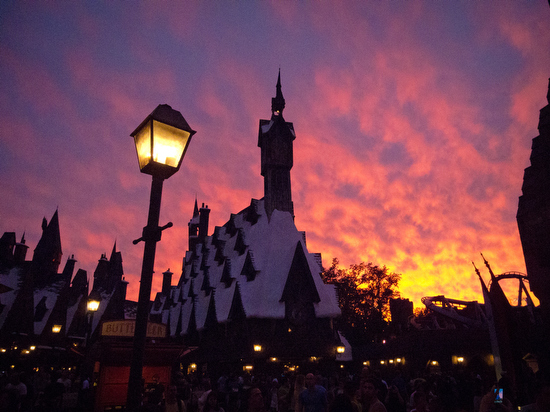
Dorie, my wife , and I hosted the Christians in Photojournalism Atlanta group at our house for a cookout and looking at each others work. These are just a few snaps from our time looking at each others work.


Photos from Projecting Pixels and Cookout Party on April 24th

Tuesday, April 20, 2010

Get out of your seat

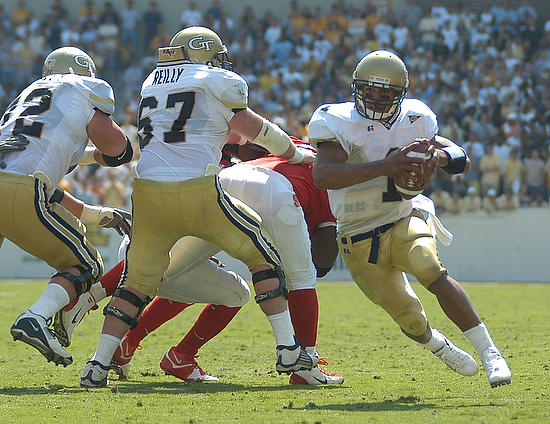
Nikon D2X, Sigma 18 - 125mm, ISO 400, ƒ/7.2, 1/200 [4 - Alienbees B1600s full power on catwalk with 50º parabolic reflectors, triggered by Pocketwizards.
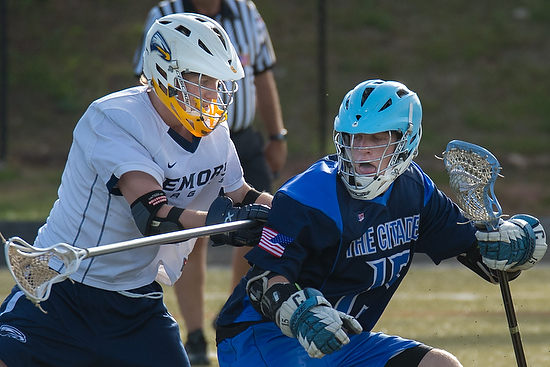
The other night I attended a lacrosse match at the local high school. I went as a spectator. This is rare for me to be at a sports event without my camera equipment.

It was interesting to watch the parents photographing the game. A couple of them were on the sidelines, but the majority stayed in their seats in the stands.

Everyone was shooting with digital cameras. From the simplest cameras to most professional equipment they all had similar focal length lenses that would zoom out to about 200 mm (equivalent on a 35 mm camera). 

Nikon D3, 14-24mm, ISO 450, ƒ/4.5, 1/1000
 At this high school lacrosse match the parents were not being kept off the sidelines by anyone. They kept themselves back from the action!

The difference between what each person was able to photograph varied greatly because of where they were in relationship to the action on the field.

If you want better photos of your kids playing sports (or doing almost anything else) get as physically close to the action as you can. Of course, use some common sense and don’t get in the way of the game or the fans and in a safe spot for you as well.

A famous war photographer said something that applies to sports photography just as it does to war photography. “If the pictures aren’t good enough, you’re not close enough.”

Another key to improving your shots, besides getting out of your seat, is to hold your camera still. The longer the focal length the shakier it can become. Use a monopod. They sell for about $30. I like the Manfrotto Modo 790B Monopod. This will help keep your camera steady and improve the image sharpness. It is easier and faster to use than a tripod.

Most folks stand up when taking pictures. It’s more comfortable than squatting or resting on your knees, but it doesn’t usually give you the best action shots. If you are low to the ground you are shooting up at the athletes. This actually makes them seem more heroic. Shooting from a low angle makes them appear higher off the ground than they are. Staying low on the sidelines is also courteous to the fans in the stands.

Nikon D2X, Sigma 15-30mm, ISO 400, ƒ/5.6, 1/200 [4 - Alienbees B1600s full power in corners bouncing, triggered by Pocketwizards.
Another trick: Be where they are going – not where they are. Get down field and shoot back at the players. Now when the big play happens it is coming to you, not away plus you can see their facial expressions.

Nikon D100, Sigma 120-300mm ƒ/2.8 with 1.4 converter, ISO 200, 1/2000
If the sport you are covering has a ball keep asking yourself this question: Where’s the ball? Most of the peak action, the strong expressions and the competition will be around the ball. This rule doesn’t apply to all your shots, but it is a good one to keep in mind.

If you were covering football you would be on opposite ends of the field depending on if you are covering the offense or defensive players. You want to see the player’s faces and close as possible. The grimaces will show the intensity of the play.

With digital cameras you can take ten pictures, a hundred pictures or even a thousand pictures for about the same cost. So take lots of photos to capture the best moments.
Your kids will probably play these sports for just a few years. Having good photos, in which they can recognize themselves, will be something they cherish for a lifetime.

So get out of your seat and get close to the action. You (and your kids) will be glad you did.

Nikon D4, Sigma 120-300mm ƒ/2.8 w/ 1.4 converter, ISO 900, ƒ/5.6, 1/2000

Let’s sum it up:
  • Get closer.
  • Use a monopod. Fuzzy Photos don’t count
  • Get down, and shoot up – make them heroes.
  • Stay ahead of the action.
  • Where’s the ball?
  • Show the faces/capture the emotion.
  • Take more pictures, it improves your odds.
  • Enjoy the photography and your kids.

Friday, April 02, 2010

Stop Selling Nails


When my wife Dorie graduated from seminary our family took an out of the ordinary vacation to Jamaica. We did the all-inclusive package. All we had to do was enjoy the trip. No worrying about when or where to eat or what to do. We just had fun. I cherish these memories.

You’ve probably splurged on something. Maybe you took a special vacation or found a wonderful restaurant. Most of us have done something fun that is outside our normal budget. These extraordinary times can form memories our families will talk about for the rest of our lives.

Workshops and Seminars
 
Each year I attend a few workshops and seminars to keep me up to date and increase my value to my clients. Years ago some friends suggested that I should splurge and invite the speaker I was impressed with out for a meal to some nice restaurant. At first I was worried that these important people would think I was nuts.


The first time I took a speaker out to eat I expressed this worry. She laughed and said, “No man, I was a peon myself once and not that long ago.” I learned more asking questions and listening during this one-on-one time at a meal with a key person than the rest of the entire conference. By the way, that first speaker I became friends and have kept in touch.

I’ve met others, who were struggling and barely had any money for their own food, but they still took a speaker to lunch. Much later on they told me that the investment in that lunch changed their lives and their business. 

Building Supplies
 
Hardware stores and real estate agents sell entirely different things. Hardware stores sell nails and wood and the prices vary little from hardware store to hardware store. Real estate agents sell what a builder did with what he bought in a hardware store and the prices range all over the place depending what was done with the basic materials.


As we talk with a prospective client does the discussions quickly turning to price and the bottom line? 

The Total Package

Let’s think back to those extraordinary vacations or the meals you treated those special speakers to. Price was not the determining factor. The value of what you got for your money prompted you to take that vacation or buy that person a meal.

If the quality of your work is superior and you have consistently treated your customers with honor, dignity and respect then you have established a brand that will draw clients to you.


If you are aware of how your work defines you in the marketplace and you communicate this effectively to potential customers you will do well. You can compare what you do to your competition or you can just point out all the things that you do for your clients and never mention the competition.

If prospective clients are talking price and bottom line then stop selling nails and wood and start talking about the quality of your work and what you will do for them.

Wednesday, March 17, 2010

It’s Not All About Me, But It All Depends On Me

One of the best things I have learned over the past year about how to grow my business is that it's not all about ME, but it all depends on ME.

Kenneth H. Blanchard who wrote the famous book The One Minute Manager also wrote Raving Fans. I rediscovered him through my client Chick-fil-A. They embrace his concepts and work hard at creating Raving Fans.

Definition of a Raving Fan: One who uses your services more often; pays full price; and tell others about you.
All businesses want and need Raving Fans. So, how do you get them?

First: Your product or service must be superior. Doing business “Good Enough” will make some clients rave about you, but they will not be FANS. Striving for nothing but the best will create genuine fans.

As a photographer I look for a unique angles; something they are not likely to see themselves. “Good Enough” is giving my client a professional version of something they could have seen and done without my help. My photos must WOW them. That’s my obligation to them as a professional.

Creative use of lighting can move my photography from just “Good Enough” to excellent. I need to explore the subject and find the point of view with the most effective use of light. For example, moving a person so that the light from a window creates the main light on their face rather than fighting the glare of the same window behind the subject. I may need to set-up strobes (flashes) to create my own “window light.”

“Good Enough” is scouting a location after joining my client at the shoot. Much better to shout in advance of the shoot and be able to suggest locations for the best light, composition or unique perspective to make photos that standout from the expected.

Second: To win Raving Fans – go the Second Mile in service. In my business I looked for things to do that were not required, but would be valued by my client.

Something I did from the beginning was to deliver my work to my clients on a professional-looking CD or DVD. I printed my logo and sometimes their logo on the disc as well as the date of the photo shoot and other useful information. “Good Enough” is writing the information on the disk with a Sharpie.

Another unexpected and appreciated extra is a quick turn-around delivering the images. When possible I give the client the disc before I leave the shoot.

By watching other businesses it is possible to discover some of the ways they attract fans. Chick-fil-A, for example, works at making a customer feel like a guest in someone’s home. Little things make this happen. They’ll hold the door for folks, carry the trays to the table, refresh their drinks and even give them food occasionally. 


Seeing what other businesses do and finding ways to apply the concept to my business isn’t always apparent. It is a constant struggle to find ways to be more service oriented. We call those who “do it naturally” Ladies and Gentlemen. (The rest of us gotta work at it.)

I believe the whole key to attracting and keeping Raving Fans is to first be sure to deliver a quality product and do so in a professional way. Only if we are doing this will the Second Mile Service have any real impact. No matter how many nice-little-things we do for a client if they are not happy with our product… The point: You Can’t Go The Second Mile If You Didn’t Go The First Mile FIRST.

I’ve found a great second mile touch is a hand written thank you card. Anything hand written is so rare these days that it has an almost unimaginable positive impact.

Third: Another component of creating Raving Fans is establishing an emotional connection with the client. It’s called Friendship.

When my customer becomes more than a paycheck, when I see them as a valuable person, when I come to care about how they’re doing and I’m concerned about their happiness that’s when I discover the true joy of “doing business.”

When business reaches this level going the second mile only seems natural.


This relationship is not going to form with all our clients, but when it does it was worth the trouble and we’ve made a Raving Fan.

A few months ago I ran into a man I knew when he was a teenager. We were talking when he stopped and said, “Last Sunday my pastor said in his sermon that we should tell people what they have meant to us over the years. Well, I want to tell you that you were a major influence on me when I was a kid and I want to thank you for that.”

I want forget that for a long time. Made me feel great and humble at the same time.

We probably didn’t know our clients when they were kids, but there are things we like and appreciate about them that, given the opportunity, perhaps we should tell them.

An easy way to make a fan and a friend is just to listen to them. Maybe over coffee or a meal, just give them the time of day. A friend, after all, is someone who will listen.

I believe this can all be boiled down to this statement: If you want to grow a business, look for ways to serve your customers.

Friday, February 26, 2010

Give yourself an assignment


I just got back from Hawaii and I’m excited. It was my fifth trip to Hawaii to teach, but photographically this was the best trip by far.

Why so? Well this time I had a couple of assignments.

On the drive over to the Hawaii Volcanoes National Park my daughter calls me and says, “Daddy, I need some photos for of the volcano for my class at school. We’re studying the Earth’s crust and I thought the volcano would be a good way to show it.”

Listen, with an extraordinary assignment like that you give it all you got! I knew I needed to do an outstanding job for this client. Besides, this gave me the perfect opportunity to play with my new Nikon D3s.

At the Volcanoes Park I meet this Park Ranger and decide to interview her since she was bound to know more about it than I did (wouldn’t take much).

When I told her about my assignment and the intended audience she knew just what to do. We did the interview in one take. I got the feeling she’d done this before – what a pro.

Here’s what we did from my daughter’s class. You can see it for yourself.


Here’s another assignment I did while on the island.

I’d been to the luau the Island Breeze produces in Kona. I asked the folks at the school where I was teaching if there was a way we could set-up a shoot with these dancers. Don’t tell me luck has nothing to do with anything. One of the dancers with Island Breeze was actually in my class! Brooke Valle, the student, is also a professional dancer and travels the world full-time dancing.

I was able to photograph the women dancers and one of the guys who is a fire dancer. They were excited. We photographed the women one night at the home of Kamehemeha the Great, the first king to rule all the islands. The next night we photographed the fire dancer on the beach.

I used this as an opportunity to show the students how to silhouette the dancers and expose for the sky at dusk, which makes for a great looking sky, but puts dancers in the dark. Then I showed them how to use remote Nikon TTL flashes to light up the dancers and make them pop.

Here are the examples:
Here the dancers are silhouetted.
They are now revealed with the flash.
One of my favorites showing the king's palace in the background.
The dancer is silhouetted.
Now he is revealed with the flash.

These self-assignments, well one assigned by my daughter, forced me to pre-plan. The photographs were better than in past trips and it was a lot of fun.

Want better travel photos? Do some research and preplan. You’ll be glad you did.


Here are some of the student’s first attempts working with studio lighting and off-camera flash after a few days in class.
 
Youth With A Mission Photography School 1 from Stanley Leary on Vimeo.

Wednesday, February 03, 2010

Finding and Keeping Clients


In February I go to Hawaii to teach in a photography school. We’ll cover Lighting, the heart of photography, and Business Practices in Photography, the lifeblood of the business. Below are some of the points we’ll cover that might work for you in your industry.

Finding Clients

Before you start building a database of names determine your niche. Targeting the specific audience you need to address will make your research and set-up time more productive.

Get Organized

Software programs such as Microsoft Office that has Outlook, Word, Powerpoint and Excel are helpful in organizing your material. Also, these programs are integrated with Microsoft Word and facilitate merging your contacts into a snail mail or emailing.

You write one letter and the software will merge your contact information into each letter personalizing it. You can write one email and personalize it to a long list of contacts. 

It is quite common for me to think of a great tip that might help me get some jobs that I send out to a few hundred or thousands of contacts. Instead of the email coming to them with "To whom it may concern," it is personalized with their name, like "Dear Steve." 

What To Do With Collected Contacts

Set-up files in a database for the name of the company, the personal contact’s name, their address and phone numbers, email and website address. Assign each contact to a category.

I specialize in photographing people, but setting up a category for companies who hire photographers that photograph people is too broad. By assigning a contact to a category such as “Education” I can send a promotional piece to only those contacts in the education field. Assigning multiple categories to individual contacts further refines target marketing.

Contact management software has space for making notes. Keep this up-to-date as new information about your client comes to light. Use this field for their Facebook page and other information that don’t fit in any other field.


Time To Party

Parties (some parties) are a good way to build your database. Attend the “after-hours” events many civic and trade organizations sponsor that are designed to promote getting to know people and businesses in the area. Usually held monthly these events are great ways to meet a lot of folks and have fun doing so. It beats sitting at home with a computer.


Work The Room

Be sure you know your two-minute “elevator talk” about your business. Find someone you know. Get them to introduce you to the person to whom they are talking. Exchange business card and ask if you can follow up at another time for coffee or lunch. Be sure to give that person your full attention while you are with them, but move on after about five minutes. Remember, almost everyone in the room is there for the same reason you are, to meet people and find clients.


Be Relevant/Current

I recommend to the students to read industry magazines. Photo District News helps keep photographers informed on happenings in the world of photography. It is filled with the latest trends and techniques, business and legal news and new product reviews.

Contact information for magazines that might be interested in your work can usually be found in the masthead. Many magazines are online today. Read some back issues before contacting them. Offer a story idea to the editor. If you did your homework your idea should reflect the trends that are going on in the industry or plug into the style of that magazine.

Investigate – Dig Deep

Put on your investigative reporter hat and dig around for your niche. Use Google and type in your categories. Combine them with the word “organizations” and you will find many of the trade associations. When you find their websites click on the “About Us” section. It often will help you know the image the company is trying to convey. This is invaluable if you contact them and land an appointment.

Dale Carnegie said it best; “You can close more business in two months by becoming interested in other people than you can in two years by trying to get people interested in you.”

Qualify Your Lead

I know of a photographer who contacted a designer for a couple years. The photographer sent out beautiful newsletters and promotional material. One day the photographer dropped off a portfolio and met the designer. He asked if he was the person that hired the photographers. He said no, that his boss picked the photographers; he just designed the pieces.


Connecting With A Client

If you find common interests with a prospect, you can establish a business relationship. In a prospect’s office look at: pictures and plaques on the wall; the books on the shelf; anything that shows their interest. Commenting on that interest is a good way to start a conversation. People love to talk about their interest. Try to find common ground for a friendship. People are more likely to buy from a friend than a salesman.

Sales consultant Jeffrey Gitomer says, “If you establish common ground with the other person, they will like you, believe you, begin to trust you, and connect with you on a deeper level; a ‘things-in-common’ level. The best way to win the connection is to first win the person.”

Finding clients is hard work. Keeping them is all-important.

Saturday, January 16, 2010

Visual presentations for NGOs


Stanley Teaching
photo by Dennis Fahringer

If a picture is indeed worth a thousand words then a slide show is an entire book.
We’ve all endured dull evenings sitting in the dark looking at someone’s mind-numbing pictures of something they thought we would enjoy.

A slide show audience is usually a captive one; there is no escape. We owe it to those watching to present an interesting, educating even entertaining presentation.

Planning prior to the trip will change a deadly dose of the dulls into a motivating experience for the viewers.

We want know exactly what we will encounter when we arrive at the shoot, but there are some time-honored questions we’ll need to answer in order to tell the NGO’s story.

Listed below are a few guidelines that can help make a visual presentation people will appreciate and with a message they will understand.

Remember the purpose of the presentation: The presentation is to help the non-government organization. In any group, likely to see he presentation, there are possibilities for support for the NGO.

What is the GOAL?

It is to motivate people to action — be it prayer, giving or by becoming involved.

What is the REAL SUBJECT?

It’s people. Not buildings, wells, machinery nor the land. It is okay to photograph these things without people, but this shouldn’t be the focus. Present the NGO in human terms.

Who is the AUDIENCE?

Is it business people, civic clubs, the NGO’s support base, faith groups, agencies that give out grants? Make a list before the trip and look for tie-ins to these groups.

What’s the BUDGET?

What are the travel and post-production expenses? List other cost such as website.

Stay Specific:

Everything can’t be told. Pick the powerful images and subjects.

Perhaps show how the NGO has impacted a person or family. This approach helps the audience connect with those the NGO helps.

Use a storyline to arrange your coverage.
  1. Give an Overview of the Country
    1. Show the town
    2. Show the market place (show faces, how the people dress, their jobs)
  2. Highlight the work of the NGO
    1. Show a family
      1. Group photograph (dinner table)
      2. Individuals
    2. Show the NEEDS
      1. Why do they need the services of the NGO?
      2. What is being provided that meets a need: water, food and shelter?
    3. Show how the audience can support the NGO
      1. How they can volunteer
      2. Financial
        1. Equipment
        2. A Project
        3. Ongoing support of a person or family
  3. Specific Guidelines:
    1. Hold a visual on the screen for no more than ten seconds.
    2. Two to three seconds a shot is long enough for today’s TV and Internet savvy audience.
    3. A two to three minute presentation is ideal for the web. When presenting to a group give short presentations mixing these with a personal story or two. Allow time for questions.
    4. Write for the ear. Use short sentences.
    5. Record an interview and use sections of it in the presentation. People telling their story adds authenticity.
  1. DON'T
    1. Use too many pictures
    2. Show photos with exposure problems, with heads cut off or that need explaining. A picture should tell it's own story.
  2. DO!!
    1. EDIT, EDIT, EDIT. Show the only the best.
    2. Use recorded script.
    3. KEEP IT SIMPLE!!!!!
  3. NOTES:
    1. Visual presentations are easy to update.
    2. Presentations should be tailored to fit the audience.
    3. Visual presentations can be used to get support for an NGO; also the NGO can use the presentation itself.
    4. Leave people wanting more.