Showing posts with label AF-S NIKKOR 28-300mm f/3.5-5.6G ED VR. Show all posts

Saturday, January 14, 2017

Creating the Publicity Photo for the Musical Oklahoma

Nikon D5, AF-S NIKKOR 14-24mm f/2.8G ED, ISO 500, ƒ/4, 1/8000
This morning we spent the time shooting promotion shots for Roswell High School's Theatre performance of Roger & Hammerstein's Oklahoma. We were shooting a variety and then we will pick the one favorite we all have for the 12' x 8' banner that we will put in front of the school.

Nikon D5, Sigma 35mm ƒ/1.4 DG Art, ISO 400, ƒ/8, 1/400
This is me and the setup for shooting the first photo that Dorie my wife took of me. Now I am shooting High Speed Sync of 1/8000 to make the sky go darker and create more of the "Big Sky" look you would have in Oklahoma.

Nikon D5, Sigma 35mm ƒ/1.4 DG Art, ISO 400, ƒ/6.3, 1/4000
This was the first photo we started shooting.

Nikon D5, Sigma 24-105mm f/4 DG OS HSM Art, ISO 400, ƒ/8, 1400
Here you can see my setup. I am using [2] Alienbees B1600 for the lights. To power them I am using the Paul Buff Vagabond batteries. To trigger the lights I am using Pocketwizard AC-9 pugged into the Alienbees B1600 and then into the Pocketwizard TT5. This is receiving the signal from the Pocketwizard TT1 with the AC-3 to dial in the exposures on the camera.

Nikon D5, AF-S NIKKOR 28-300mm f/3.5-5.6G ED VR, ISO 500, ƒ/5.6, 1/8000
I am shooting low again to emphasize the big sky.

Nikon D5, Sigma 35mm ƒ/1.4 DG Art, ISO 400, ƒ/8, 1/640
I tried to keep it simple by not moving all around the farm but rather make use of more time at the same location and vary the camera angle.

Nikon D5, AF-S NIKKOR 28-300mm f/3.5-5.6G ED VR, ISO 100, ƒ/5, 1/4000
Last night we watched the movie of Oklahoma with Shirley Jones starring as Laurey Williams. I feel like this last photo has that same look and feel of the movie.

I wonder which of these might be the banner photo we use to promote the musical Oklahoma.


Here you can get a feel for what we are creating when all the type is added.

Sunday, January 01, 2017

My favorite images from the Chick-fil-A Peach Bowl 2016

Alabama Crimson Tide running back Bo Scarbrough (9) is knocked out of bounds by Washington Huskies defensive back Taylor Rapp (21) during the first quarter in the 2016 CFP semifinal at the Peach Bowl at the Georgia Dome. [Nikon D5, Sigma 120-300mm ƒ/2.8 DG OS HSM | S, Sigma TC-2001 2x, ISO 36000, ƒ/5.6, 1/4000]
This is a sampling of some of my favorite images from the Chick-fil-A Peach Bowl.

Alabama Crimson Tide running back Bo Scarbrough (9) is knocked out of bounds by Washington Huskies defensive back Taylor Rapp (21) during the first quarter in the 2016 CFP semifinal at the Peach Bowl at the Georgia Dome. [Nikon D5, Sigma 120-300mm ƒ/2.8 DG OS HSM | S, Sigma TC-2001 2x, ISO 36000, ƒ/5.6, 1/4000]

Nikon D5, Sigma 120-300mm ƒ/2.8 DG OS HSM | S, Sigma TC-2001 2x, ISO 36000, ƒ/5.6, 1/4000

Alabama head coach Nick Saban and the Crimson Tide. [Nikon D5, AF-S NIKKOR 28-300mm f/3.5-5.6G ED VR, ISO 64000, ƒ/8, 1/1600]
Nikon D5, Sigma 120-300mm ƒ/2.8 DG OS HSM | S, Sigma TC-2001 2x, ISO 32000, ƒ/5.6, 1/4000
Washington Huskies (20) defensive back Kevin King pursues Alabama's (9) Bo Scarbrough. [Nikon D5, Sigma 120-300mm ƒ/2.8 DG OS HSM | S, Sigma TC-2001 2x, ISO 40000, ƒ/5.6, 1/4000]
Alabama Crimson Tide running back Bo Scarbrough (9) scores their first touchdown. [Nikon D5, Sigma 120-300mm ƒ/2.8 DG OS HSM | S, Sigma TC-2001 2x, ISO 66535, ƒ/5.6, 1/4000]
Alabama Crimson Tide quarterback Jalen Hurts looks for running room. [Nikon D5, Sigma 120-300mm ƒ/2.8 DG OS HSM | S, Sigma TC-2001 2x, ISO 45600, ƒ/5.6, 1/4000]
Alabama Crimson Tide quarterback Jalen Hurts looks for running back Bo Scarbrough for hand off. [Nikon D5, Sigma 120-300mm ƒ/2.8 DG OS HSM | S, Sigma TC-2001 2x, ISO 40000, ƒ/5.6, 1/4000]
Alabama Crimson Tide running back Bo Scarbrough (9) runs the ball for a touchdown against the Washington Huskies during the fourth quarter in the 2016 CFP semifinal at the Peach Bowl at the Georgia Dome. [Nikon D5, Sigma 120-300mm ƒ/2.8 DG OS HSM | S, Sigma TC-2001 2x, ISO 51200, ƒ/5.6, 1/4000]
Alabama Crimson Tide running back Bo Scarbrough (9) runs the ball for a touchdown against the Washington Huskies during the fourth quarter in the 2016 CFP semifinal at the Peach Bowl at the Georgia Dome. [Nikon D5, Sigma 120-300mm ƒ/2.8 DG OS HSM | S, Sigma TC-2001 2x, ISO 65535, ƒ/5.6, 1/4000]
Alabama Crimson Tide celebrates Bo Scarbrough (9) 68 yard run for a touchdown against the Washington Huskies during the fourth quarter in the 2016 CFP semifinal at the Peach Bowl at the Georgia Dome. [Nikon D5, AF-S NIKKOR 28-300mm f/3.5-5.6G ED VR, ISO 32000, ƒ/4.2, 1/1600]
Alabama head coach Nick Saban addresses the crowd as the Tide celebrates after the Alabama vs. Washington Peach Bowl College Football Playoff semifinal football game, Saturday, Dec. 31, 2016, at the Georgia Dome in Atlanta, Ga. [Nikon D5, AF-S NIKKOR 28-300mm f/3.5-5.6G ED VR, ISO 1000, ƒ/5.6, 1/100]
Alabama head coach Nick Saban receives the Peach Bowl trophy after the Alabama vs. Washington Peach Bowl College Football Playoff semifinal football game, Saturday, Dec. 31, 2016, at the Georgia Dome in Atlanta, Ga. [Nikon D5, AF-S NIKKOR 28-300mm f/3.5-5.6G ED VR, ISO 1400, ƒ/5.6, 1/100]

Monday, December 19, 2016

Tis The Season for Group Photos


This is a photo taken at the mall near us where you could get your picture with Santa. They created an experience that with Po and his friends you can go on adventure to see Santa. Our son loves Po so we wanted the photo with Po even more than our photo with Santa.

They had created great backgrounds and over all experience to put families with Santa.


The key to group photos is planning -- and how big you plan to use the photo can make a big difference in your planning. We don't hang wristwatches on the wall, because their faces are so small you cannot tell time with them. In most family rooms, you could have a three-inch face clock and tell the time. In a classroom, you might need a 10-inch face. The clock face size is a good rule of thumb for determining whether someone will be recognized in a wall print at a normal viewing distance.

Nikon D5, Sigma 24-105mm f/4 DG OS HSM Art, ISO 900, ƒ/8, 1/100

The more you show in a photograph other than people's faces, the larger the photo needs to be to recognize the people, because their face size will diminish. If your group photo is more for identification, then getting everyone close together where you can see their faces should be the primary goal. Then you can run the photo in a publication and people can tell what everyone looks like.

Nikon D5, AF-S NIKKOR 28-300mm f/3.5-5.6G ED VR, ISO 2000, ƒ/5.6, 1/200 – 2 Alienbees B1600 strobes in a balcony lighting the room
On the other hand, if your photo is more about creating a mood for a poster of, say, a hip-hop band, then you will shoot much looser and space the people out and let their body language help establish the mood. For these concept/mood photos, I like to spread people out and put people at different heights (relative to their faces). I like to think in triangles. If you were to connect the dots (faces) between people, do they make triangles? Create depth by having some people closer to the camera and others further away. This will give it a more three-dimensional feel.

Nikon D5, Nikon 85mm ƒ/1.8G, 4 - Alienbees B1600, 4 - PocketWizard Plus, ISO 100, ƒ/5.6, 1/200
If you go to the music store and look at CD covers of music groups, you can see some of the leading work done in the industry. Try copying some of these until you get the hang of it and can come up with your own concepts.

If you pre-plan and have a good idea and have taken into consideration people's sizes, you will move pretty quickly through the process. If you don't, it goes slowly and your photo may fall apart -- because you will lose the attention and interest of the people in the photo.


Nikon D4, 14-24mm ƒ/8, ISO 100, ƒ/8, 1/200, Off camera Alienbees B1600
In scouting locations in advance, you are not only choosing a location because of the scenery; you are also ensuring you are there at the best time of day for a group photo. Having the sun right behind the group isn't the best technical photo. Sometimes, a location won't work simply because the group isn't available at the right time of day to make the photo.

I have found that if you have done your homework, you can pretty much make any group photo in 10 to 15 minutes. You may get to the location earlier, but the people in the photo should be able to be placed into position immediately -- and then you are just looking for good expressions.

Nikon D5, Nikon D5, Sigma 24-105mm f/4 DG OS HSM Art, ISO 100, ƒ/8, 1/125, Off camera Alienbees B1600

One last thing that can make a great impact on the quality of your photo: either have a laptop computer or TV on location to view the images as you shoot. Virtually all digital cameras will plug into a TV and let you see the image big enough to assess the smallest details -- enabling you to move people only inches and improve the final product.

Thursday, December 08, 2016

Some of my favorite Sports photos

Nikon D3, AF-S NIKKOR 28-300mm f/3.5-5.6G ED VR, ISO 1000, ƒ/8, 1/2000
I just thought I would share some of my favorite sports images that I now have in my most recent "Sports Portfolio."

This first photo is of Kerri Walsh spikes the volleyball against Jenny Krop & teammate Nancy Mason in the 3rd round of the Women's $100,000 AVP Crocs Tour at Atlantic Station in Atlanta.

Nikon D5, Sigma 120-300mm ƒ/2.8 DG OS HSM S, Sigma TC-2001 2x, ISO 36000, ƒ/5.6, 1/4000
Georgia Bulldog's #2 Defensive Back Maurice Smith breaks up the pass to North Carolina Tarheel's #3 Ryan Switzer in their win over UNC 33 to 24 during the Chick-fil-A Kickoff game at the Georgia Dome.

What I love about the photo is there is an anticipation of the big play and we see both the offense and defense in a very competitive and athletic moment. Both players appear to be giving it their all in the moment.

Nikon D5, Sigma 120-300mm ƒ/2.8 DG OS HSM S, Sigma TC-2001 2x, ISO 45600, ƒ/5.6, 1/4000
Georgia Bulldog's Freshman Running Back #35 Brian Herrien Scores his very first collegiate touch down while UNC's Safety #15 Donnie Miles was unable to stop him during tonights Chick-fil-A Kickoff Game at the Georgia Dome.

I love the effort made by both the teams in the moment of competition. This is what the game is all about, getting a touchdown and defending all wrapped up in a split second.

Nikon D100, Sigma 120-300 mm f/2.8 DG EX APO IF HSM, ISO 1600, ƒ/2.8, 1/350
Jaron Nunnemaker attempts to ride Hot Rod during the 2004 RBR Atlanta Classic at the Georgia Dome.

Bull Riding is the wildest and most dangerous event in rodeo. In the American tradition the rider must stay atop the bucking bull for eight full seconds to count as a qualified ride. The rider tightly fastens one hand to the bull with a long braided rope. It is a risky sport and has been called "the most dangerous eight seconds in sports."

Nikon D5, Sigma 120-300mm ƒ/2.8 DG OS HSM | S, ISO 64000, ƒ/2.8, 1/2000
The bulls are rated and even more famous in many ways than the cowboys who ride them. This bull here had 27 consecutive buck offs, now that is 28. A cowboy must stay on the bull 8 seconds for the ride to count. Then they get a score which takes into account the bull they are riding.

Nikon D5, Sigma 120-300mm ƒ/2.8 DG OS HSM | S, ISO 64000, ƒ/2.8, 1/2000
Every once in a while when a bull is determined unrideable the Professional Bull Riders Association has a million dollar ride. At $125,000 per second, this bonus ride is offering one of the largest payouts any athlete has ever received for the amount of time they are required to compete. In comparison, Dallas Cowboys quarterback Tony Romo received roughly $12 million dollars to play in 15 NFL games in 2013.  At 54,000 seconds per season, it took Romo 4,500 seconds to make $1 million.

Nikon D100, Sigma 15-30mm, ISO 400, ƒ/6.7, 1/180
Georgia Tech's #1 B. J. Elder lays up and passes Duke's #2 Luol Deng during second half play at the Alexander Memorial Coliseum in Atlanta, Georgia.

I love basketball and for those teams that take it to the net this is my favorite place to photograph. You get to see the effort in the face expressions and how close they are to either making the basket or defending it.

Nikon D100, Nikon 24-120mm ƒ/3.5-5.6, ISO 400, ƒ/6.7, 1/180
Georgia Tech's #2 Isma'il Muhammad slams one early over NC State's #11 Gavin Grant during play at the Alexander Memorial Coliseum in Atlanta, Georgia.

This is one of those photos most players either love or hate. Love that Isma'l flew over the NC State player Gavin for a slam. It made the ESPN highlights during that week and was played over and over. When Isma'l graduated the coach had a large print made and gave it to him.

Nikon D2X, Sigma 120-300 mm f/2.8 DG EX APO IF HSM, Sigma 2x, ISO 400, ƒ/5.6, 1/3000
Mike Trapani is chased down by Chris Campbell  and finally tagged out by Nick Chigges  of the College of Charleston during play at the Russ Chandler Stadium in Atlanta, Georgia.

I love the steal in baseball and if I am in the right position as here can capture the effort of both offense and defense as they both are trying to advance a base or stop it.

Nikon D2X, Nikon 24-120mm ƒ/3.5-5.6,  ISO 100, ƒ/16, 1/200–[6] Alienbees B1600

Sometimes my favorite moments were when I made the team photo that would help sell tickets for the season. Seeing this photo on the side of buses around town to promote Calvin Johnson and the rest of the Georgia Tech Yellow Jackets 2006 season was a pleasure.

Hope you enjoyed some of the moments in sports of mine through the years.

Monday, December 05, 2016

You ready for snow days?


Nikon D3s, AF-S NIKKOR 28-300mm f/3.5-5.6G ED VR, ISO 5600, ƒ/5.6, 1/8000
Here are just a couple tips that can help you in taking photos in snow. First you can use the scene mode of snow if it exists on your camera. Another option is the beach scene mode. Both of these will get you pretty close.

The downside to using scene mode is the camera doesn't know if you are shooting landscape or action in the snow.

Nikon D3s, AF-S NIKKOR 28-300mm f/3.5-5.6G ED VR, ISO 12800, ƒ/5.6, 1/800
My suggestion is the use the exposure compensation on your camera as a way to compensate for all that white snow.

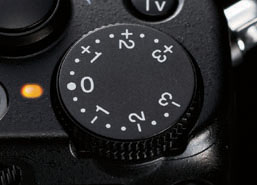
This is the location of the Exposure Compensation on the Nikon D3S. You push this and spin the dial on the back of the D3S to under or over expose the photo.
Now this is in different places on each camera, so get your manual out and look for exposure compensation in the index.

Exposure Compensation Dial on Nikon P7000
Most of today's cameras also have different metering modes. On Nikon I recommend shooting with matrix metering.

Here is what camera settings I suggest for capturing action in the snow.
  1. Matrix Metering
  2. +1 Exposure Compensation – Take test shots and see if needing more or less. Each camera responds a little differently.
  3. Auto ISO
    1. Use the camera suggested latitude ISOs for your camera. I use 100 - 104,000 for my Nikon D5, but only 200-6400 for my Fuji X-E2
    2. Minimum shutter speed of 1/2000 for my Nikon D5 and 1/500 for Fuji X-E2
  4. Aperture Priority – Choosing depth-of-field that is appropriate for the photo. 
  5. Continuous Focus – Single focus mode will lock the focus but if they are sledding to you they will not be in focus. Need to be in continuous mode to track the subjects.
Nikon D3s, AF-S NIKKOR 28-300mm f/3.5-5.6G ED VR, ISO 6400, ƒ/5.6, 1/8000
For many of these photos I decided to shoot as fast as I could at 1/8000. It isn't necessary to stop the motion, but I was just seeing what it looked like and really liked the results.

Nikon D3s, AF-S NIKKOR 28-300mm f/3.5-5.6G ED VR, ISO 5000, ƒ/5.6, 1/8000

Action Shot Tips

  1. Place yourself to where the action is going. For most all these photos I captured the people at the bottom of the hill. this way I captured their expressions and not the backs of their heads.
  2. Don't just shoot action, but reaction and things around the action.
  3. Use your motor drive to capture series of images.
Nikon D3s, AF-S NIKKOR 28-300mm f/3.5-5.6G ED VR, ISO 9000, ƒ/5.6, 1/8000
Here I was at the top of the hill and captured the brother and sister as they came back up the hill. You can still see the excitement. I also purposely composed to show someone at the bottom of the hill or you wouldn't know it was a hill.

Nikon D3s, AF-S NIKKOR 28-300mm f/3.5-5.6G ED VR, ISO 2000, ƒ/8, 1/500
For this photo I was panning with them as they got a push. The idea is to mix up as much as you can the photos so you have captured more of the memories for the years ahead to remind them how everyone was having fun together.

I think I am now ready for some snow.

Sunday, December 04, 2016

Storytelling is the biggest form of entertainment

Nikon D5, AF-S NIKKOR 28-300mm f/3.5-5.6G ED VR, ISO 6400, ƒ/5.6, 1/200
Entertainment is a form of activity that holds the attention and interest of an audience, or gives pleasure and delight. It can be an idea or a task, but is more likely to be one of the activities or events that have developed over thousands of years specifically for the purpose of keeping an audience's attention. Although people's attention is held by different things, because individuals have different preferences in entertainment, most forms are recognizable and familiar. Storytelling, music, drama, dance, and different kinds of performance exist in all cultures, were supported in royal courts, developed into sophisticated forms and over time became available to all citizens. The process has been accelerated in modern times by an entertainment industry which records and sells entertainment products. –– Wikipedia
Fujifilm X-E2, FUJINON XF 18-55mm, ISO 6400, ƒ/5.6, 1/45
During my time in London we stopped by The Globe. The Globe Theatre was a theatre in London associated with William Shakespeare. It was built in 1599 by Shakespeare's playing company. A modern reconstruction of the Globe, named "Shakespeare's Globe", opened in 1997 approximately 750 feet from the site of the original theatre.

I believe photography is one way for us to preserve these storytelling moments and be enjoyed in a new medium and able to be shared to many more than live theater can do. While theater is quite entertaining it is just one way for us to capture the imagination of people. Storytelling is a great way to take the brain hostage and substitute ones own imagination for another person's.

Nikon D5, Sigma 120-300mm ƒ/2.8 DG OS HSM | S, Sigma TC-2001 2x, ISO 3200, ƒ/5.6, 1/100
I love the theater for the same reason I love the movies and TV dramas, they all help me think beyond my imagination. After watching these stories I often find my mind dreaming new dreams made possible by these art forms.

Nikon D5, Sigma 24-105mm f/4 DG OS HSM Art Lens, ISO 160, ƒ/5.6, 1/100
To me the one thing that is just as impactful if caught in such a way that it is a slice of a story is real life. I believe photojournalism is that medium of telling real life stories.

Here is a slice of a wedding which is the first chapter of the couples new life together.

If you want your photography to get better the more your work embodies those real moments that are captured in the best light with a perspective that helps move you along the storyline I think you are going to have a very good chance of hijacking a person's brain from their own dreaming stories to your storytelling.

Nikon D5, Sigma 120-300mm ƒ/2.8 DG OS HSM | S, Sigma TC-2001 2x, ISO 4000, ƒ/5.6, 1/100
Great lighting, great stage direction and acting can really capture an audience's attention. But if you want them to really remember then a sound track can make your story even more memorable.

We all have had a earworm. An earworm, sometimes known as a brainworm, sticky music, or stuck song syndrome, is a catchy piece of music that continually repeats through a person's mind after it is no longer playing. Phrases used to describe an earworm include "musical imagery repetition", "involuntary musical imagery", and "stuck song syndrome".

Also music can just help create mood as much as light does. Music helps us remember storylines and just about anything.

This leads me to what I love doing today the most. Multimedia packages where I combine still images, motion and audio to tell a story.

I do this for companies. Here is just one example:


Storytelling is an art form. The artist is always looking for ways to capture the audiences attention, because you are competing not just with other things demanding their attention, you are competing with their own day dreaming.