Showing posts with label Fujifilm X-E2. Show all posts

Wednesday, March 22, 2017

Storytelling Photo vs Point Photo

Fujifilm X-E2, Fuji XF 55-200mm, ISO 6400, ƒ/4.5, 1/100
"When I take you out in the surrey with the fringe on top!", sings Curly in the musical Oklahoma!

This photo above is the only time on the stage during the entire production of the musical at Roswell High School where the surrey is on stage. This is the one scene that captures the build up of the whole show to where we see what Curly was singing from the beginning of the show promising Laurey how he would treat her on a date.

Nikon D5, Sigma 120-300mm ƒ/2.8 DG OS HSM | S, Sigma TC-2001 2x, ISO 5000, ƒ/5.6, 1/250
This is Ado Annie Cames singing, but because I am isolating her alone only the corn in the background helps to place this with the musical Oklahoma!.

This is what I call a point shot verses the top photo which has much more information and is getting closer to helping to tell more of the story. You still need words with either photo to make it storytelling, but hopefully you are seeing the difference between the scene establishing shot and the closeup.

Fujifilm X-E2, Fuji XF 55-200mm, ISO 1250, ƒ/5, 1/100
Now the reason this photo of Curly and Laurey often works as well as the shot of the surrey is that this particular pose is used often in posters to promote the show. Just Google "Oklahoma! Musical" and look at all the photos and you will see this style shot pop up.

Nikon D5, 28-300mm ƒ/3.5-5.6G ED VR, ISO 500, ƒ/4.5, 1/8000
Here is how I shot a promo shot verses the photo above it is from the show. Now while this doesn't tell the story say as well as having the surrey in the photo, Curly is gesturing about how the future he promises to Laurey is better than where she is now.


Fujifilm X-E2, Fuji XF 55-200mm, ISO 6400, ƒ/4, 1/180
Google "Oklahoma Barn Scene" and you can see variations of other productions that show similar scene. Again this is more of a point photo, but because I included more of the set most theatre folks will know this is the Musical Oklahoma!.

Nikon D5, Nikon 85mm ƒ/1.8G, ISO 100, ƒ/1.8, 1/200
People Need The Lord Photo

"I don't need a lot of 'People Need The Lord' photos," commented Jeff Raymond to a photographer shooting photos with him in the Dominican Republic. "What do you mean?," commented the photographer.

Jeff went on to explain the photo style like the Afghan girl on the front of National Geographic by Steve McCurry. This photo has had such an impact that many people think this is the "BEST" way to shoot.

Give me more context is what Jeff coached the photographer to do in addition to a few portraits.

You see the photo of the boy here could have been shot anywhere in the world.


This is a frame from short movie clip. Notice how the kids in the foreground are close enough to give you a portrait, but including the background gives you more context. Here is the movie and you can see what conditions I was shooting.

Kids playing in Togo, West Africa from Stanley Leary on Vimeo.

Please understand this blog post is not saying Storytelling Photo is better than a Point Photo. What I am saying is you need both.

Nikon D5, Sigma 35mm ƒ/1.4 DG Art, ISO 100, ƒ/1.4, 1/2000
The problem I see with many new photographers is falling in love with the closeup shot at ƒ/1.4 and centered. Then they have only slight variations of this photo in their portfolio.

If you are going to be hired over and over you must be the photographer who gives the client more than they expected. This is why learning how to use a variety of lenses, different apertures and shutter speeds on an assignment will have clients raving about you.

Sure you can do OK shooting the "People Need The Lord" photo, but you are a one trick pony show.

Monday, March 20, 2017

What high school theatre can teach us about Volunteers

Fujifilm X-E2, Fuji XF 55-200mm, ISO 6400, ƒ/4.5, 1/100
Roswell High School had their last show of the musical Oklahoma! yesterday. What a production it was for everyone involved.

Fujifilm X-E2, Fuji XF 55-200mm, ISO 6400, ƒ/4.8, 1/180
Our daughter Chelle was in the musical as Aunt Eller and this is the main reason my wife and I were involved as volunteers.

While there are many other ways I could talk about being a volunteer I thought this was a great way to talk about the roles of the volunteer.

If your organization is using volunteers it is imperative on you to define roles of volunteers so everyone knows what they are doing. Most organizations that regularly use volunteers usually have a volunteer coordinator.

Fujifilm X-E2, Fuji XF 55-200mm, ISO 1250, ƒ/5, 1/100
Now in theater the term role came from literally an actor being given a part. No one had the entire play in the time of Shakespeare. They just had their part. This is why often their role would setup the next actor.

For the play to be successful each person needed to know their part/role.

Think of your organization like a musical to give you an idea how important it is for each person to know their part and for someone to be responsible for coordinating like the director of the show.

Nikon D5, Sigma 120-300mm ƒ/2.8 DG OS HSM | S,  ISO 32000, ƒ/5, 1/500
If you want to see excitement on your volunteers faces like here in the scene from Oklahoma! then you need to make everyone feel like they are part of the team.

Now everyone in this musical except for the two teachers were all volunteers. The student actors could have quit at any time.

By the way very seldom does this not cross someone's mind as a volunteer. The main reason for the thought of quitting coming up is due to communication problems, which are often rooted in poor understanding of volunteers.

Fujifilm X-E2, Fuji XF 55-200mm, ISO 6400, ƒ/4.2, 1/140
Here is a list of some suggestions for you:
  • Developing ways to recognize and reward volunteer efforts
  • Helping volunteers feel welcome and supported
  • Developing and managing policies, procedures and standards for volunteers
  • Looking after the volunteer database and records
  • Planning and goal setting
  • Rostering and organizing volunteers
  • Delegating projects and tasks
  • Managing any associated budgets and expenditure
  • Communicating with people from diverse backgrounds
  • Resolving conflict or managing the grievance process.
Some No-Nos
  • Complaining about a volunteers work
  • Ask people to volunteer and then when they show up not use them
  • Make volunteers wait on you
  • Don't thank your volunteers
Nikon D5, Sigma 120-300mm ƒ/2.8 DG OS HSM | S,  ISO 18000, ƒ/5, 1/500
TIME

The one thing that is the most valuable given by any and every volunteer is their TIME. No matter the person no one's time is more valuable than any other person.

The only time it seems that we are really aware of how valuable our time is seems to be when our time is running out on this earth. Don't be one of those people who doesn't think about how valuable your time and others is until your last days here. Each person's hour of time they donate is the same value as another person.

Now some who read this will disagree with me, but just like this play if one person didn't do their assigned part then it is noticed. An actor doesn't appear on stage at the right moment the other actors have to improv and the plot can be affected in the storyline. 

Just think of the time you had a splinter and how annoying that is and affects the whole body. That is how big of a deal each person's time is to the organization. Something so small will be felt by the body.

Feelings Get Hurt

When people get upset working as a volunteer it can almost always be traced back to miscommunication. Often it is when the role wasn't well defined or just as often is when volunteer shows up and those who are coordinating their time dropped the ball.

Fujifilm X-E2, Fuji XF 55-200mm, ISO 2000, ƒ/5, 1/100
When you take the time to plan and organize your thoughts about using volunteers you can get everyone in step together.

When a plan comes together

I can tell you healthy organizations are the ones that treat everyone's time as precious as gold. When they do the word gets out. People see what is going on and want to join. You see way too many people are aware of volunteering and wasting their time or at least not being treated with the respect due when you are giving away your time.

When a theatre company consistently is putting on great performances it is due to someone coordinating all those volunteers and treating everyone's time a precious.

When respecting people's time you will benefit from more friends and deeper friendships. You see a good relationship is respecting one another's time.

Wednesday, March 01, 2017

Covering a candidates for City Council meeting

L/R Marie Willsey, Lori Henry and Shelley Sears are all running for open spot on the city Council, speaks at Roswell City Council Candidate forum held at the Roswell Community Masjid. [Nikon D5, Sigma 24-105mm f/4 DG OS HSM Art, ISO 2500, ƒ/4, 1/100]
I went to the local Masjid in Roswell to cover three of the candidates running for City Council office.

Why?

I wanted to show that this was pretty historic to show the Masjid hosting the meeting and as well to capture the personalities of those running for office, so that the audience would know about the candidates a little more than before the event. The tiles had Arabic language on them and I included them to show the location of the meeting.

I watched and listened. Each of the candidates running for office was very different from the others.

Shelley Sears was running on her success as a business woman in Real Estate. [Fujifilm X-E2, FUJINON XF 55-200mm, ISO 3200, ƒ/4.8, 1/100]
Shelly Sears was no nonsense business personality. She had a very similar approach of Trump. She wanted everyone to no she was not a politician, but a successful business person. She was running on the platform of we need business people running the city and not politicians.

I noticed she leaned forward more than the other candidates and intentionally chose not to use a microphone. This to me was her visually saying she needs no help at all and can handle it herself. I waited for the moment I thought that show her take control lean forward and tell you how she is going to take control was the best way to capture her.

Marie Willsey has been serving on her homeowners association board. She was seeing this as an opportunity to serve just like she has done for homeowners board, but a bigger stage of the community. She just likes serving. [Fujifilm X-E2, FUJINON XF 55-200mm, ISO 3200, ƒ/4.8, 1/100]
Now Marie Willsey reminded me of the stay at home mom who is involved in community service projects. She was serving on her homeowners board and loved doing this. She saw many of the same things facing the homeowners as those concerns for the larger community.

All the time when she was talking she was smiling. It was important that she came across as friendly and wanting to be seen as someone there to help you. So, I was sure to capture the smile and the warmth she was conveying to the audience.

Lori Henry had served in the past on the City Council. She wanted people to know she understood the issues that are the hotting topics to the community. She wanted to portray herself as scholared candidate on the cities issues. [Fujifilm X-E2, FUJINON XF 55-200mm, ISO 3200, ƒ/4.8, 1/100]
Now the third candidate had been here before. Lori Henry was running at the well educated on the issues candidate. She took issues and explained what needs to change to make a difference.

To capture this I had to look for that expression that showed a lot of thought going into her comments. So I looked for that furrowed brow and intense gaze.

Thought before I shot

As you can see I thought about each person. I felt their presence and looked for ways to capture those things into a visual moment that communicated some of this to the audience through the lens of the camera.

[Nikon D5, Sigma 24-105mm f/4 DG OS HSM Art, ISO 2800, ƒ/4, 1/100]
However First I ...

The very first thing I did was to walk into the room and asses the room technically.

The room had fluorescent as well as tungsten lights. I wrote an earlier blog talking about this here and how to get good white balance.

I basically did a custom white balance using the ExpoDisc and was sure that the shutter speed was no faster than 1/100.

Next I sat on the front row center so I could get a clear shot of the speakers without any distractions. Also I knew I could stand up for a moment and move to the side and get an overall shot at some moment.

I also brought two cameras. The Nikon D5 had a 24-105mm which helped for the over all shot and the three speaking, but then I brought my Fuji X-E2 with the 55-200mm which let me get tight shots of them individually speaking without me leaving my chair.

Once I had all the technical stuff taken care of I then switched my mind over to listening and finding those moments to tell the story.

Workflow

I call all this my shooting workflow. You need to always get the best technical shot as well as getting the moments to tell the story. There is a process that takes place every single time.

Do you have a process? Do you know why you are taking a photo? Do you know who your audience is for your photos? If you don't know these answers then you will not be able to communicate much through your photos.

Wednesday, January 11, 2017

Treat your Camera like a Pen and you will get better photos!

Nikon D5, Sigma 35mm ƒ/1.4 DG Art, ISO 1400, ƒ/1.4, 1/200
If photographers would take photos the way they write all of their photos would most likely be ten times better in quality.

So many people just pick up their camera and point and shoot. Just try and do that with writing. Go ahead and try it. Pick up the pencil or pen and just write.

Nikon D5, Sigma 24-105mm f/4 DG OS HSM Art, ISO 8000, ƒ/4, 1/100
For those of you who use the methodology of "Spray & Pray" how is that working for you? Your percentage of a photo you like is probably better than just clicking one time and moving on.

Fujifilm X-E2, Fuji XF 18-55mm, ISO 320, ƒ/4, 1/100
The famous photographer Ansel Adams first chapter in his very first book was about the concept of previsualization in photography is where the photographer can see the final print before the image has been captured. Adams is often quoted as saying “Visualization is the single most important factor in photography”.

Adams was referring to not just what was in front of the camera, but rather his interpretation of what was in front of him all the way to the print before he clicked the shutter.

The reason most photographers are not producing work like Ansel Adams is because very few have taken the time to think about what they are trying to capture and say with their photos.

Previsualization is applied to techniques such as storyboarding, either in the form of charcoal drawn sketches or in digital technology in the planning and conceptualization of movie scenery make up.

The advantage of previsualization is that it allows a director, cinematographer or VFX Supervisor to experiment with different staging and art direction options—such as lighting, camera placement and movement, stage direction and editing—without having to incur the costs of actual production. On larger budget project, the directors work with actors in visual effects department or dedicated rooms.


At the Warner Bros. Studio Tour London they have displayed the sketches which then are turned into models like here.


After they have done this then they make the actual set that will be used in the movie as you see here for Diagon Alley.


Now compare this set to the street of Cecil Court that most likely inspired J. K. Rowling for Diagon Alley.


This is why Harry Potter the movie is a little more exciting than the just point and shoot of the tourist that I was on Cecil Court. The street has been the inspiration and then the artists create their vision of what they want to use to convey a mood for a story.

Nikon D5, Sigma 120-300mm ƒ/2.8 DG OS HSM S, Sigma TC-2001 2x, ISO 40000, ƒ/5.6, 1/4000
Even in sports the creative photographer is anticipating. I am down field waiting for the action to come to me. I have thought about where I need to be and what I want to capture.

TIP FOR BETTER PHOTOS!

Treat the camera like the pen. Before picking it up and putting it to your eye have some idea of the sentence you are going to write. If you don't you will have only gibberish and that is why your photos don't work. You didn't know why you took the photo and no one else will either.

Take this one step further and have in your mind the caption that will accompany that photograph as well. This will help you know what you are trying to say with your photo.

Wednesday, December 28, 2016

Marketing is no longer about the stuff you make!

Fujifilm X-E2, FUJINON XF 18-55mm, ISO 200, ƒ/4, 1/150
I like to think of still photography as capturing the emotional moments of a story. They are moments however and need a good storyteller to help weave these moments with text/words into a compelling story.

Photographers need to remember it isn't just about the moments that will get them hired. In other words just having images will lack the most important part of getting jobs.


For photographers marketing ourselves is no longer about the photos we make, but the stories we tell that will help us seal those deals.

This is a great insight by John Steinbeck about a great story, “If a story is not about the hearer he [or she] will not listen . . . A great lasting story is about everyone or it will not last. The strange and foreign is not interesting–only the deeply personal and familiar.”

The Five Essential Elements Of A Story - Katie Kazoo says, “A story has five basic but important elements. These five components are: the characters, the setting, the plot, the conflict, and the resolution. These essential elements keep the story running smoothly and allow the action to develop in a logical way that the reader can follow.”

  1. Character – This needs to be developed so that we can feel like we know this person. We can picture them and how they would dress, walk and talk.
  2. The Setting – Great writers like Pat Conroy who does such a great job of writing that if you had never been to Charleston, SC you would recognize it from just reading some of his books.
  3. The Plot – This is how you sequence the events of a story to keep the reader on the edge. 
  4. The Conflict – This can be internal or external and often is a little of both for the main character. 
  5. The Resolution – offer a fitting conclusion, which can be a tragedy or a comedy
This is a great example here of creating a setting for the story by South Carolina's famed writer Pat Conroy as he describes Charleston in his 2009 novel, South of Broad: "I carry the delicate porcelain beauty of Charleston like the hinged-shell of some soft-tissued mollusk. . . . In its shadows you can find metal work as delicate as lace . . . it's not a high-kicking, glossy lipstick city."

Fujifilm X-E2, FUJINON XF 18-55mm, ISO 250, ƒ/4, 1/100
Photography can help in creating these five parts of the story. They can help show what often is difficult to tell without a lot of words.

Fujifilm X-E2, FUJINON XF 18-55mm, ISO 6400, ƒ/5.6, 1/10
To me I am looking for those moments where the expressions on people's faces is what writers often spend pages trying to create using just the text. I often see photos as packing in even more information than the writer attempted. 

When you go to see a movie that a writer's book has been turned into, you will notice over and over where screenwriters, directors and producers must include so much more in the frame of the lens that isn't even described in that type of detail that the camera is giving to the audience.

Fujifilm X-E2, FUJINON XF 18-55mm, ISO 6400, ƒ/3.2, 1/90
Throughout my family vacation I was capturing slices of the memories that will be part of the stories we tell as a family in the years ahead.

When you look at your images that you captured this holiday did you capture slices of the story?

Many will always say yes, but I want to challenge you. Take a moment and think of what the story was this Christmas for your family. Now without thinking of your photos can you just tell the story? Then after telling us the story how many photos do you have that will support this story?

You don't start your storytelling by just clicking randomly. You start with the storyline in your mind.

“The purpose of a storyteller is not to tell you how to think, but to give you questions to think upon.” 
– Brandon Sanderson
Marketing yourself with story is creating the questions for the client to realize they don't have answers to and they need some help. That help is you!

Monday, December 26, 2016

This is the time of year for children

Fujifilm X-E2, FUJINON XF 55-200mm, ISO 1250, ƒ/4.5, 1/100
This is the time of year we celebrate Jesus being born. This is the time of year we celebrate children.

At my church this Christmas eve there is a special service for families with small children that we enjoy going to each year.

Fujifilm X-E2, FUJINON XF 55-200mm, ISO 2500, ƒ/4.8, 1/100
This little boy decided to join our minister in the chair beside her. The minister said as long as you sit you can stay.

Well that was a fun thing to watch unfold.

Fujifilm X-E2, FUJINON XF 55-200mm, ISO 2000, ƒ/5.6, 1/100
I think the minister was enjoying the little boy as much as he liked being treated like an adult.

The more I travel the more I see that children are much more welcomed into services around the world than we do here.

Nikon D5, Sigma 24-105mm f/4 DG OS HSM Art, ISO 4500, ƒ/4, 1/100
Here all the kids are so well behaved here in Togo, West Africa. However they do walk around in the service to the mothers and family.

Children can bring you joy.

Nikon D5, Nikon 85mm ƒ/1.8G, ISO 4500, ƒ/4, 1/100
Take the time to enjoy moments and capture them to show others what you value and also to teach children what you value.

Photography has the power to help communicate our values. When it comes to faith capture those moments that shape your morals and values for your family.

1 Timothy 4:12 Don’t let anyone look down on you because you are young, but set an example for the believers in speech, in conduct, in love, in faith and in purity.
Fujifilm X-E2, FUJINON XF 55-200mm, ISO 1250, ƒ/5.6, 1/100
 Children are paying attention to all we do and how we act.

Fujifilm X-E2, FUJINON XF 55-200mm, ISO 2500, ƒ/5.6, 1/100
John 1:12 Yet to all who did receive him, to those who believed in his name, he gave the right to become children of God.

Sunday, December 04, 2016

Storytelling is the biggest form of entertainment

Nikon D5, AF-S NIKKOR 28-300mm f/3.5-5.6G ED VR, ISO 6400, ƒ/5.6, 1/200
Entertainment is a form of activity that holds the attention and interest of an audience, or gives pleasure and delight. It can be an idea or a task, but is more likely to be one of the activities or events that have developed over thousands of years specifically for the purpose of keeping an audience's attention. Although people's attention is held by different things, because individuals have different preferences in entertainment, most forms are recognizable and familiar. Storytelling, music, drama, dance, and different kinds of performance exist in all cultures, were supported in royal courts, developed into sophisticated forms and over time became available to all citizens. The process has been accelerated in modern times by an entertainment industry which records and sells entertainment products. –– Wikipedia
Fujifilm X-E2, FUJINON XF 18-55mm, ISO 6400, ƒ/5.6, 1/45
During my time in London we stopped by The Globe. The Globe Theatre was a theatre in London associated with William Shakespeare. It was built in 1599 by Shakespeare's playing company. A modern reconstruction of the Globe, named "Shakespeare's Globe", opened in 1997 approximately 750 feet from the site of the original theatre.

I believe photography is one way for us to preserve these storytelling moments and be enjoyed in a new medium and able to be shared to many more than live theater can do. While theater is quite entertaining it is just one way for us to capture the imagination of people. Storytelling is a great way to take the brain hostage and substitute ones own imagination for another person's.

Nikon D5, Sigma 120-300mm ƒ/2.8 DG OS HSM | S, Sigma TC-2001 2x, ISO 3200, ƒ/5.6, 1/100
I love the theater for the same reason I love the movies and TV dramas, they all help me think beyond my imagination. After watching these stories I often find my mind dreaming new dreams made possible by these art forms.

Nikon D5, Sigma 24-105mm f/4 DG OS HSM Art Lens, ISO 160, ƒ/5.6, 1/100
To me the one thing that is just as impactful if caught in such a way that it is a slice of a story is real life. I believe photojournalism is that medium of telling real life stories.

Here is a slice of a wedding which is the first chapter of the couples new life together.

If you want your photography to get better the more your work embodies those real moments that are captured in the best light with a perspective that helps move you along the storyline I think you are going to have a very good chance of hijacking a person's brain from their own dreaming stories to your storytelling.

Nikon D5, Sigma 120-300mm ƒ/2.8 DG OS HSM | S, Sigma TC-2001 2x, ISO 4000, ƒ/5.6, 1/100
Great lighting, great stage direction and acting can really capture an audience's attention. But if you want them to really remember then a sound track can make your story even more memorable.

We all have had a earworm. An earworm, sometimes known as a brainworm, sticky music, or stuck song syndrome, is a catchy piece of music that continually repeats through a person's mind after it is no longer playing. Phrases used to describe an earworm include "musical imagery repetition", "involuntary musical imagery", and "stuck song syndrome".

Also music can just help create mood as much as light does. Music helps us remember storylines and just about anything.

This leads me to what I love doing today the most. Multimedia packages where I combine still images, motion and audio to tell a story.

I do this for companies. Here is just one example:


Storytelling is an art form. The artist is always looking for ways to capture the audiences attention, because you are competing not just with other things demanding their attention, you are competing with their own day dreaming.

Monday, November 28, 2016

London taught me that creating an EXPERIENCE is important in business

Fujifilm X-E2, FUJINON XF 18-55mm, ISO 6400, ƒ/4.5, 1/220
In business your product is just part of why people will do business with you. Now if your product is on par with the rest of the industry then the other thing that people are paying for is EXPERIENCE.

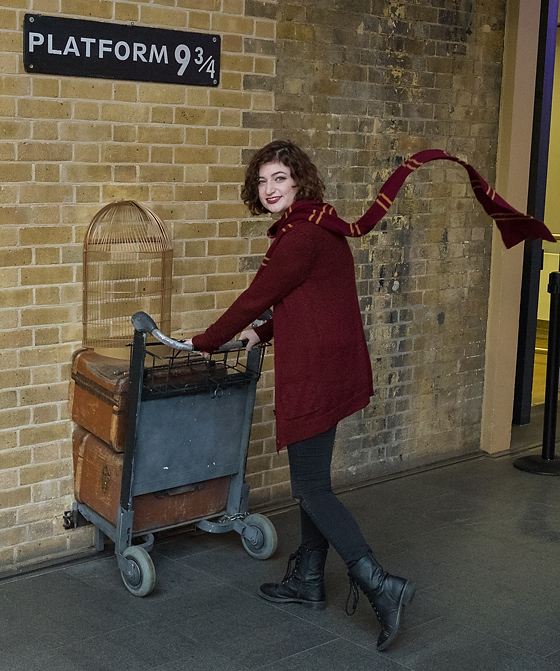
We just spent our vacation traveling to London for an EXPERIENCE. One of the major things we were paying to enjoy was to relive the Harry Potter movies. We wanted to experience the movies as if we were there in them. So here we went to Kings Crossing Train Station to 9 3/4 to get our pictures made as if we were going through the wall onto Hogwarts.

Fujifilm X-E2, FUJINON XF 18-55mm, ISO 2500, ƒ/2.8, 1/100
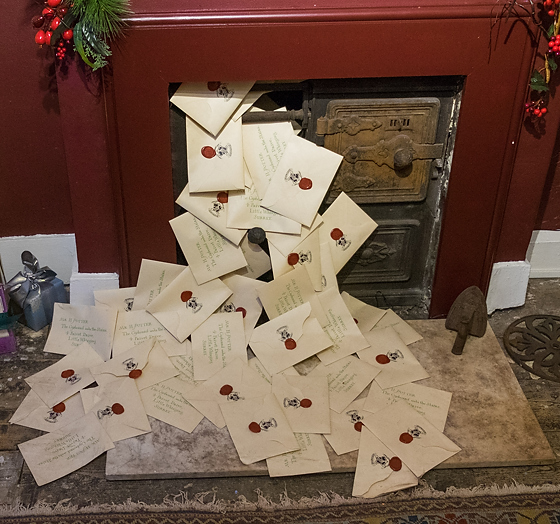
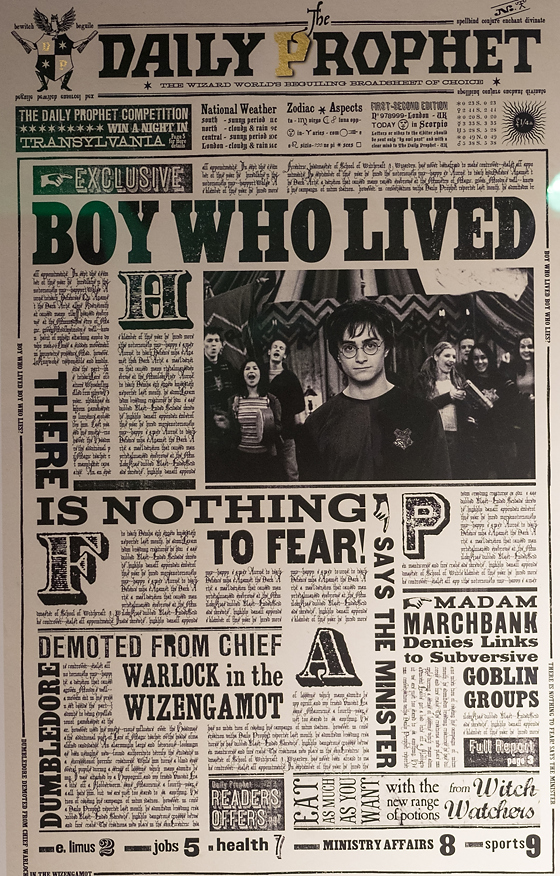
We went to the House of Minalima. Miraphora Mina and Eduardo Lima met in 2002 when a happy coincidence of fates meant they were to work together as graphic designers on the Harry Potter film franchise. Here they had a unique opportunity to establish the visual graphic style from the outset of the productions. The design aesthetic they created for Harry Potter is still sought after, be it designing collectable merchandise or collaborating on the much anticipated Warner Bros Studio Tour.

Rather than just have a store with items on the shelf they created a self guided tour of their artwork and created moments like we remember of Harry Potter's invitation letter to Hogwarts. They created an EXPERIENCE for us to enjoy.

Fujifilm X-E2, FUJINON XF 18-55mm, ISO 640, ƒ/3.6, 1/100
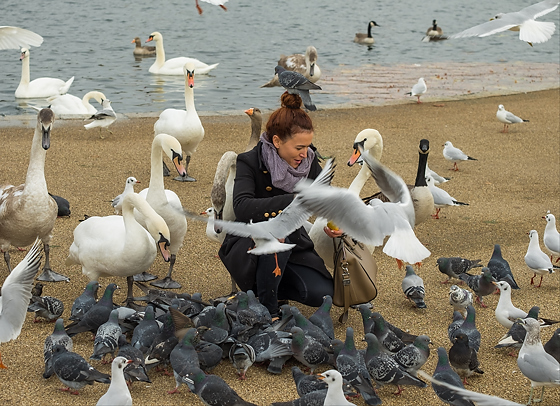
One of the biggest phenomena's in the past few years as related to photography has been the selfie. While we have always done some form of this with photography through the years the selfie stick came along to help us include more people in our photos.

Fujifilm X-E2, FUJINON XF 55-200mm, ISO 800, ƒ/5.6, 1/100
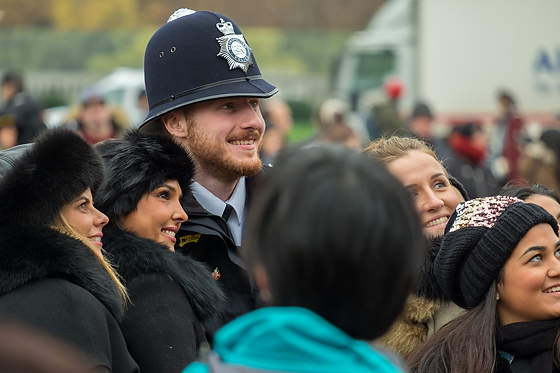
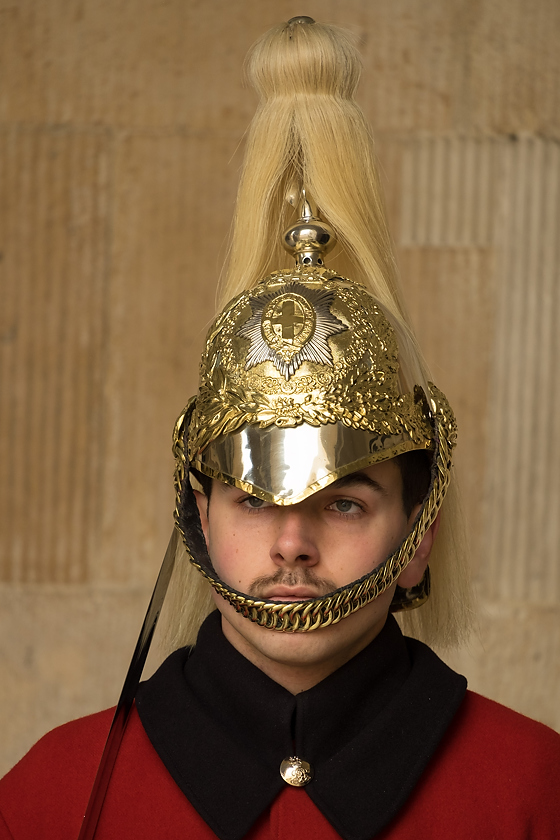
Here you can see all the women getting in close to the London Bobby to get their photo made with him. It is an experience that not only are they having they are now sharing this in their social media. Then their friends will comment on how much they: like, love or other ways of expressing their joy of the photo.

Fujifilm X-E2, FUJINON XF 18-55mm, ISO 640, ƒ/3.6, 1/100
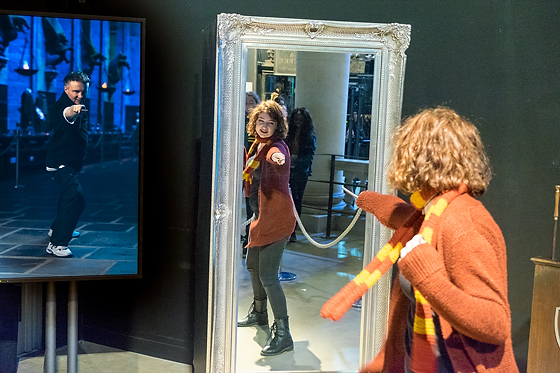
In the Harry Potter tour at the Warner Brother's Studio outside of London they had different things you could do on the tour. Here my daughter is being taught how to dual with a wizarding wand using a mirror to see her style as compared to the teacher on the TV screen to the left.

Fujifilm X-E2, FUJINON XF 18-55mm, ISO 6400, ƒ/10, 1/70
We went on a Harry Potter Muggles tour where they showed us some of the filming spots in London as well as take us to places like Collier Street which was J. K. Rowling's inspiration for Diagon Alley.

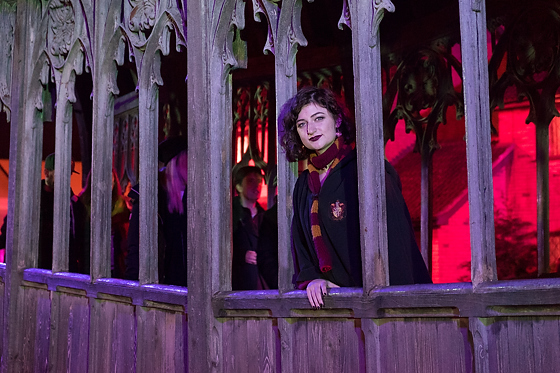
Notice the tour guide is dressed in Gryffindor attire and looks like she could easily just walked off the set of the movie. To help us with the EXPERIENCE she had screen shots of the movie [in her hand] that she would pull out at different stops and pass around to help us see in the movie what we were EXPERIENCING first hand.

Fujifilm X-E2, FUJINON XF 18-55mm, ISO 6400, ƒ/3.2, 1/75
Now my daughter dressed up in her Gryffindor robe and enjoyed not only having people ask to be photographed with them, but she was excited to see this guy dressed up as Newt Scamander from the latest movie Fantastic Beasts and Where to Find Them.

Even last night I heard my daughter yell out that the guy dressed like Newt was in another documentary she just saw. Again it is about an EXPERIENCE.

Fujifilm X-E2, FUJINON XF 18-55mm, ISO 6400, ƒ/4, 1/45
One of my daughter's favorite scenes from the Harry Potter series is when Harry Potter talks with Remus Lupin on the Bridge. She is standing where they stood when they filmed that scene. What an EXPERIENCE it was for her.

Fujifilm X-E2, FUJINON XF 18-55mm, ISO 6400, ƒ/5, 1/90
For me it was the scale model of Hogwarts that just let me see the detail for which they created this mystic place that captured me the most.

Question for You

What are you doing to create an EXPERIENCE that people will tell their friends about and want to do business with you.

Fujifilm X-E2, FUJINON XF 55-200mm, ISO 200, ƒ/5.6, 1/200
Can you see your customers smiling at certain points in their interactions with you and your company?

Can you think of something that can create more of an EXPERIENCE than you are doing now?

Fujifilm X-E2, FUJINON XF 55-200mm, ISO 400, ƒ/4.8, 1/110
My trip to London just reminded me that all those little details like clothing can help create something that keeps people traveling from all over the world to get the EXPERIENCE first hand.

Most importantly for everyone in business is to concentrate of creating a great PRODUCT and creating an EXPERIENCE that separates you from everyone else.