Showing posts with label Sigma 2x EX DG APO Autofocus Teleconverter. Show all posts

Sunday, May 31, 2015

Turning into a Bird Watcher

Fuji X-E2, FUJINON XF 55-200mm, ISO 4000, ƒ/4.8, 1/500
Do you feel like a little kid all excited about a subject you get to photograph? I know I do and lately since we have a nice bird feeder and have been blessed by a variety of birds at the feeder.

Here we have the male purple finch and the Red Headed Woodpecker on our feeder. This is something that connects me to the past. My grandparents loved their feeders and I remember them talking about the birds as they visited.

Fuji X-E2, FUJINON XF 55-200mm, ISO 5000, ƒ/4.8, 1/500
I was surprised the woodpecker stayed for so long on the feeder just chillin. It was lightly raining and I guess just like we enjoy a shower to relax us maybe the bird was relaxing to all the rain.

Nikon D4, Sigma 120-300mm ƒ/2.8 DG OS HSM | S,  Sigma 2x EX DG APO Autofocus Teleconverter, ISO 25600, ƒ/5.6, 1/2000
Another thing I really get excited about is sports photography. As I was going through my college negatives the other day I noticed how much more I shot at a typical game than a typical assignment. Well it is much more difficult to get a good action shot than an environmental portrait.

Nikon D4, Sigma 120-300mm ƒ/2.8 DG OS HSM | S,  Sigma 2x EX DG APO Autofocus Teleconverter, ISO 25600, ƒ/5.6, 1/1600
When you find yourself totally absorbed and lost in something take note of it. This is most likely where your strengths lie. This is something you need to nurture.

Nikon D4, Sigma 120-300mm ƒ/2.8 DG OS HSM | S,  Sigma 2x EX DG APO Autofocus Teleconverter, ISO 14368, ƒ/5.6, 1/2000
Sometimes as I have found you don't have to go any further than your own backyard.

Monday, December 29, 2014

Covering meeting with the Sigma 120-300mm ƒ/2.8 DG OS HSM S plus 2X converter

Nikon D4, Sigma 120-300mm f/2.8 DG OS HSM w/ Sigma 2x, ISO 5600, ƒ/5.6, 1/100 
This morning I was covering the FCA Chick-fil-A Peach Bowl Breakfast at the Marriott Marquis where both the TCU and Ole Miss football teams were hosted by the master of ceremonies Ernest Johnson, Jr. who is a sportscaster for Turner Sports.

Nikon D4, Sigma 120-300mm f/2.8 DG OS HSM w/ Sigma 2x, ISO 12800, ƒ/5.6, 1/200
Aeneas Demetrius Williams is a former American football cornerback and free safety, who played with the Arizona Cardinals and St. Louis Rams of the National Football League (NFL). He was the featured speaker today at the FCA Chick-fil-A Peach Bowl Breakfast — at Atlanta Marriott Marquis.

Couple of things that I was trying to be sure I captured was the number of folks at the event, the new logo for the Bowl this year and couple moments here and there.

Here is a small sample of some of the coverage.


When covering an event like this, you really need some long glass or you will be needing to be between the audience and the speakers.

Nikon D4, 14-24mm, ISO 12800, ƒ/4.5, 1/60
This wide shot is shot from the same place I shot the two top photos. The difference is 14mm lens vs. a 600mm lens.

When you are in a banquet facility where the size of the room is a football field you need to bring the same glass you would to cover a football game. The reason you need the long glass is you just cannot get the subject to fill the frame enough from some of the places you need to shoot from due to logistics.

Wednesday, December 03, 2014

Following UGA Head Coach Mark Richt for a game assignment

Click here for online version
Decision Magazine hired me to follow UGA head coach Mark Richt. I was asked to also get photos of his wife Katharyn Richt.

If it worked out I was to try and get photos of them together. That never happened, but I stuck with the coach and his wife the day.

Nikon D4,  Sigma 120-300mm f/2.8 DG OS HSM, Sigma 2x EX DG APO Autofocus Teleconverter, ISO 1250, ƒ/5.6, 1/2000
I arrived really early and met Katharyn early sitting in the stands.

Nikon D4, 28-300mm, ISO 900, ƒ/5, 1/2000
While this will win no awards it is starting with the safe shots to be sure I had some good expressions.

Nikon D4, 14-24mm, ISO 400, ƒ/16, 1/500–Nikon SB900 fill flash -1EV
I liked this photo much better even tho I cannot see her face as well she is doing what she does every game to help support the team and Mark.


The magazine picked that photo and one more of Mark interacting with one of the players.

Nikon D4,  Sigma 120-300mm f/2.8 DG OS HSM, Sigma 2x EX DG APO Autofocus Teleconverter, ISO 1600, ƒ/5.6, 1/2000
Now at this point in the season the top running back in the country is UGA #3 Todd Gurley. I really tried to get a photo of him with the coach. The best I did that day was this shot, but the ƒ/5.6 was too shallow to show Mark clearly in the photo in the background.

Nikon D4,  Sigma 120-300mm f/2.8 DG OS HSM, Sigma 2x EX DG APO Autofocus Teleconverter, ISO 450, ƒ/5.6, 1/2000
Mark Richt is on the far right with headset. Well I just missed it. Just a few days later the suspension by the NCAA came out so he was definitely out of the magazine piece. It would have pulled the attention away from the storyline.

Here are the selects that I gave the editor.

Sunday, September 28, 2014

What to include or exclude in a photo

Nikon D4, Nikon 85mm ƒ/1.8G, ISO 140, 1/100
Theater

A great place to practice your craft is in the theater. For this production of Steel Magnolias at Roswell High School I sat on the back row and for a good reason.

On the back row you are able to see the feet of the actors whereas on the front row you often find the angle has you missing their feet. Another great reason is you are able to shoot above the heads of the audience and be somewhat out the the view of the audience.

Nikon D4,  Sigma 120-300mm f/2.8 DG OS HSM, Sigma 2x EX DG APO Autofocus Teleconverter, ISO 1250, ƒ/5.6, 1/100
You can use your long glass for more than a football game. Here I am shooting on a monopod and sitting on the back row. I am shooting zoomed in with a 600mm lens at ƒ/5.6.  You can see from the first photo to this one I am able to get pretty tight on the actors on the stage.

So do you shoot wide or tight? The answer is simple—BOTH.

Lighting

The good news is the stage crew and lighting crew have taken care of just about everything for you. Here I just set the white balance to tungsten and found the correct exposure and just shot away. The lighting changes just once in the production to a darker scene, which made the color temperature a little warmer.

Nikon D4,  Sigma 120-300mm f/2.8 DG OS HSM, Sigma 2x EX DG APO Autofocus Teleconverter, ISO 1600, ƒ/5.6, 1/100
I prefer shooting with a cinematic approach. This is where you are thinking of filling the frame that the viewer will experience the photos, which is assuming more of the size screen in a movie theater. The size is more about proportions of 16x9 or 3x2.  You are not thinking of cropping to a square or vertical.

Nikon D4,  Sigma 120-300mm f/2.8 DG OS HSM, Sigma 2x EX DG APO Autofocus Teleconverter, ISO 1800, ƒ/5.6, 1/100
I choose to fill the frame of my Nikon D4. This means I am watching the frame edges to see what to include or exclude. Here in this photo I am letting the actors on either side determine the width and I am watching the curtains and the feet to be sure they have a little room. Too much higher and you see the top of the set.

Nikon D4,  Sigma 120-300mm f/2.8 DG OS HSM, Sigma 2x EX DG APO Autofocus Teleconverter, ISO 1250, ƒ/5.6, 1/100
Now I am also thinking about what the play is all about. They are in a hair salon and when I think of this place I think of the gossip that goes on. So in this photo while I could have cropped in to just show the two on the right a lot tighter. I am letting the actress sitting and the photo up on the wall both show how this is a place for eavesdropping.

Nikon D4, Nikon 85mm ƒ/1.8G, ISO 140, 1/100
Sometimes I am including more around the edges to help establish the scene, which is inside a High School theater. I am intentionally showing the audience as they watch the production.

Nikon D4,  Sigma 120-300mm f/2.8 DG OS HSM, Sigma 2x EX DG APO Autofocus Teleconverter, ISO 1600, ƒ/5.6, 1/100
Now in this last photo you can see that the bottom of the photo is just including the bottom of the chair and the top is including the photos on the wall. Those photos are then proportioned left to right to again keep the full frame filled. Now if this were for a print piece I may crop a little on the left and right, but this is a great example where you make the very best you can of the composition. I tried to go tighter, but thought the bottom of the chair helped to anchor this photo much better.

Fuji X-E2, FUJINON XF 55-200mm, ISO 4000, ƒ/4.8, 1/500
I went back the second night to get some photos with the second cast of the show. I decided to shoot some of these photos with my Fuji X-E2 with the FUJINON XF 55-200mm ƒ/4.8 lens. This worked great.

Fuji X-E2, FUJINON XF 55-200mm, ISO 4000, ƒ/4.8, 1/500
Here is a small collection from the show. Can you see why I composed the shots as I did for these? Maybe you would do something different.


Tuesday, September 23, 2014

Peak Action + Exposure/Focus + Post Processing = Great Football Action Photo

Nikon D4,  Sigma 120-300mm f/2.8 DG OS HSM, Sigma 2x EX DG APO Autofocus Teleconverter, ISO 1100, ƒ/5.6, 1/2000
If Ansel Adams shot football games the way many photographers do he would have never become famous.

Ansel Adams is not a great photographer because he was able to capture a great moment and compose it in a compelling way. He is a great photographer because he went beyond just the capture and spent literally months trying to process and print images just right.

Today's cameras help you capture the zone system with little skill required by the photographer. This is the problem today. Too many photographers shoot football games for example and just crop the photograph and then publish the photo.

Same photo as above but this is with no post processing other than slight crop.
Post Processing is Key

You can see the difference between the photo above that I took into Adobe Lightroom and worked on to give me the results above, verses the same Nikon RAW NEF file exported from PhotoMechanic to a JPEG after a slight crop.

Here is another example for you to see the comparison.

Nikon D4,  Sigma 120-300mm f/2.8 DG OS HSM, Sigma 2x EX DG APO Autofocus Teleconverter, ISO 500, ƒ/5.6, 1/2000

No processing other than slight crop
Comparing the Histogram on top photo

Before
After
You are not trying to get a perfect bell curve histogram. You are trying to be sure that in the top histogram you can see a lot of information on the far right. This is the details being blown out. Recovering this by sliding your highlights to the left to recover that information.


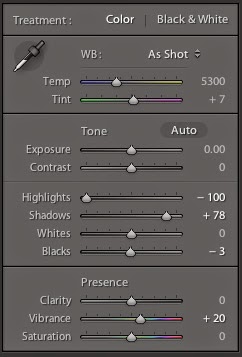
These are just the adjustments I did for the top photo. Notice with the middle of the day light the inside of the helmets tends to go black from the shadows and the highlights are blown out. I am trying to open up the shadows and recover the highlights.


Here you can see the area that I then dodged in the photo to be sure you could see the player's face. Here are the actual slider settings for the dodge here:


RAW vs JPEG

I understand that shooting RAW takes more space and more time to process than just shooting a JPEG and using that image. I hope I have established this is not the way to make your work stand out.

With the RAW image you have all the information that landed on the CMOS chip of the Nikon D4. I have more dynamic range in this file than can be seen by my computer monitor.

With a JPEG the camera's computer makes some assumptions and then tosses out some of that information to save on space for your image file size.

Couple of things that if you shoot JPEGs for daytime football that will become difficult for you to correct later in post processing.

First of all if your white balance is not just perfect and you want to correct it later the nuances of color shifting this to what is possible is no longer there. You have tossed out some of that information.

Second all the information in those blown out highlights is no longer there. Your ability to add folds back into those white jerseys for example will not be possible.

Third the amount of information in those shadows is also lost. The camera software assumed you wanted those areas black and therefore you have less information there to open up those shadows.

Nikon D4,  Sigma 120-300mm f/2.8 DG OS HSM, Sigma 2x EX DG APO Autofocus Teleconverter, ISO 900, ƒ/5.6, 1/2000
Which photo do you prefer? This one just above or the one just below?


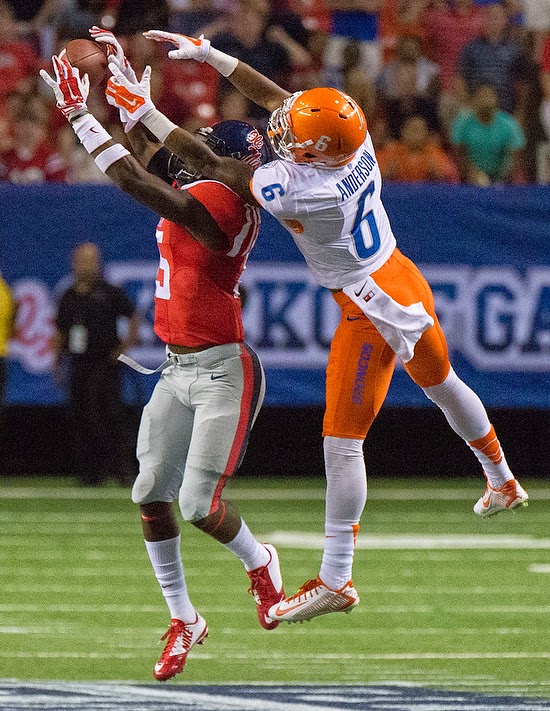
When it comes to evaluating the two photos there is one thing that I look for in sports photos that is hard to see in the second unprocessed image—expression. I believe your sports photos are better when you can show the expressions of the athletes you help communicate the effort and competition of the peak action.

Notice the highlights that are blown out in the lower photo and how many of the shadows are just too dark.

Post processing matters with your photos. Do more than just crop your photos and add captions and you will stand out from the pack.

Wednesday, September 17, 2014

Covering Football: Action, Reaction and more

Nikon D4,  Sigma 120-300mm f/2.8 DG OS HSM, Sigma 2x EX DG APO Autofocus Teleconverter, ISO 28735, ƒ/5.6, 1/2000
ACTION!

The most obvious photos from a football game are the action during the game. If you only shoot this you will miss a good amount of what the game is all about.

Nikon D4,  Sigma 120-300mm f/2.8 DG OS HSM, Sigma 2x EX DG APO Autofocus Teleconverter, ISO 51200, ƒ/5.6, 1/1600
REACTION

The fans really care about the game and the outcome. Don't spend all your time looking at the action on the field look into the stands for the reaction to plays.

Nikon D4,  Sigma 120-300mm f/2.8 DG OS HSM, Sigma 2x EX DG APO Autofocus Teleconverter, ISO 25600, ƒ/5.6, 1/2000
Go back and shoot more action. It is best to get the big plays. It is the time in between plays that you can turn the camera away from the field.

Nikon D4,  Sigma 120-300mm f/2.8 DG OS HSM, Sigma 2x EX DG APO Autofocus Teleconverter, ISO 25600, ƒ/5.6, 1/800
A lot happens in those stands. Keep your ears tuned in around you as well as your eyes.

Nikon D4,  Sigma 120-300mm f/2.8 DG OS HSM, ISO 25600, ƒ/5.6, 1/1000
After major touchdowns many schools cheerleaders have traditions of celebrating on sideline or like here in the endzone.

Nikon D4,  Sigma 120-300mm f/2.8 DG OS HSM, Sigma 2x EX DG APO Autofocus Teleconverter, ISO 25600, ƒ/5.6, 1/2000
After big plays like this one you will find fans reacting.  Sometimes you will see coaches on the sidelines interacting with the referees.  

Nikon D4,  Sigma 120-300mm f/2.8 DG OS HSM, Sigma 2x EX DG APO Autofocus Teleconverter, ISO 28735, ƒ/5.6, 1/2000
The idea is if you are at a game it is a big event with a lot of people doing different things and roles.

Nikon D4,  Sigma 120-300mm f/2.8 DG OS HSM, Sigma 2x EX DG APO Autofocus Teleconverter, ISO 18102, ƒ/5.6, 1/2000
There are the bands that perform before the game, during the game and at half time. They practice as much as the football team. It is a major performance for them.

Nikon D4,  Sigma 120-300mm f/2.8 DG OS HSM, Sigma 2x EX DG APO Autofocus Teleconverter, ISO 10000, ƒ/5.6, 1/2000
Not so obvious

Nikon D4,  Nikon 14-24mm ƒ/2.8, ISO 560, ƒ/5.6, 1/100
I take photos of people on sidelines that I work with during games. I try and then send them a copy of the photo. This helps to build relationships so that the next game when I need some help with access these friends are now seeing me as someone they want to help.

Look for different angles

Nikon D4,  Sigma 120-300mm f/2.8 DG OS HSM, Sigma 2x EX DG APO Autofocus Teleconverter, ISO 25600, ƒ/5.6, 1/1600
I like to go up into or onto press boxes to get a different perspective of the game. Don't shoot all the action from the same position the entire game. On the other hand don't move around so much that you are missing action because you are always moving.

Nikon D4,  Sigma 120-300mm f/2.8 DG OS HSM, Sigma 2x EX DG APO Autofocus Teleconverter, ISO 25600, ƒ/5.6, 1/800
Hopefully you will have editors cheering with your coverage. The key is to give them variety and hopefully these tips will have you looking for different photos at your next football game.

Nikon D4,  Nikon 14-24mm ƒ/2.8, ISO 4000, ƒ/9, 1/200
Don't leave early

Stay shooting after the game. There are still photos to be made.

Nikon D4,  Sigma 70-200mm f/2.8 EX DG APO OS HSM, ISO 800, ƒ/5.6, 1/100

Monday, January 28, 2008

Anatomy of a Sports Photography Assignment

Last month, I covered Boston College's victory over Georgia Tech in Atlanta. Here are a few of my photos from the game, along with some thoughts on my approach to shooting the assignment.

First, when covering a football game, I like to stand behind the end zone so the team I'm focusing on is facing me. That way, I am already where they are trying to go.

There are two types of photos you can get of a team from this vantage point -- defense and offense. The great thing is you can see the players' faces, which for me is very important.

Nikon D2X, Sigma 120-300mm f/2.8 DG EX APO IF HSM, Sigma 2x EX DG APO Autofocus Teleconverter, ISO 1600, ƒ/4, 1/500
In this photo, for example, Boston College wide receiver Kevin Challenger spins loose from Georgia Tech defensive back Avery Roberson, setting up Boston College's first touchdown. What I like in the photo is you can see Challenger's face, along with the defensive player he left in the dust and the ball.

In sports with a ball, I am typically looking for three things: (1) peak action, (2) the ball and (3) competition. Sometimes you can't get all three in a picture, but if one element stands out, the photo will still work.

Nikon D2X, Sigma 120-300mm f/2.8 DG EX APO IF HSM, Sigma 2x EX DG APO Autofocus Teleconverter, ISO 1600, ƒ/4, 1/500
In this photo, BC receiver Rich Gunnell is tackled by Georgia Tech safety Djay Jones and teammate cornerback Pat Clark after a catch. While you cannot see the ball or their faces, the peak action of the players' feet off the ground communicates the effort.

After one team is ahead in a game, I often begin to focus on the other team to see if there is a play that changes the whole game. When the game is close, this can happen at any moment. With a blowout, the latter part of the game is harder to cover since not much will happen to change the outcome of the game.

After you shoot a game, it's important not to editorialize in your captions -- but to provide concise descriptions of what's taken place. Concise, but chock-full of information.

Today, databases require the captions to be written so the software can pick keywords from the caption so that editors can find the photos. One thing to remember, for example, is to list both teams in the caption. This way, the editor knows which game the photo is from. It is common for editors to search for a few photos and then put them in a folder, and well-written captions help them with the necessary information.

Nikon D2X, Sigma 120-300mm f/2.8 DG EX APO IF HSM, Sigma 2x EX DG APO Autofocus Teleconverter, ISO 1600, ƒ/4, 1/500
Here's a caption for the photo above, for example:
Sept 15, 2007; Atlanta, GA, USA; Georgia Tech running back Tashard Choice (22) cuts on Boston College linebacker JoLonn Dunbar (40) during first quarter at Bobby Dodd Stadium.
Getting a great moment in the camera is only part of the story; it is the caption that fills in the rest.

A final note about the picture above; like all of these, it's taken at night, which is a bit more difficult. But it communicates all three elements: He's carrying the ball, it contains peak action, and you can sense the competitive pressure he probably feels from the defensive player pursuing him.