Monday, May 16, 2016

Great people photos are about building relationships

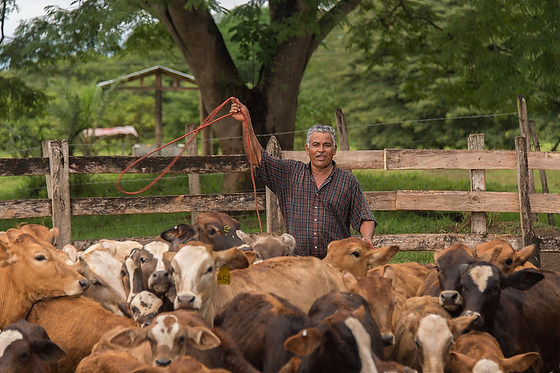
Nikon D5, Sigma 35mm ƒ/1.4 DG Art, ISO 100, ƒ/1.4, 1/1600
Before you can introduce a subject using your camera to an audience you have had to have introduced yourself.

Here in Managua, Nicaragua we are teaching photographers/videographers how to make your photos work. Yesterday I watched one student shooting with a Nikon 5300 and 28-300mm lens. She was zoomed all the way out so her lens was actually a 450mm. She was so far away from the people and often shooting the sides or even the backs of people's heads.

I pulled up photos like this above and showed her what I was getting. I helped her to see the importance of being engaged with the subject.

Nikon D5, Sigma 24-105mm f/4 DG OS HSM Art Lens, ISO 100, ƒ/5, 1/200
I also realized I needed to show her what to try and then asked her to do the same thing.

Nikon D5, Sigma 24-105mm f/4 DG OS HSM Art Lens, ISO 110, ƒ/5, 1/200
I even took photos up right next to a pastor preaching to show the congregation and give a different perspective to help engage the audience.

I asked her to follow me and shoot the same photos. She was getting the difference very quickly.

Nikon D5, Sigma 35mm ƒ/1.4 DG Art, ISO 100, ƒ/1.4, 1/1600
Now I can tell you and even show you that there is that one subject that may get a little upset with you like here. It just shows I may have moved too quickly. You do need to smile a lot to a subject if you don't speak their language as I am doing here in Nicaragua.

If you want your audience to feel like they have been right were you are standing then you have to get close and to do that you have to build relationships with people.

Thursday, May 12, 2016

Nikon D5 comparing ISO 800 to 66535

Nikon D5, AF-S NIKKOR 14-24mm f/2.8G ED, ISO 800, ƒ/11, 1/200–4 - Alienbees B1600 w/45º reflectors, PocketWizard Plus 
I shot this group photo of 400 musicians and to get the most even light I ended up bouncing 4–Alienbees B1600 strobes with 45º reflectors bouncing off the ceiling. I also used the ExpoDisc to get a custom white balance.


This is pretty heavy crop of the above photo.

Nikon D5, Sigma 35mm ƒ/1.4 DG Art, ISO 7200, ƒ/5, 1/200
Now this is a performance shot with available light. If you notice the light on the orchestra at the bottom wasn't very even and this is why I shot with strobes rather than using available light for the group photo.

Now just to give you an idea of how good ISO 7200 looks here is a enlargement of similar size to the first photo.


Pretty awesome if I say so myself.

Nikon D5, Sigma 120-300mm ƒ/2.8 DG OS HSM S, Sigma TC-2001 2x, ISO 66535, ƒ/5.6, 1/200
I was blown away with the ISO 66535 quality of the french horn player.


Wednesday, May 11, 2016

Shoot some with other photographers so you can grow

Nikon D4, AF-S NIKKOR 14-24mm f/2.8G ED, ISO 500, ƒ/8, 1/500
Just the other night our instructors got on a conference call and talked through our plans for one last time before our trip for Storytellers Abroad workshop in Managua, Nicaragua.


This was the first draft and all that pink and green is our time shooting our stories. All the light blue is class time and editing time.

One of the best things you can do to improve your photography is to network and shoot some things with other photographers. Plan an outing soon where you can get that immediate feedback from others.

Nikon D4, AF-S NIKKOR 14-24mm f/2.8G ED, ISO 12800, ƒ/8, 1/30
I will be teaching techniques to help steady one's DSLR as they are shooting video. All these tips and tricks are to help the students capture the stories of the people in Nicaragua.

Nikon D750, AF-S NIKKOR 28-300mm f/3.5-5.6G ED VR, ISO 400, ƒ/5.6, 1/100
I am looking forward to helping the students as they shoot with tweaking their settings on their cameras to get a better image.

Nikon D750, AF-S NIKKOR 28-300mm f/3.5-5.6G ED VR, ISO 100, ƒ/5.6, 1/125
Maybe you would like to learn how to tell stories using video/audio/stills and need someone to help you navigate all those settings on the camera and all the possibilities of using software like Adobe Premier.


While the trip next week is sold out you can join Gary S. Chapman and I in Honduras. Spend a week with us getting to know the people and countryside of Honduras as well as having time to show us your work and get some feedback and tips.

Nikon D750, AF-S NIKKOR 14-24mm f/2.8G ED, ISO 12800, ƒ/5.6, 1/25
At the end of the week we all gather with the subjects and some in the community for them to have the big reveal of all our stories. We show them what we put together that week on them.

Well I am off to buy some more bug spray to be ready for the mosquitos in Nicaragua.

Check out how to go with us to Honduras here http://workshop.stanleyleary.com/

Monday, May 09, 2016

Storyteller tips before you leave for your coverage

Nikon D4, AF-S NIKKOR 14-24mm f/2.8G ED, ISO 1800, ƒ/5.6, 1/500
Last June I was in Bucharest, Romania teaching the Storytellers Abroad Workshop. In just a few days I will fly to Managua, Nicaragua to teach the same workshop with my friends Jeff Raymond and James Dockery.

Let me give you a few tips for doing storytelling that we are doing this week before the class goes to Managua.

Nikon D4, AF-S NIKKOR 14-24mm f/2.8G ED, ISO 1000, ƒ/5.6, 1/500
I have never traveled for any story that I did not have an idea of who and what the story was before I left my house. You need to go prepared as much as you can and if things change that is OK, but don't go unprepared.

Each and everyone of the students will have a person/story that they will be given before they leave. Typically for the working professional if you are traveling overseas you most likely will have a month or more time to prepare for your story due to the logistics of traveling.

Once you have the contact information of your subject do all you can to correspond with them as soon as possible. Sometimes I have not had the luxury of working directly with the subject. In those times I was working with the NGO staff person on the ground in that country. Often with church organizations this was the missionary.

Nikon D4, AF-S NIKKOR 14-24mm f/2.8G ED, ISO 1000, ƒ/5.6, 1/500
Most of the time someone with an organization has identified a person and tells you their story. While this often changes from what you hear till the time the story is done, I always use this storyline as a way to formulate questions to help "flesh out" the story. To flesh out something is to give it substance, or to make it fuller or more nearly complete.

There have been a few times in my career that I was able to do so much research before I arrived that the story was pretty much set. I had asked enough questions that I felt comfortable and had even been able to tell the story as I understood it back to the subject to be sure I was on target.

When that happens I have an outline which had the text/verbal part of the story being told and then a visual shot list that I would use as b-roll. In interviews and documentary films it may describe secondary footage that adds meaning to a sequence.

Nikon D750, AF-S NIKKOR 28-300mm f/3.5-5.6G ED VR, ISO 1100, ƒ/4, 1/100
Now besides interviewing the subject I also spend a lot of time researching all I can about the country and the region I will be going. Before the internet this meant going to the library and pulling all the books I could find and periodicals on the country. Today with Google this process is so much easier.

I also love to read if I can find them documentary novels on a culture. One such writer who view history with a visitor's eye is Sarah Vowell. She wrote Unfamiliar Fishes, which is the short and awful history of Western intervention in Hawaii, up to U.S. annexation of the kingdom in 1898.

Sometimes a novel can really help you feel like you have been somewhere even before you have experienced it. I know many people who have read Pat Conroy's book South of Broad feel like they know that area of Charleston, SC just from reading the book.

Nikon D4, AF-S NIKKOR 28-300mm f/3.5-5.6G ED VR, ISO 100, ƒ/8, 1.6 sec
Now the other thing that is cool with Google is when you research a location like Seattle, Washington you can narrow that search to just see images.


This is a great way to get ideas on some establishing shots for the beginning of your story. When I did all this homework before I show up in a city I have already got the street addresses and know what is the best time of day to shoot that skyline shot. It is on my calendar with all the other appointments with the subject before I leave for the trip.

Tips Summary


  • Identify the story/subject before you go
  • Contact your subject and find out all you can before your trip
  • Research the area you are going
  • Find as many photographs of the area before you go

Thursday, May 05, 2016

Do you like reading my blog? How about something even better?

Nikon D750, Sigma 24-105mm f/4 DG OS HSM Art Lens, ISO 500, ƒ/16, 1/100
I am hoping that if you read my blog with any regularity that I may be able to get you excited about having more time with me in a workshop, where you can ask questions and have me clarify even more than you get through this blog.

I am getting really excited about teaching storytelling workshops over the next few months.

I a couple weeks I am flying to Nicaragua to help teach a storytellers abroad workshop with my friends James Dockery and Jeff Raymond. Right after that workshop I will be in Kona, Hawaii with my good friend Dennis Fahringer teaching the same skills to his students who will be going to Brazil to cover stories around the Olympics.

Nikon D750, Nikon 85mm ƒ/1.8G, ISO 720, ƒ/1.8, 1/100
While seeing sites like the sunset above in Kona are part of the trips, we spend a lot of time like James is doing here with student Jon Franz. We enjoy working with people and watching stories come together over just one week.

Nikon D750, AF-S NIKKOR 28-300mm f/3.5-5.6G ED VR, ISO 12800, ƒ/16, 1/50
Unfortunately both the Nicaragua and Hawaii classes are full, but you can join Gary S. Chapman and I in Honduras this fall.

Come with us to the remote area Agalta Valley in Central Honduras. We will be staying at Rancho el Paraiso, a 1,400-acre working ranch. You can learn to milk a cow if you like and watch the heard of cattle being taken out to the fields each day and brought in to be milked.

When Honduras Outreach was started 25 years ago they bought the ranch and created dorms and cafeteria to house the volunteers who come year around to do projects in the valley. Their 60 local Honduran staff members work year-round with communities in the areas of healthcare, agriculture, education, faith building, and commerce.

Honduras Outreach has had the president of Honduras to visit not only the ranch but come to the US to give them an award for such outstanding work.

Enjoy your days taking pictures in the beautiful Agalta Valley and showing your work to world traveling seasoned professional photographers [Gary Chapman and Stanley Leary] for feedback each day.

We will also be teaching how to capture a story for a nonprofit. We will give you tips that you can use in your future travels.

Go here to learn more about the workshop.

Nikon D4, AF-S NIKKOR 28-300mm f/3.5-5.6G ED VR, ISO 280, ƒ/5.6, 1/250
“The reason I do workshops is so I can learn, and I am fortunate that I’ve probably gained more from the whole experience of teaching than any one participant has. It is all about asking.” – John Sexton

There are a couple things that the workshops I am teaching all have in common. See if this appeals to you.
  1. ACCESS – One of the hardest thing about having great images and stories is access to those people that are interesting. All the workshops I am working with have already lined up stories for the workshop participants.
  2. MORE THAN – This is a deeper dive than that as a tourist. You get a chance to meet someone and hang out with them and get to know more about them. This is what tourists seldom get to do on a vacation.
  3. SEASONED PROS – Getting feedback each day from professionals whose life has been traveling the world and doing stories on people of every walk of life. Having them review your work and give you tips each day.
  4. LOGISTICS – All the logistics of the traveling has been taken care for you. You just have to pack and get to the first location and we plan the rest for you.
  5. TRAINING – We will teach you how to use software, how to get a story and how to put it together in a package.
Nikon D750, Sigma 24-105mm f/4 DG OS HSM Art Lens, ISO 100, ƒ/4, 1/1000
While there is education and things to learn the lure of the travel to a new location is seeing the wonderful sites of the location.

Nikon D750, Sigma 24-105mm f/4 DG OS HSM Art Lens, ISO 100, ƒ/4, 1/1600


Wednesday, May 04, 2016

Nikon D5: Sports Camera Settings


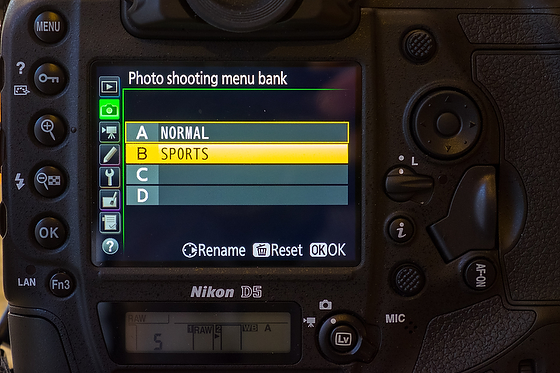
These are the settings that I use on my Nikon D5 for shooting most all sport action. Nikon has made it really nice to allow photographers to save these settings so they do not have to remember each and every little setting they like to use for a style of shooting.

If you go to Menu and under the camera icon pick the first item "Shooting menu bank." I have chosen B, which is my sports menu.


If you toggle into the "Shooting menu bank" you can rename those settings. Once you choose one of these settings everything you do to change the menu will be saved in that menu bank. I recommend to go ahead and try all my settings and then tweak them to your preferences.


When shooting sports it is very common for the lighting conditions to change instantly. While the football player runs toward you they may go from shade into direct sunlight. For this reason I let the camera do some of the thinking for me.

Go to the camera icon again and look for "ISO sensitivity settings." Select this and you will then see this menu:


I turn on the "Auto ISO sensitivity control." Then I set the minimum shutter speed to 1/4000. You could pick something else. I used to shoot at 1/2000. The ISO setting is what you see in the smaller window below the menu. I set this to ISO 100 and then set the "Maximum sensitivity" to ISO 102400.

While I am in Aperture Mode shooting the camera will always pick 1/4000 shutter-speed. If in sunlight I am at ƒ/4 the shutter-speed may go as high at 1/8000 at ISO 100, but as the scene changes and the athlete is now in the shade the camera will automatically drop to 1/4000 @ ƒ/4 and then change also the ISO up until I can still shoot at 1/4000.

The only time the shutter speed will dip below the 1/4000 is if the ISO peaks out at 102400.  If my aperture is wide open then the camera is doing everything that I would have done manually, but faster than I could ever adjust the camera. That is how you get more shots than the guy next to you.


Next select the Pencil on the menu and then go into the Custom settings bank.


Again just like the Photo Shooting Menu create a Sports Menu as I have done here.


Next choose the Autofocus in the menu.


Then choose the Focus tracking with lock-on.


I change the "Focus tracking with lock-on" from Normal to 4. What happens when I do this is the delay for the lens to refocus if something comes in between the camera and subject (like a referee). While I am following someone the camera will not refocus right away. This is something you need to try and pick what you like. You may want the lens to be more responsive and therefore go to setting 1 which will let the lens refocus instantly.

Focus Settings

Note the lenses you choose affect the availability of focus points.


You want to pick Autofocus Continuous mode for sports.


In the menu Pencil selections pick AF Activation under the Autofocus settings.


Then choose the AF-ON only. This will mean when you push the shutter release it will not focus, but just fire the shutter to take a photo.


By changing these settings you will notice the camera will stay in focus and shoot faster frame rate. Great for following a baseball player sliding into a plate and another player trying to tag them or maybe a football player running towards you to score. You will find more photos tack sharp in a series.

I generally put my focus point dead center and lock it so I don't bump it. I am trying to get photos of moving subjects and off center is too difficult for me. I may crop later for a better composition, but I want the subject in focus first.


Now this gets a little complicated so pay attention to the highlighted text above. 
  • Moving Predictable - 25-point dynamic-area AF
  • Moving Unpredictable - 72-point dynamic-area AF
  • Moving Erratically side to side - 3D-tracking in AF-C

Here are the selections again with more explanation


The only other setting is on the lens that I turn on VR.

Monday, May 02, 2016

Are you in a fog trying to find your way?

Nikon D5, Sigma 120-300mm ƒ/2.8 DG OS HSM | S, Sigma TC-2001 2x, ISO 450, ƒ/5.6, 1/4000
In any sport to win requires you recruit and get the best people. You then need to practice together and have a game plan against your competition, which you have scouted and prepared to play against.

Executing your plan flawlessly will most often give you then win and mistakes will most likely cost you the game.

Nikon D750, Sigma 35mm ƒ/1.4 DG Art, ISO 110, ƒ/1.4, 1/80
Many of my friends in communications are loosing their jobs. When talking with many of these professionals I have discovered a real lack of understanding of business. Many professionals are coming out of a fog and waking up in the middle of a game. They are finding themselves in the middle of a game for which they do not know the rules or the goals of the game.

By 2020, 40% of the U.S. workforce will be independent workers. Today, there are already 53 million Americans (34% of the workforce) that fall into this category. That number is growing based on a number of factors. Some from employers who see this as a better choice and many employees who want more control over their lives as well.

It will become increasingly difficult to be a communications professional if you do not understand business. This is the game you are now playing. There just will be fewer staff jobs where other people take care of the business while you are just a writer, photographer or some other role in the industry.

Business Insights for my Communication colleagues just learning about business skills

First thing you need to know about every business is that you need to have good people skills because everything about business is about people.

Your audience for communicators is people. Your clients are people. Your stories are about people.

If you do not understand how to work with all these groups then you will not be successful.

Second in any business is your expertise with your product. This is where many of my colleagues are also getting tripped up. They think it is photography for example. I believe that the earliest cave man communicators didn't have cameras and used other ways to communicate using visuals. I also believe that the storytellers around the campfires during the caveman times were the communicators of their time.

Today you need to be a excellent communicator. You may be stronger as a writer than a photographer or some other skills, but today you still need to be a person who can sit around the campfire of your community and tell those stories.

I think due to budgets of today for many professionals they will be responsible for more parts of the storytelling process than when they were part of large staffs where specialization was more possible.

A third thing you must master to survive in business today is having worked on your processes. You must be excellent at executing your job as well. This means not just that you know how to research a story, but you can take care of all the travel plans and budgets so that you can create an estimate that makes it profitable to do the work. Then you must also know how to bill and pay those taxes on your business.

These are just some of the process you must be executing at the highest standards to run a successful business. You need to master these before you do the last step.

The last thing you must master to get business is having clarity on communicating your business for customers.

Nikon D750, Sigma 24-105mm f/4 DG OS HSM Art Lens, ISO 1140, ƒ/1.8, 1/1000

How it works to get those clients


Your potential clients have communication problems that they cannot solve on their on. Many of these potential clients don't even know they have the problem. Most of the world didn't know they had a problem that the smartphone would help solve until Steve Jobs gave his presentation on what the iPhone could do.

You need to position yourself to fix those problems that you are an expert.

If someone asks you what you do when you are done telling them will they know what problems you solve for people and that you just might be able to solve their problem? If they see your marketing materials is it crystal clear what you will do to help them?

Be sure your marketing articulates the problems that you are solving for your potential clients.