Sunday, May 12, 2013

Photographers--How are you coming across?


Throughout our life we are project an attitude to all we come in contact with each day. While we all have those bad days, what are you projecting most of the time?

While we are listening to others how are we coming across?

Listening Etiquette--Visual and Audible


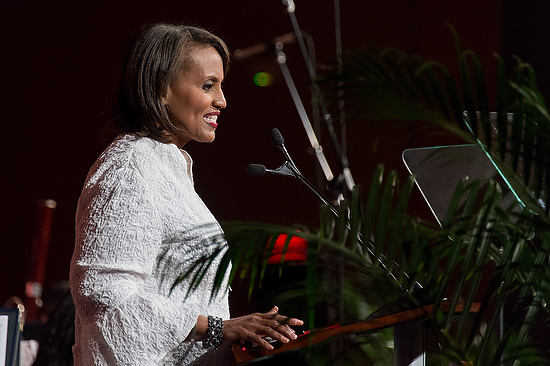
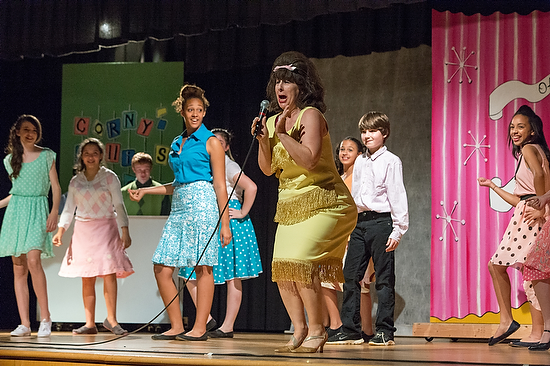
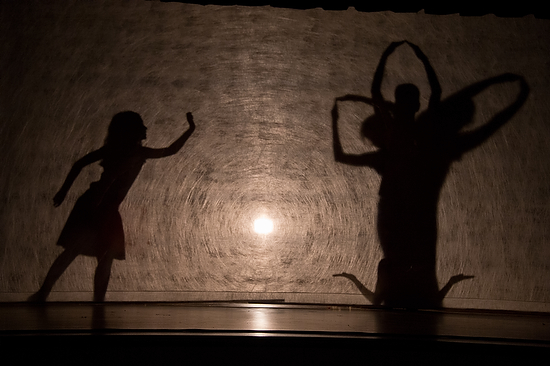
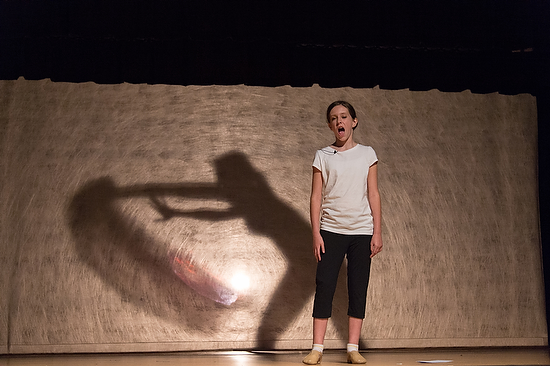
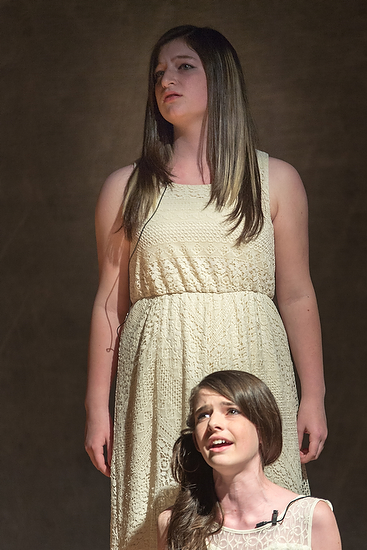
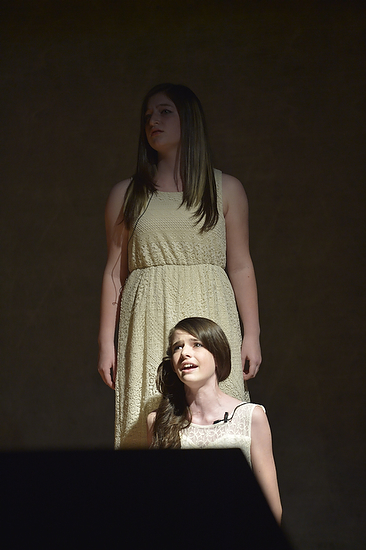
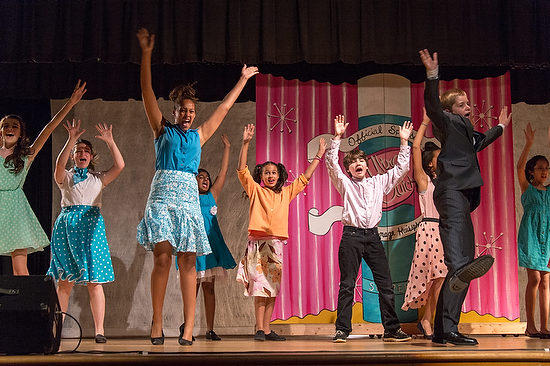
We need to be aware of our visual presence. Our body language is very important. Just compare the top two photos. Who would you rather have listening to you?

Even when you are not directly being talked to and you are present you need to be aware you are communicating something to those around you.


Here are just a few tips to help you out with visual presence:
  • Stand in front of a mirror and practice your expressions 
  • Remember to not cross your arms and remain open to the person talking
  • Be careful to not give a fake smile [try mirror for practice]
  • Nodding at appropriate moments is good. Nodding to just nod will come across as disingenuous.
  • Video tape yourself with someone for practice
Hopefully you are becoming aware that you can have a positive or negative impact on those around you without ever saying a word. It is better to take charge of your circumstances rather than loosing control due to inadvertent visual communication.


A manager at a local drive thru had been talking to his employees about how they come across. One of the biggest game changers was when they started to record the conversations using a simple iPhone.

The drive thru restaurant had a list of things they wanted to do for each customer and the one thing that was really difficult to address was the voice inflections of the employees.

By recording the employees doing their work they now had a way for the employee to listen to how everything sounded. The manager would first listen to the conversations and going down a list of things they wanted to happen with every customer rated the employee.

The employee was then asked to evaluate themselves with no one around. After the employee and manager had both listened and evaluated separately they would talk about the performance.

Very seldom did the manager have to say much at all that the employee didn't pick up on their own after listening to themselves.

One employee they had talked to for a while about their voice tone and attitude said this was an "ear-opening" experience.

Maybe there is a reason we have two eyes, two ears and only one mouth. I think we will get more accomplished with clients learning to use our eyes and ears proportionally.

If your are self-employed you are missing out on having formal evaluations, so create them for yourself. Be sure to ask some friends and clients you trust that will be honest for some feedback. Be prepared to hear something negative and remember they are telling you because they care. 

Thursday, May 09, 2013

Photographers: Can learn something from the Shepherd

Necessity is the mother of invention. –Plato

Photographers need to run their business like a shepherd. If shepherds stayed in one place hunting and gathering food, sooner or later the area would run out of things to gather. In order for them not to run out of food so quickly, shepherds tended to travel in rather small groups.

Desert Experience

One of the best experiences to have in one’s past is the desert experience. When you are trying to survive and pretty much no matter where you look you see desolation your priorities shift to survival mode.

I was laid off from a job in 1989 and found I was in a desert for close to three years. This is when I was unable to find a job, as a photojournalist that was my calling.

I decided to take this time and go back to school for my masters and find whatever job I could to pay the bills.

While you are in the desert you are having your priorities rearranged.  While I had studied Maslow’s hierarchy of needs in my social work undergrad program, it was the loss of my photojournalist job that gave me real world experience in it.

Maslow's Hierarchy of Needs
First Priority

I realized my first priority was to those basic needs of food and shelter. I had to move back home with my parents for a while to cut our expenses to something manageable. 

My attitude changed from jobs being beneath me to being thankful for any job. I remember driving around trying to sell meat out of a freezer in the back of a pickup for a month. I felt so much like the beggars who hold up the sign saying willing to work for food.

Knowing what I needed to survive help me to know many jobs that were advertised that were photojournalist positions were not paying enough to cover my basic needs. 

I now understand what I must charge to survive—do you?

I was becoming a very skilled shepherd who was looking for a field to graze in that could support me for a while.

Second Priority


You need a good view of your present situation. Like the shepherd who looks out into the field assesses how much food is left and for how long, you must do the same for your business.

It is quite common for many shepherds to go into the same field for their flocks. When the shepherd feels like it is time to move, the sheep respond to his voice and not the other shepherds.

Photographers are like the shepherds often in the same field. The smart photographer will see the end in sight and move to a new pasture before everything is gone.

If you haven’t had a desert experience you will if you are not aware of the resources left in the field where you are living now.

Third Priority


You must be looking towards the future. You need to have long-term goals.

The good shepherds know when the food supply is running low, but also they know where the next pasture to take their sheep is located. They have been doing their research.

The key for you to be forward thinking is to look to places where no one has gone before. Good shepherds are looking to green pastures; they are not looking where all the shepherds are with all their sheep.

Too many photographers and photographer wannabees are looking at other photographers and following them rather than learning from them and moving onto greener pastures.

A great book for anyone wanting to understand how to look for new opportunities for growth should read Blue Ocean Strategy.

Strategy for a Blue Ocean

  • Be the expert in a subject to help separate you from the pack
  • Get access to something difficult for everyone to access
  • Photograph subjects that hobbyist cannot because of their day job
  • Once you find a Blue Ocean--Look for another because your competition will follow you.
Lesson from the past

When George Eastman introduced the brownie camera people stopped hiring professional photographers. They almost decimated the industry for the professional photographer. It took some time for people to realize it was not the camera alone that made good photos and slowly would return to hiring them.

In time even today with the new digital camera having similar effect on today’s photographers as the brownie camera did earlier, in time people will return to using photographers for what they bring other than their cameras to a job.

My suggestion for today’s professional photographer is not to look for where people are using photography, but where they are not using it and could use it.


Tuesday, May 07, 2013

Are you experiencing professional photographer burnout?

Do you feel burned out? How often are your pitches to your clients landing on deaf ears? Do you feel like your clients no longer care about quality?

While in the best of times I felt like there was a disconnect, when the economy tanked I understood the lack of funds. Today I am seeing money spent, but from my perspective unwisely. I see the possibilities of how I could really help clients.

If you are thinking like this maybe the key is to rethink how you are doing business.

There are three sides to every story—yours, the truth and mine.

I have been coordinating a group of photographers for a few years now. We meet quarterly in the Atlanta area. We started giving everyone the opportunity to give a two-minute presentation. So few could adhere to the time limit I changed it to five-minutes and still most cannot get their material presented in the time frame.

Frankly this is a key insight into why so many photographers are failing today—they waste people’s time. If you are not clear as to what you do and can help others do then no one else will understand as well.

Your Elevator Speech

You should be able to tell people what you do in an “elevator speech.” This is a very concise short summary of what you do and has a value proposition. The name comes from the amount of time it takes to ride an elevator to your destination, which is usually thirty seconds to two minutes.

If you do not have an “elevator speech” I would recommend putting one together. It is very similar to a Mission Statement or Vision Statement.

Start with these parts:
•    Define who you are
•    Define what you do
•    Define how you are different
•    Define your audience
•    Call to action
•    Why should they care
Refine each of these and then assemble this and start with the why. This is the hook to pull them in. Here is one example I have used a few times.
Have you ever given your elevator pitch and realized they just need to see it to believe it? This is what I help companies do everyday. I help them with visual storytelling.
I have on my phone, iPad, computer and website a quick slide show that is my two-minute elevator speech. When I am talking to someone I am showing a few examples of what I do to accompany my narrative.

Time to Listen


After you have done this long enough you will get clients that know you and recommend you.  Once you have some people using you, then you can go to them and see how they would describe you. In a way you are looking for your two-minute speech, as they would give it on your behalf. 

I recommend going deeper than this and really get to understand how others define you.

You can hire a professional coach who will help you do a 360 where they talk to people and find out how others see you. If you don’t have the resources to do this, then you just need to approach some clients and ask them for some time to help you out. 

You could do a focus group. You can choose to get a group of people together or you can do this one-on-one. The key here is to treat this like a focus group. Most people are compensated for their time.  My suggestion is to have a game plan and timetable.

Be upfront with what you are doing and respect their time. Maybe offer to take them to lunch and tell them you need about 90 minutes of their time. Set aside 30 minutes to eat and then take the time they agree to remaining, ask your questions and when time is up, not when you finish your questions stop.

Some people may not want to be all that honest and upfront, so you may have to bring up touchy topics by saying some people say that you are strategic but not good with follow through, and then ask them if they agree or disagree.

You might find out that you come across as an arrogant person. All this time you thought you were being helpful and now you are finding out you were sabotaging your brand.

Whatever you find out remember they think highly enough of you to meet with you and want to help you.  This is why after you have heard some weaknesses you might want to ask what are some things they suggest to make a change.

Look for a consensus before making changes. The patterns are what you are listening for and not each individual comment alone.

The Truth
We judge ourselves by what we feel capable of doing, while others judge us by what we have already done.

--Henry Wadsworth Longfellow
My mentor, Don Rutledge, used to say to me that the best judge for a photography contest is the public, because they will judge the photograph merely on the impact it has on them. He went on to say that as practitioners of photography we should study which photos have the most impact and understand why.


If you take the time to listen to how you are perceived then you are now ready to make the necessary adjustments to help you grow in your business.

Take all those positive comments and be sure those are now part of your “elevator speech.”

Take the constructive criticism and make some changes. Let’s say people think you come across as a know-it-all or arrogant. Maybe instead of just shutting down all your comments, you ask nonthreatening questions.  Have you ever thought about …?

You may need to practice this new way of bringing up your concerns or ideas. Remember it will take time to make these adjustments.

When you lack a hook

You maybe fully aware of your brand and what you offer, but you still are not getting business.

Your business model is not addressing the needs or desires of the customer or they would be using you.

A few things can be happening here and you need to be honest with yourself.

Possibilities:
•    They need what I offer, but can get this somewhere else
•    They don’t see what I offer as a need
•    What I offer isn’t desirable. Think luxury here
Be sure your elevator speech is not about facts but is about emotions. When you are able to hook into people’s emotions, then you will be successful.

Some wedding photographers say they take pictures of weddings, some say they are helping families write the first chapter for their new family. Which one is getting to the core of what they offer?


Sunday, May 05, 2013

Photographing People Tip: It is all about relationships

Nikon D4, 14-24mm, ISO 12,800, ƒ/5.6, 1/200
Today I was blessed by one of my daughter’s friends. She came up to me to tell me how good my photos were of the play my daughter was in the other night. I think she thought I wasn’t taking her compliment seriously enough and so she went on to tell me how nice the photos were.

I seldom ever hear how nice my photos are any more. People thank me for taking photos and yes I occasionally hear a comment, but for the most part once you establish yourself as a professional then people just expect a quality image.

The young lady continued to tell me how impressed she was with my logo as well.  I had to tell her I was lucky to have a good friend design that for me. My daughter’s friend was very kind and gave me a blessing.

The fly on the wall

Nikon D4, 14-24mm, ISO 5,600, ƒ/5.6, 1/200
Fly-on-the-wall is a style of documentary-making used in filmmaking and television production. The name derived from the idea that events are seen candidly, as a fly on a wall might see them. In the purest form of fly-on-the-wall documentary-making, the camera crew works as unobtrusively as possible. –Wikipedia 

Nikon D4, 14-24mm, ISO 10,000, ƒ/5.6, 1/200
If you are able to put people at ease then they will allow you to be present as if you were not there. There is a trust that must be established to pull this style of photography off.

I think this is one of the most powerful forms of photography. The best photojournalists do this every time they pick up the camera.

The fly in the room

I think the “fly on the wall” isn’t the best description, because this just means you are in the room. More like ease dropping on the conversation. The photos that are most compelling require good composition and lighting on top of the decisive moment to capture the essence of the subject and message.

Nikon D4, 28-300mm, ISO 12,800, ƒ/8, 1/200
I like to see myself moving around the room like a fly. Have you ever tried to get rid of a fly and they seem to disappear in the room only to notice them right in front of you at times. While I do not want to equate what I am doing as being a pest, I do want you to notice how the fly is able to get very close and quickly get out of the way.

The obstacle course

Nikon D4, 28-300mm, ISO 4,000, ƒ/5.6, 1/250 [Combating the teleprompter and microphone]
Most every place I am photographing is like working an obstacle course. To get a good line of sight to a subject requires me to move a great deal at times.

Microphones on podiums often are right in front of the speaker’s face. You are moving side to side and even behind the speaker to find an angle to not just get rid of the microphone, but sometimes teleprompters and things like flower arrangements.

Nikon D4, 28-300mm, ISO 11,400, ƒ/5.6, 1/250 [Moved to the side to eliminate the problem with the teleprompter and microphone.]
Those are just the things between the camera and subject and then you have to contend with a background. Often you are trying to move to keep things from growing out the head of the speaker or looking like they are being impaled by something.

Nikon D4, 28-300mm, ISO 6400, ƒ/5.6, 1/250 [Found another spot to get a clean shot of the speaker]
Nikon D4, 28-300mm. ISO 12,800, ƒ/5.6, 1/250 [I am using the plants around the stage as a way to frame the subject.]
Off the stage and informal

Nikon D4, 14-24mm, ISO 12,800, ƒ/10, 1/60 [I put the camera up as high as I could hold it and shot down to give the birds-eye-view of the reception. I also waited for a moment when the people in the foreground were showing their enjoyment of the moment. Also I wanted your eye to go from the front to the back, so I chose to increase the depth-of-field by using ƒ/10.]
My favorite shots at meetings are never from the stage but the small conversations at receptions or just in the halls outside the meetings. This is where you see relationships.


Nikon D4, 14-24mm, ISO 11,400, ƒ/3.5, 1/200 [I came in close to show this moment and used a shallow depth-of-field to keep the focus on the foreground of the two people.]
I think we all so want of a good relationship in our life that we enjoy seeing other relationships as well. We hope to learn something from them and appreciate them. I believe the reason we are here on this earth is for relationship and that our DNA makeup has us pursuing this every day of our lives.


Nikon D4, 28-300mm, ISO 12,800, ƒ/8, 1/250 [Here I wanted to show the ladies listening to their friend and so I used ƒ/8 for a little more depth-of-field.]
Capturing people in relationships of all kinds I believe is the core value of the human race. We celebrate strong relationships through marriages and parties. We punish those who destroy relationships that steal or even kill another. However, even in these situations we can be brought to tears when relationships are restored.


Nikon D4, 85mm, ISO 1,100, ƒ/1.4, 1/250 [Here I wanted to isolate the subject so I used the 85mm @ ƒ/1.4 for a shallow depth-of-field.]
Showing how people are engaged is one way to capture those relationships. Another thing is to show how interesting a person is and this can be done by isolating the subject.  It is the mixing of all these different lenses, ƒ-stops and compositions that help me bring more impact to the moment. While I have chosen sometimes to go wide and other times to isolate, notice how even with their differences of nuance they still have you focused on a relationship.

The reason I think photography is so powerful as compared to words—it has the power to capture the essence in relationships.

My tip to you is to hire photographers who value relationships and to take the time when we photograph people to honor the importance of this by picking the right moments using composition and lighting to celebrate humanity.

I don't want to be a fly on the wall—I want a relationship with those in the photo. My goal is to develop friendships for myself and to connect others to those people.

Friday, May 03, 2013

Photographing school plays

Nikon D4, 70-200mm, ISO 11,400, ƒ/5, 1/500
Be Prepared

Here are a few tips to do before you actually start shooting the performance.
  • Arrive Early—You need to have some time prior to the curtain going up.
  • Fast lens and/or high ISO—You need to have the gear that will let you take photos is low light. 
  • Find a good seat—You might think the front row is the best seat, but sometimes the back row is the best. If it is assigned seating, you might want to go before you buy a ticket to the venue. In general I find the seats in the center to give your more opportunities than from the side.
  • Test Shots—Often you can make some test shots to get your exposure correctly set.
  • White Balance—Shooting on Auto White Balance for a theater production is the worst possible time to use this setting. Often the productions use colored lights and this can have your camera correcting which will give your actors funny skin tones. Custom white balance is ideal and second you can try some presets like tungsten to get you close.
White Balance

Having good skin tones is the number one thing that really separates the hobbyist photos from the pros.

My secret weapon is the ExpoDisc. Call my friend Jody Grober at Roberts Imaging 1-800-726-5544 and tell him I sent you. I buy most all my gear from Jody.


ExposDisc goes in front of the lens and then you use it to get an incident reading rather than a reflective reading of the light.

Notice the direction of the light hitting the subject.  You move to the same position to get the light reading below.

Point the camera toward the direction of the light that is falling on the subject. 
I have found if the subject is facing me and the light is from the side, I face the camera with the ExpoDisc on it so it is pointing towards the camera position.  The chart above is to help you understand the concept, but you can modify it.

One way you can modify it is as long as the light is the same where you are standing, then you could cheat and take a reading from where you are.  The problem that can arise is if they are lit by Window light and the camera position is in the shade then your color balance will be off if you do not take it from the subject's perspective.


Nikon D4, 28-300mm, ISO 3,600, ƒ/5.6, 1/400
If it is suppose to be a silhouette and you get a photo like mine, then great. However, if you are suppose to see their faces then you need to make some adjustments.


Nikon D4, 28-300mm, ISO 4,500, ƒ/5.6, 1/320
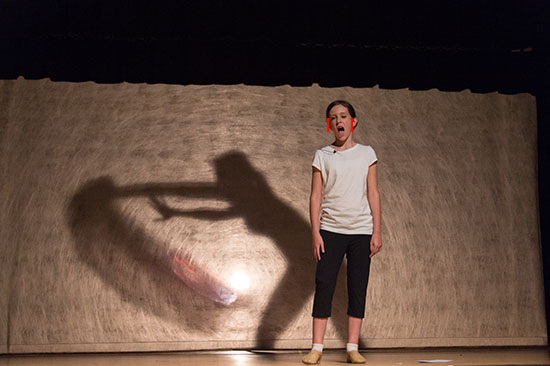
There are a few ways to adjust to get a good exposure on the skin tones. First use spot metering if you camera has it. On the Nikon D4 I can choose selective focus and spot metering. I then have 51 different points I can move the focus/spot metering to take the photo.


Using spot metering and selective focus with the Nikon D4 I have red brackets I move to where I want the focus and exposure to be set by.
Nikon D4, 28-300mm, ISO 12,800, ƒ/5.6, 1/320
Waiting for the light


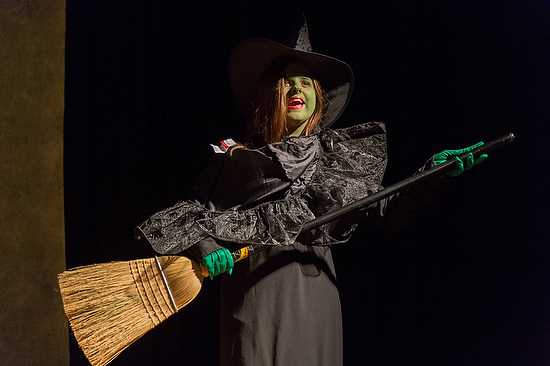
While you are waiting for the peak moments in the scene, you also have to wait for the best light. For example this witch's hat had her face in the shadows most of the time she was on stage., but when she was singing those dramatic high notes she put her head up and eureka you have your shot.


Post Production is critical


Nikon D4, 70-200mm, ISO 1,2500, ƒ/2.8, 1/500
No Flash—That is the rule for stage performances and therefore you are at the mercy of what stage lighting you see. Unless your small town has some incredible endowment for the arts, your lighting on the stage will not look like Broadway or TV shows.  Throughout this production the light value on one person would look great and the other person was blown out or silhouetted. 

This is where taking the photo into either Adobe Lightroom or PhotoShop can help salvage a photo. This is one of the rare moments I am having to fix photos in post production. It isn't because I screwed up, it is because the lighting just isn't even or at least acceptable for photos.


This is the photo before I cropped it or made changes in post production. Notice that the kneeling actress is well exposed and not blown out. As a general rule you can open up the shadows, but do very little with something that is blown out with no detail.


Nikon D4, Sigma 120-300mm ƒ/2.8, ISO 2,500, ƒ/2.8, 1/500


Get Close


Don't shoot the full stage all the time. Vary your images by using really long glass, like a 300mm lens or longer to isolate an actor. The lighting guys do this will spot light to make you look at just one place, but you can do it with lens choice.


Nikon D4, Sigma 120-300mm ƒ/2.8, ISO 2,800, ƒ/2.8, 1/500
Think Marching 


Nikon D4, 28-300mm, ISO 7,200, ƒ/5.6, 1/250
When you see the military marching in formation or see marching bands the photos look great with everyone in sync together.  I usually find that when everyone is in full stride looks better because it creates motion. Closer the legs are together they look like they are standing still, even tho they are moving.


Nikon D4, 28-300mm, ISO 4,000, ƒ/5.6, 1/250
Summarizing


Arrive early, shoot a lot of photos and plan on doing some post production to get quality like I am getting here. You camera phone will not get this quality. Nor will having great gear. What gets this quality is experience. So arrive early to do test shots so you are not shooting your first images of the play when it is live.

Wednesday, May 01, 2013

Three Aspects to a Successful Business

 
Three Aspects to a Successful Business
  1. Desirable
  2. Service oriented
  3. Emotionally connected
Desirable

How can you be attractive to customers is what we are asking ourselves. These are some tips here to help you not just attract new customers, but create a constant customer base.

Location—You have no further to look than your own community to know that there are certain locations that just seem to be terrible for business. You see business after business locate there only to have them go under.

UPS helped many businesses succeed by becoming the fulfillment center for those companies. Locating to take advantage of order fulfillment center or to a prime location where your customers will see you can make a huge difference. It is also why it makes sense to be sure you are marketing to businesses near to you.

If your industry is in another state or city, you might just want to relocate to improve your customer base.

You need to be close as possible to your customers for them to consider you.

This is not just about a bricks and mortar location—having your online presence easily accessible is another way. Also, while the client may be around the world, their subject could be next door to you. Letting people know where you live may get you the job.

Presentation—What kind of impression do you leave? How often have you gone to a restaurant and go to wash your hands only to leave due to a dirty the restroom?
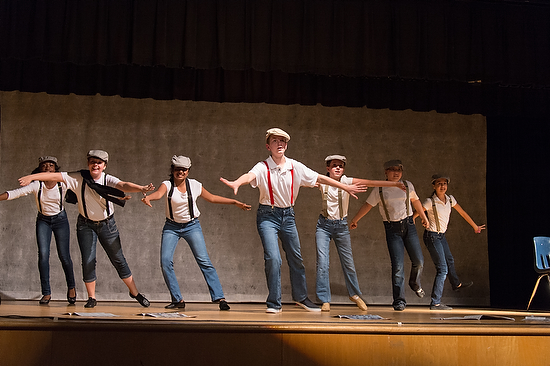
Uniforms are used in so many businesses because this is the only way they can assure a consistent appearance for their customers.

Be sure everything that the customer will see from you is consistent in quality and look.

Pricing—You must know what you must charge to make a profit. You must also understand the marketplace. If you were rated like the hotel industry, would you be a one star, two stars or maybe a five star rated business?


Expertise—How knowledgeable are you about your product and services? As a photographer I have to know when someone calls me if what they want photographed is possible as well as knowing everything needed to create the image.

This expertise is more than being able to answer questions. If you are an expert in the field you will most likely be asking questions to help guide the client. Are you asking questions that help the client understand you can help them?

Marketing—You must advertise in all the right places. If you know who your targeted audience is you will be able to reach them more cost effectively than trying to let everyone know about you.

Service

Great service is proactive and not reactionary. Exemplary service is like having someone complete your sentence for you. You anticipate a need before the customer realizes it.

Five star hotels have bellmen to distinguish them from three star properties. Before you are even getting out of your car they are opening the car door for you. They are offering to get your bags before you have even thought of needing them.

Five star restaurants are helping place the napkin in your lap; keeping your glass filled and doing table touch in. They are offering freshly ground pepper or cheese for your meal. You never have to search for the waiter; they are already there when you need them.

Great service is considered second mile service for a reason. In the marketplace with your price point there is a certain basic level of service expectation. This means if you are just meeting the standard then you are just average. It is when you are already meeting the standards and then go beyond them with surprise service do you get the WOW effect.

Emotionally connected

This is by far the most difficult thing to do in business, but what those top in an industry are doing.


You are focusing all of your attention on creating a relationship with the customer and not just getting a transaction.

The hardest part about creating emotional connections is you have to really want a genuine relationship with the client. No matter the actions you take, if your heart isn’t into it the customer knows they are just being played.

Most of my friends enjoy eating out. In Roswell where I live we have a good number of great restaurants. The restaurants we love to go to over and over have a few things in common. They all serve fresh food that tastes great. The restaurant is clean. But most of all I feel like a guest in one of my best friends homes.


When I go to those restaurants each one of them knows our family. They ask about our kids and how things are going. Sometimes the places are so busy they are rushing about, but they still take just enough time to say hello. At least one time in the history of eating there, they have taken the time to talk and get to know me. A few even sat down with us and we chatted about each other’s lives.

The key here is they were interested in my life and over time I too became interested in them. It was the authenticity of their actions that has me going back.

Tuesday, April 30, 2013

Covering events: The Fashion Show under a tent

Figure 1—Nikon D4, 28-300mm lens, ISO 3200, ƒ/5.6, 1/160
News Coverage

When your space is limited, like in a newspaper, it is quite common to just use one photo with text. Pure Fashion's Spring Fashion Show was sponsored by Belk's located at the Forum in Norcross, GA.  A few hundred words and the photo above [Figure 1] and you are done. I have communicated the core of what happened at the fashion show.

This is the lighting diagram for the above photo taken under a white tent outside while it was raining.


In Depth Coverage

Sometimes the best images and content is behind those headlines.  You may even hear magazines talk about the story behind the story.

Figure 2—Nikon D4, 28-300mm lens, ISO 2500, ƒ/5.6, 1/160, Custom White Balance with ExpoDisc.
One of the stories behind the scenes was the models all got a chance to meet Pip from the second season of The Voice. Now this photo here [Figure 2] is typical that many people will take. they may like this better than when they finally are set in the pose, you can pick up on the excitement of not just the model but the enjoyment of Pip knowing he was having just as much fun.

Posed pictures are OK, but compare this photo of them smiling for the camera to these where you see Pip taking time with the models.  Now pay attention to the faces and the eyes. You will see more than just "nice to meet you smile."

Figure 3—I like the hand gesture, the expression of the model and most of all you can see those looking on noticing the excitement of the moment as well. Do you see it? [Nikon D4, 28-300mm lens, ISO 900, ƒ/5.6, 1/125, Custom White Balance with ExpoDisc.]
The cool thing was Pip didn't over react and embarrass the models. He just maintained eye contact and most of all he ask each person their name.

Figure 4—Notice the models shoulders and both hands. You can tell she is loving this moment.Two of the girls are just as excited and one is already posting her photo of Pip to social media. [Nikon D4, 28-300mm lens, ISO 2500, ƒ/5.6, 1/125, Custom White Balance with ExpoDisc.]
I was loving these moments, because usually teenagers are trying their best to remain calm and cool, but here we see them acting on the outside how we would feel meeting a real star.

Figure 5—Nikon D4, 28-300mm lens, ISO 2500, ƒ/5.6, 1/125, Custom White Balance with ExpoDisc.
I hope you are seeing how much body language is communicating the moment. It isn't about the composition and lighting, but that is important, the thing making these photos is the expressions and body language.

Figure 6—This is my daughter talking to Pip. Her friends keep telling her she needs to try out for The Voice too. She is telling Pip she wants to try out one day and Pip starts asking questions and encouraging her.  I can tell she is loving the moment. Now look at the lady in the middle. She is the makeup artist working on my daughter. you can tell she is listening and even tho she isn't talking to Pip she too is enjoying the moment. [Nikon D4, 28-300mm lens, ISO 1800, ƒ/5.6, 1/125, Custom White Balance with ExpoDisc.]
I think the photos behind the scenes with Pip are better than the Fashion Show itself.  For promoting Pure Fashion these are great photos. Get to model and maybe meet some stars.  How many young girls wanting to be models wouldn't love this experience.

But wait there is more.

Figure 7—This was shot with the 85mm ƒ/1.4 and while most everything other than the makeup artist is out of focus, there is just enough detail that the makeup counter and background become more abstract art. [Nikon D4, 85 mm lens, ISO 100, ƒ/1.4, 1/80, Custom White Balance with ExpoDisc.]

The models get professional makeup artists to help them look their best. Everyone loved how they looked after some of this professional attention.

Figure 8—I shot a little wide here to help show the environment. Since Belk sponsored the Fashion Show showing off their brand helps to recruit them in the future to do more shows. It promotes their products as well. [Nikon D4, 28-300mm lens, ISO 3600, ƒ/5.6, 1/160, Custom White Balance with ExpoDisc.]

Figure 9—I shot this with an 85mm ƒ/1.4 to isolate the models in this very busy environment. [Nikon D4, 85 mm lens, ISO 100, ƒ/1.4, 1/125, Custom White Balance with ExpoDisc.]

Figure 10—While you can show all the models having fun, it is important to show how serious these professional makeup artists and hair stylist are about their jobs. [Nikon D4, 85 mm lens, ISO 220, ƒ/1.4, 1/60, Custom White Balance with ExpoDisc.]

Figure 11—Can you see how precise and detailed the makeup artist is with applying the makeup? [Nikon D4, 28-300mm lens, ISO 2500, ƒ/5.6, 1/160, Custom White Balance with ExpoDisc.]
Figure 12—Nikon D4, 28-300mm lens, ISO 3200, ƒ/5.6, 1/160
While I could have just snapped and had a photo of the ladies on the runway, I was looking for those moments where they looked great. Pure Fashion is about instilling confidence into young girls helping them.  I think they look like young confident women in this photo [Figure 12].

Figure 13—Nikon D4, 28-300mm lens, ISO 3200, ƒ/5.6, 1/160
My daughter really had fun with this program and did a great job showing her outfit off.

Figure 14—Nikon D4, 28-300mm lens, ISO 3200, ƒ/5.6, 1/160

I think this photo captures the emotion of how Pip performed for everyone.

My spin on the coverage

I hope you are seeing that it is the details beyond color correct images, good exposure, composition and variety of images that I deliver. I am focusing on the details of emotions which show through body language and microexpressions.

Do you think the photo will make young high school girls and their families want to get involved from these photos?

Here are some more photos from the event. Here is a link to learn more about Pure Fashion.