Showing posts with label Portrait Photography. Show all posts

Monday, October 10, 2016

Capturing the times of our lives

Nikon D5, Nikon 85mm ƒ/1.8G, ISO 200, ƒ/5.6, 1/80–Alienbees B1600, triggered with Pocketwizard TT1 and TT5 system [logo from Wikimedia Commons and modified]
This weekend was my daughter's high school homecoming. This is her senior year where everything is the last time for her class. They commented on how freshman year they all stood around and were afraid to dance at the party. Now as seniors they didn't care what others thought like they did as freshman.

If you follow my blog then you know my daughter is involved in theater and her group of friends are mostly other theatre geeks. They are not an exclusive group and therefore why I said this was most of her friends, but the theatre kids love most people and are excited to have more people hang out doing life together.


Great Self Esteem = Great Photos


When photographer's subjects are confident and can just relax and be themselves you spend more time just capturing those moments versus spending so much of your time trying to pull those moments out of a person.

Nikon D5, Nikon 85mm ƒ/1.8G, ISO 200, ƒ/5.6, 1/80–Alienbees B1600, triggered with Pocketwizard TT1 and TT5 system
The key role of the photographer to make this happen is to create an atmosphere where the subjects feel like they are in control.

One way I try to convey this is asking many times throughout the photo shoot is there anything else they would like. I suggest combinations of people and try to keep the excitement going, but the whole time I am really trying to say I am here for you.

Nikon D5, Nikon 85mm ƒ/1.8G, ISO 200, ƒ/5.6, 1/125–Alienbees B1600, triggered with Pocketwizard TT1 and TT5 system
I arrived early and started by picking a location. I setup my lights and my wife helped by standing in as subject so I could get the light set just right on her face and balance it with the background and other light on her face.

For the better part of 15 minutes I was trouble shooting. I had one lens that was not working with my flashes. I finally found the combination of working with my Nikon 85mm ƒ/1.8 on the Nikon D5 that would work for me. This required me moving back and forth to get the closeup shots and then walking a good fifteen feet back to get the group shots.

Nikon D5, Nikon 85mm ƒ/1.8G, ISO 200, ƒ/5.6, 1/80–Alienbees B1600, triggered with Pocketwizard TT1 and TT5 system
By the way I spent a good hour later working with both my cameras and all my lenses to test them with the flashes.

I believe I have a lens that was just repaired that is the problem. I now know for sure what the problem is that I was having such a problem with when I was setting up for these photos.

Nikon D5, Nikon 85mm ƒ/1.8G, ISO 200, ƒ/5.6, 1/125–Alienbees B1600, triggered with Pocketwizard TT1 and TT5 system
Once I had the lights in place I didn't change them at all. I just moved closer and further back and occasionally would twist the models a little to the left or right to get a different look. The closeup of my daughter I just twisted her until the strobe off to the back was directly behind her.

Here is the setup for you.


I was so thankful to be photographing my daughter and her theatre friends. They exuded so much more confidence than they did just four years ago.

Nikon D5, Nikon 85mm ƒ/1.8G, ISO 200, ƒ/5.6, 1/125–Alienbees B1600, triggered with Pocketwizard TT1 and TT5 system
What I think is so exciting about taking these photos this weekend is I feel like I captured the traits in these kids who are now young adults just before next year they all either enter the work force or go off to college living their own lives.

I am so proud of who my daughter has become and the friends that she has made in her time in school.

Nikon D5, Nikon 85mm ƒ/1.8G, ISO 200, ƒ/5.6, 1/80–Alienbees B1600, triggered with Pocketwizard TT1 and TT5 system
In the TV show Friends we watched these six people do life together over 10 years. They dated each other and had to break up with each other. The reason so many of us returned to watch the show was we loved it when no matter what happened they worked really hard to keep their friendships in tact.

What I love about photography over text is the power for it to capture emotions. To capture emotions you need to be prepared. The camera must be set properly. You must have considered the lighting for the photograph. You have been thinking about and taken into account the background. Will you make it razor sharp or blurry and out of focus.

But even more important that knowing your gear is to know your subject. You cannot capture that which you have no knowledge of or understanding.

For me to do great photography that is compelling requires the photographer to be involved in their subjects lives long enough that they let you in to see them for who they really are.

I have watched these kids from when they were really young and had them in my home many, many times which allowed them to get to know me and for me to know them.

While my relationship is different than my daughter has with her friends, there is a relationship. I think that is key to understand as your role as a photographer. I am not trying to be their friends that hang out every day. I want to be like a parent the safe space that they can hang out and be themselves.

Friday, May 15, 2015

The Principles of photography versus the Techniques of Photography

Nikon D4, Nikon 85mm ƒ/1.8G, ISO 100, ƒ/1.8, 1/400
Have you ever noticed that when you use a technique that some famous photographer perfected and maybe even taught you that you don't get the same results?

Maybe you have started to realize that you are implementing all these techniques correctly in your photos and you continue to not win any of the competitions you are entering.

There is a great moment in the movie Remember the Titans about how “… attitude reflects leadership.” Here listen to the clip:


Where is your heart?

It wasn’t so much what I did that made a difference–it was how I thought. I started to ask myself why certain techniques worked and others didn’t. I soon noticed that when a strategy was wildly successful, it had more to do with the fact that I honored a principle than the strategy itself. When a strategy was less successful, that too could be directly related to a principle I violated.

Principle is much deeper understanding of something than a strategy. By understanding the why and not so much the what or how you understand how to implement it better because you are able to be much more flexible. Your ability to be flexible is because you are more relaxed. You “GET IT” and because you do you are able to listen more and look more for ways to implement. This is when real creativity can take place.

The principle of the technique frees you up, whereas the technique alone will freeze you up.

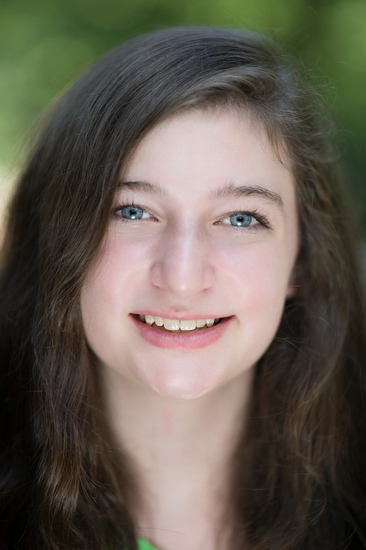
Nikon D4, AF NIKKOR 85mm f/1.4D, ISO 800, ƒ/1.4, 1/160
I remember this photo shoot I was doing to help a young actress with her headshots. I could see right in front of me what I wanted to capture, but it just wasn't working. I was shooting with soft boxes using strobes and the depth of field was too big.

I wanted to shoot at ƒ/1.4. The technique of always using my strobes in the studio setting was a technique. I was letting that technique get in the way of the principle of soft lighting.

These lights are just too much and then I relaxed and realized the modeling lights might be just enough to make it work. So I turned off the radio remote and opened the 85mm lens to ƒ/1.4 and then cranked the ISO up to 800 and then started shooting.

That is only a small part of why I love this photo. You see there is another part of the creative process. I had been noticing her looks and mood they were creating. I talked to her about how certain looks of hers were reminding me of some famous actresses in Hollywood.

Nikon D4, AF NIKKOR 85mm f/1.4D, ISO 200, ƒ/8, 1/200
I thought here that she looked like Evil Queen/Regina Mills (Played by Lana Parrilla) on Once Upon a Time. She loved that actress and was pleased I saw her in that way.

Nikon D4, AF NIKKOR 85mm f/1.4D, ISO 200, ƒ/1.4, 1/80
I told her how she reminded me of Anna May Bates (played by Joanne Froggatt) of Downton Abbey in this photo.  Well her mom was there and said I was mentioning all her favorites. We were connecting.

You see the principle of lighting and WHY was driving the creative process and not just put the light here and look here.

Nikon D4, Nikon 85mm ƒ/1.8G, ISO 50, ƒ/2.8, 1/60
For the photos of the beautiful blonde I was just trying to capture her personality. She is such a ham and just loves to have fun. Not too serious at all. After a while I was connecting with her like the humble kid next door.

Then as we changed locations I started to see how certain locations would bring out different parts of her personality. They would compliment her and create a mood. The last photo here is what I think of when I think of the famous Dove Girl ads.

You see we have been talking about the principles of portraits and not so much technique.

If you just love photography because of playing with all the gear, then just be ready to accept mediocrity. However if what motivates you is inspiring imagery then learn to get in touch with your heart and what moves you and then you too will create great images.

Wednesday, April 03, 2013

It is all about perspective


I learned about this phenomenon from Jay Maisel. Look at this photo, which way does the foot print go? In or out?


How about this foot print? Is it in or out?

Actually they are the same photo, just flipped. Your eye expects patterns a certain way and flipping the photo can change the topography.


The above photo of me is how most everyone sees me. I really never felt like it looks like me.


This is the photo as I see myself. What is the difference, it is just flipped or the mirror image that I see each morning in the mirror.

I suggest taking a digital photo of yourself and flip it and see if it feels more like yourself.

I showed this to a few of the students I was teaching lighting to in Kona, Hawaii and they all were amazed. 

Wednesday, July 25, 2012

Butterfly Lighting and Foot Lights

Available light
First always start with no lights before adding lights.This photo at top shows you the nice diffused lighting of open shade on our deck.

Foot Lights

One of the lights used in theater is the foot lighting. Personally I think this helps the older actors look younger. So, while they can act after some years of experience better than they did when they were young, they need the foot lights to help soften the wrinkles of the skin.

If you go to Broadway and see the stages, most of the time you will see some lights built in the front of the stage floor near the audience. These lights give you that ghostly lighting like children like to create using a flashlight under the chin. If you bring it a little away from the face it looks more like your theater foot lights.

Foot Lighting balancing with available light
Now in the photo above we are still getting some overhead lighting from the sky in this outdoor photo, but look in the eyes and you can see the lower light being very bright.

Butterfly Lighting
Butterfly Lighting and Foot Lighting combined with available lighting
If you put a light straight above the lens pointing down at a model you will get what we call butterfly shadow under the nose. The model needs to be looking straight into the camera and no foot lighting to see this affect.

In the last photo of my daughter I kept the foot light and the butterfly light the same power and underexposed the overall photo by one stop.

The Setup

Setup: You can see the SB800 on the lower light and the SB900 on the upper light.
To trigger the Nikon SB800 and Nikon SB900 I am using the PocketWizard Mini TT1 on the camera and the Flex TT5 transceiver on the flashes.

To soften the light I am shooting through the white umbrellas with the soft domes on the flashes.

To keep the background blurred I chose to shoot with the Nikon 85mm ƒ/1.4 lens at ƒ/1.4 opening. If you look closely you will notice that the front of her nose is out of focus as the edges of her face just behind the eyes.

I am focusing on her eyes.
Setup
To control the amount of power coming out of the flashes I am using the PocketWizard AC3 which attaches to the Mini TT1.

For the photos above the flashes are set to 0 compensation and the camera is set to -1 EV using the exposure compensation dial on the Nikon D4.

I am shooting in Aperture mode.

  • ISO 100
  • ƒ/1.4
  • 1/500
These are the settings on the camera for all the photos above.

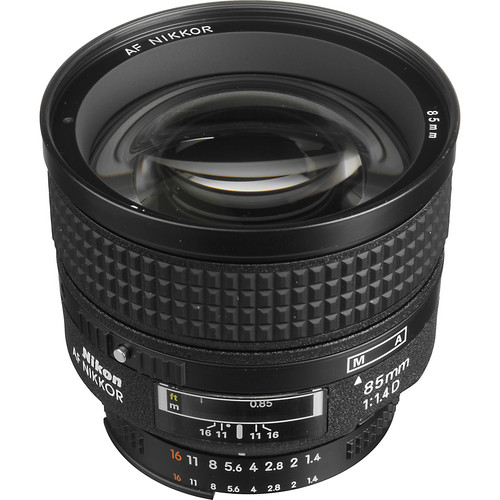
Nikon Telephoto AF Nikkor 85mm f/1.4D IF Autofocus Lens
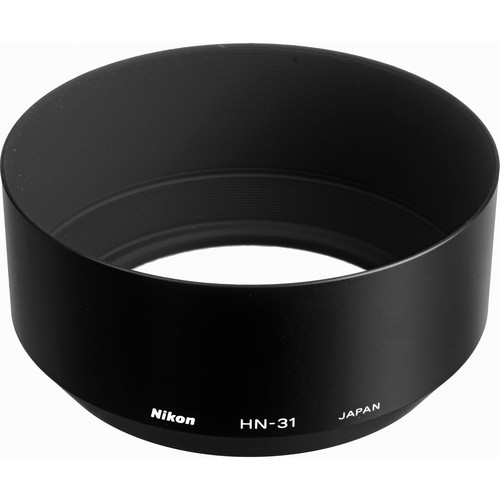
When taking these photos it is very important for you to use a lens hood to avoid lens flare.

The Nikon 85mm ƒ/1.4 comes with a lens hood which is made of metal. You can always buy a rubber off brand hood if you choose.


Why not use a reflector?

Most photographers will choose to use a reflector to act as a foot light, which is a perfectly good thing to do. However, the advantage of using a flash with TTL control is you can control even more so the affect of the foot light.

The best you can do with a reflector is come close to the exact same value of light of the main light, however for some people you may want to pump it up to be even brighter. 

My suggestion is to go out and try some of this yourself. Get comfortable with the setup and trying different things so you have one more lighting option for your portraits.

Monday, June 25, 2012

Lighting African American on black background


This is one of my favorite photos that I have ever made. I think the model brought as much to this session as I did lighting her.

I love her hair, the turtle neck and her wonderful skin and smile.

Simplicity is what makes this work so well.  You need to have the background far away from the soft boxes.  There is easily 10 feet from the model to the background.  So the amount of light hitting the subject drops off pretty quickly and what little light is hitting the background isn't enough to register in the photo.

She is around f/8 on the Mamiya RZ 6x7 camera system. I was using a 100-200mm zoom lens and shooting with Provia 100 transparency film.  I didn't know how good it was until I got the film back from the lab a day or so later.

Sure I shot a test shot. I shot that with a Polaroid back using Fuji's Polaroid film.