Showing posts with label Vibration Reduction. Show all posts

Thursday, January 24, 2013

Nikon helps to continue solving photography's number one problem

Nikon D3, 24-120mm, ISO 6400, 1/50, ƒ/5.6 (shot at 112 focal length)
Photos are not sharp

While the photo above is not terrible it isn't sharp. Look at the enlarged section here below.


The reason the photo isn't sharp is not due to the camera or lens. You see the number one problem facing most photographers today is soft images due to camera movement.

No matter the camera you are shooting, the best thing to combat camera movement is a tripod. Your images will be the sharpest possible, that is if your subject is perfectly still during the exposure.

The second thing you can do is to increase the shutter speed. The rule-of-thumb is turn your focal length into a fraction. Put 1 over your focal length and then find the closest shutter speed on your camera faster than it and you are generally good to go. 

In the photo above I was shooting at focal length of 112. I would convert this to a fraction of 1/112 and then shoot to the closest shutter speed, which for my camera would have been 1/125.  Notice however I was at ISO 6400, ƒ/5.6 and 1/50.  I needed to go up by more than 1 stop to do that for this photo.

For various reasons I couldn't raise the shutter speed. To raise it would have been to push the ISO to 12,800 and the D3 really didn't look all that good at 12,800. I was already wide open and so I couldn't open up the aperture any more. I couldn't shoot with a tripod in the hair salon because I would be in the way of customers.

Nikon to the rescue
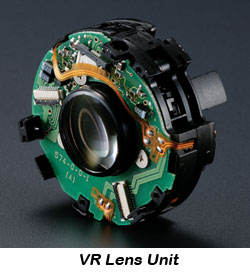
Nikon added two lenses to some of their lenses to help with camera shake. These lenses help with vibration and reduce the camera shake by counteracting it. They call these lenses VR which is acronym for Vibration Reduction. Nikon VR lenses use two angular velocity sensors, one that detects vertical movement (pitch), the other, horizontal movement (yaw), with diagonal motion handled by both sensors working together. The sensors send angular velocity data to a microcomputer in the lens, which determines how much compensation is needed to offset the camera's shake and sends that information to a duo of voice coil motors that move selected lens elements to compensate for the detected motion.

If you ever go on a cruise the ships have similar devices called gyroscopes that help stabilize a ship in rough water. If you have ever been on a ship and you still felt the roll of the sea this is because there is a limit to how much they can compensate.

The compensation of the Nikon VR II lenses is about equal to four stops. What this means is if you were shooting hand held with a camera lens at 1/60 then you should get the same sharpness as if you were shooting at 1/1000.  So you should be able to handhold a 1000mm lens at 1/60 based on this technology.  But if you have ever handheld a 600mm lens you know that few can actually hold one up.

The VR system can also detect the use of a tripod, recognize panning―an instance in which you wouldn't want the lens to compensate for movement―and address the specific shake caused by the ongoing vibration patterns produced when shooting from a moving vehicle. From my personal experience you want to turn off the VR function when shooting from tripod.

Nikon D4, AF-S NIKKOR 28-300mm f/3.5-5.6G ED VR, ISO 12,800, 1/80, ƒ/5.6 300mm
Just a few years later I now am shooting with a Nikon D4 instead of the D3 above. I can now shoot ISO 12,800 and I also have the newer AF-S NIKKOR 28-300mm f/3.5-5.6G ED VR that is a VR II technology.

I am hand holding this lens and just loving the results.

This is cropped area of the photo above. Notice how sharp the eyelashes are in the photo.
When I started shooting professionally 30 years ago I was using the Nikon FM2 film cameras. Let me list a few things that have changed making the above photo possible that I could have never done before.
  • Auto focus lenses
  • Highest ISO I shot in 1982 was ISO 400 for color and today I regularly shoot ISO 12,800
  • Vibration Reduction (letting me hand hold images four stops slower)
  • In Camera White Balance today (Only Daylight, Tungsten and BW film in 1982)
In 1982 Nikon had a 50-300mm that weighed 6lb 2.8oz

The lenses were manual focus early in my career and weighed a lot more than today. They are not as sharp as today's lenses due to the ability of computers to help in the design today.
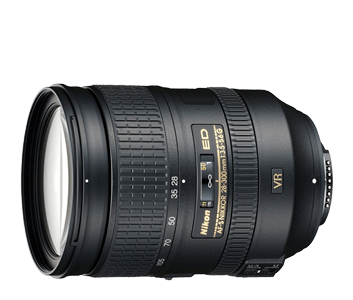
Today this 28-30mm lens only weighs 28.2 oz and can focus faster than I could ever do with manual lens.
Nikon has helped me take photos I could never have taken before in available light, which is helping me provide services to my clients that have never been done before.

My go to lens

The AF-S NIKKOR 28-300mm f/3.5-5.6G ED VR lens might as well be bolted onto my camera. I do use other Nikon lenses, but this is always my first choice in majority of the situations I shoot. This lens with the Nikon D4 is one of the best combinations in camera gear today.

Saturday, November 03, 2012

Shooting Volleyball with the Nikon D4 using available light

Nikon D4, 70-200 ƒ/2.8, ISO 12,800, 1/1250, ƒ/4
Today I shot a volleyball game with just available light. I was pleasantly surprised at how nice the quality of the images were for shooting under sodium vapor lights.

The Nikon D4 is something I wish I had back in the 1980s.  During those years I was shooting sports every week for the daily newspaper that I worked back then. Now I only occasionally shoot sports.

While the Nikon D4 has the high ISO capabilities the new technology of vibration reduction also contributes to the photos being sharper than I can remember.

Nikon D4, 70-200 ƒ/2.8, ISO 12,800, 1/800, ƒ/4
White Balance Setting

To insure I got the best skin tones possible, I used the ExpoDisc.  I put the ExpoDisc over the lens and pointed it towards the lights in the gym.  I also slowed the shutter speed to 1/100 to be sure I was not catching the lights during a cycle.  After doing this for both of the Nikon D4 cameras, I cranked the shutter speed preference in the Auto ISO settings to 1/2000.

Nikon D4 Exposure Settings
  • Aperture Priority
  • Auto ISO
    • Lowest ISO 100
    • Highest ISO 12,800
    • Shutter Preference 1/2000

I also was using the Vibration Reduction on the lens to help improve sharpness due to handholding the lens.

Nikon D4, 70-200 ƒ/2.8, ISO 12,800, 1/1250, ƒ/4
With the Nikon D4 you also have auto focus setting as well to choose from.

Auto Focus Setting for the Nikon D4
  • Continuous Auto Focus
  • 21 Grouping
  • Kept it centered and locked it
  • Focus Tracking on Long
  • Shutter on C-H 10fps
Nikon D4, 120-300 ƒ/2.8, ISO 12,800, 1/1000, ƒ/5.6
My Favorite Angle

This is my favorite angle for shooting volleyball. However, the one thing I would have loved even more was to shoot from a slightly higher angle. The reason for this would help me keep the net from trying to refocus my lens.

Why I like this angle is I can show the team I am covering. You can see their face expressions and while I cannot see the other teams faces, I can see the competition in the body language.

The good thing in shooting up a the players is it gives them this Greek gods feel.  I like athlete looking like they are bigger than life.  Shooting up at them helps to create this feel.

There you have it, my settings and secret weapon, the Nikon D4.