Saturday, January 12, 2013

Master's Thesis on Don Rutledge: Chapter Two


THE EARLY YEARS WITH BLACK STAR, 1955 TO 1966
Don Rutledge
         Don was born in Smithfield, Tennessee.  Not long after being born the family moved to Murfreesboro, Ten­nessee, south of Nash­ville.  "Good ole' home folk," is what you would say about the Rutledges.  They lived on a farm where all of them worked togeth­er as a family.  Growing up in rural Tennes­see is where Don was ex­posed to the world.  Don's family was involved in the local Baptist com­munity church, where they were often praying for and listen­ing to missionaries from all over the world.  Although this family was in the coun­try, they were not limited by any means.  This world vision is what would drive Don throughout his life.
         One of Don's uncles had a box camera.  Don asked if he could use it.  Going to the local drug store, he bought some film and went back to the farm to explore his own home with a camera.  Don took many dif­ferent pictures of the farm while he was a teenager.  Having these photographs developed, he started to see the mysteri­ous power of the photograph.
         While attending Temple College in Chattanoo­ga, Tennes­see, Don took photo­graphs for the student paper and year book.  This experience helps to build his techni­cal skills and proficiency with the camera. 
         During the sum­mers Don went on mis­sion trips to help mis­sion­aries in places like Central America.  Recording these visits with his camera, he then would show the pictures to his church and other groups. 
Figure 4 John Howard Griffin uses the heat lamps to help tan his 
skin with the aid of drugs.  This process helped to change him into 
appearing Black.
They not only enjoyed the photo­graphs, but were "trans­ported" from Tennessee to Central America, through the "eyes of Don."  Don was always pulling for the underdog, since he could relate.  While in high school some boys jumped Don and seriously hurt him.  He had been wear­ing braces at the time.  His mouth was beaten up outside and inside.  He later found each of the boys alone and repaid the fa­vor.  He knew very well what it was like to be a minority in umber.  This experi­ence taught Don, that there are times when people need others to help them. 

Figure 5 John Howard Griffin uses makeup to smooth out his complexion
        Don's helping nature moved him into the ministry.  Don was an­swering the call to the ministry that he felt deep inside of himself.  After talking to church leaders, Don was led to believe that the only place that he could serve as a minister was as a pastor or a mis­sionary.
         Don Rutledge majored in religion and psychology in college.  These two give Don the edge on under­standing people.  Theol­ogy is cen­tered on relation­ships.  The Bible teaches us how God wants and desires a relationship with his people.  We also learn through the Bible about the relation­ships between people.  Nurturing each other as believers and reaching out to God's world is what the Bible teaches.  Jesus said,
Figure 6 Checking his makeup one last time before venturing out as a Black man.
"For I was hungry and you gave me something to eat, I was thirsty and you gave me something to drink, I was a stranger and you invited me in, I needed clothes and you clothed me, I was sick and you looked after me, I was in prison and you came to visit me."
         Then the righteous will answer him, "Lord, when did we see you hungry and feed you, or thirsty and give you something to drink? When did we see you a stranger and invite you in, or needing clothes and clothe you?  When did we see you sick or in prison and go to visit you?"
         The King will reply, "I tell you the truth, what­ever you did for one of the least of these brothers of mine, you did for me."[1]
Don's life reflects this passage.
         The psychology taught him how to read body lan­guage.  Body language is very important in Rutledge's photographs.  The body language is more than peak actions of anger, sadness or happiness.  It runs the full range of emotions.  Both the theology and psychology become so integrated in Rutledge's work that it is difficult to separate the two. 
Figure 7 Mr. Griffin talks to the help in a restaurant in New Orleans.
         Don wanted to help people in need and aid them in acquiring dignity.  Don, through his preaching, tried to communicate to people but was never truly comfortable in the pulpit. 
         While at Temple College, Don served as president of the student body.  He was a very quick thinker in his own right.  Don grew up in the most conservative of backgrounds.  Like many from this conservative background, Don saw some of the fault of this thinking.  Later Don would see that very few groups have it all together.  Throughout college, Don started trying to find his niche in society. 
         After graduating, the Director of Missions of Murfreesboro Association in Tennessee asked Don to consider pastoring a church.  He talked to Don about how the church was falling apart.  Going into this pastorate Don was planning to help the church close its doors.  Coming from the very conservative group, where most pastors ruled with certain authority, Don took a completely different approach.  Don encour­aged the people to grow as individuals and as a group.  He let them take control of the church.  The reason for this "hands off" practice was twofold in nature:  (1) Don did not believe in telling people what to do, and (2) he was pursuing the career as a photo­journalist during the week. 
         Being a bi-vocational pastor allowed Don to combine two loves.  Don was fulfilling the call to the ministry and was trying to understand this call of photog­raphy.
         In 1955, Don frequently wrote Howard Chapnick at Black Star, a photo agency in New York.  Don had noticed the cut-lines of the photographers in magazines and noticed that Black Star represent­ed many of the photographers.  Black Star told Don they wanted to see a portfo­lio before giving him an assignment.  Don didn't have a portfolio.  During the time Don was corre­spond­ing, he gave them story idea after story idea.
Figure 8 The shoe shine man had to be told by Don
that John Howard Griffin was white and not black.  He
could hardly believe that this man was really white.

         Black Star was frus­trated with the person who kept writing them so often.  He had some good ideas, but can he take a photograph?  They wrote back letting him know that they liked one of his ideas.  They contacted the parties to see if they were interested.  That first story was for Friends magazine.  This was the magazine of the Chevrolet Compa­ny.
         Don was so de­lighted with the response, he imme­diate­ly contacted the people in the area for the story and went and shot the story, also writing the material, and sent the package of contact sheets and material to Black Star.  Black Star was quite upset. "We haven't even talked to them and you have already shot the story," was the reply Don received.  They also in­formed him of the many holes in the story and how it would not work.  This was their mistake. 
Figure 9 In New Orleans, John Howard Griffin outside a movie theater entrance.

         Don contacted the people again and went back filling in the holes.  This was Don's really first time to have someone cri­tique his work and guide him.  The Friends magazine not only liked the work but wanted to use Don again.  This was the begin­ning of a close relation­ship of Don with Black Star and even more so with Howard Chapnick.
Figure 10 Don's awareness of body language is sometimes very clear-cut like here in this photograph of teacher and stu­dents.  Often the body language is more subtle in Don's photographs.  Body language is always important in Don's photographs.
         Meanwhile, Don's career with Black Star was growing and so, too, was the church.  Don's leadership style, which required all the people to become in­volved, saved the church and helped it to become a strong church of the com­mu­nity.  Don realized that the church needed some­one full-time.  Don joked with the people saying that when he was gone doing an assignment and another person filled the pulpit, the attendance was always higher.  Don was feeling more at ease as a photog­rapher and less content as a pas­tor.  Don re­signed, and the church today still has good memories of Don.  They con­tinue to invite him to speak at homecoming.
         Living so close to Nash­ville was ideal for a photogra­pher.  Black Star was needing coverages of the Grand Ole' Opry and special coverages of the personali­ties in the Nashville area.  Mirror magazine had asked Black Star to find the next up—and—com­ing country star in Nashville. 
Figure 11 Don took this in 1967 inside the Arctic Circle.  People are so comfortable with Don that he is able to be apart of the woodwork. 
Don was given the assignment.  Don asked around about how to find someone who would know about the up—and—coming stars.  After searching throughout the Nash­ville area, Don was told about a man who gave pens to those stars that were up and coming.  This man was supposed to be the best at spotting new talent.  The man happened to be under Don's nose all the time.  The man who knew all the up—and—coming stars worked at the camera store Rutledge patronized.  The man who had been waiting on Rutledge for years was the expert on the country singers. 
         After talking with this expert, Don went to this unknown country singer's home and wondered if this person new what he was doing.  Don sat on a crate and talked to Loretta Lynn and did the story.  This interview is portrayed in the movie "Coal Miner's Daughter."  Don helped to launch the career of Loretta Lynn.  Don photo­graphed many of the stars of Nashville for Black Star.
         Don did coverages for Black Star on religious subjects.  He followed the Wycliff translators into the Amazon.  He photographed a theater group at Georgetown College in Kentucky that painted their faces like stained glass.  The story was again religious in nature.
Figure 12"Don discovered these two young­sters who
proudly displayed the results of their morn­ing
hunt.  In that section of Cincinnati, rats were not
particularly difficult quarry to locate."
[Walk­er Knight, See How Love Works]
         While Don had started working with Black Star, our country was in a major turmoil.  Although Lincoln had helped to free the slaves, the Blacks were still in bondage in America.  Racism had led the country to the Civil Right's Move­ment.  Dr. Martin Luther King and other prominent people in the movement, were photographed by Don.  His camera helped America to see itself in the mirror.  Most of the country did not like what it saw.  Don Rutledge helped America see how the South was an apartheid.  Today in South Africa it is being played out again.  But in the late fifties and early sixties the United States had its insides turned out for the world to see.
         Don was raised in the midst of the racist environment of the South, but was not at all a part of the oppression of the Blacks.  Don was one of the strongest photojournalistic voices during this time.   Don not only covered the news events, but created with a writer one of the most powerful books during the Civil Rights move­ment: Black Like Me.
         One day while he was reading the newspaper, Don noticed an article about a street in Atlanta, Georgia, that had more Black millionaires than anywhere else in the world.  How could this be?  Black millionaires in the South?  Don contacted Black Star with the idea of doing a story on this idea.  They checked their connections to see what magazines might be interested.  They found a magazine based in Fort Worth, Texas, that was interested.  They sent the writer, John Howard Griffin, to work with Don on the coverage.  While the two of them worked on the story, Howard Griffin talked with Don about an idea concerning the Civil Rights issue. 
         John Howard Griffin had the idea of taking some hormonal drugs that would alter his appearance, mak­ing him look Black.  He also would style his hair dif­ferently as to look as much like a Black as possible.  His idea was to cover the story of what it was like to be a Black in the South just from being a different skin color.  This story intrigued Don.  After complet­ing the story on the million­aires, John Howard Griffin and Don disap­peared into the deep South to do the coverage for Black Like Me.
Figure 13 During 1967 Don went to Dania, Florida and
photographed this Seminole woman sitting under a
chickee, a thatched hut of Indian design.
         As they worked on the coverage, they sent the pictures back to the maga­zine.  This made certain that everything was coming out fine and the cameras were working well.  Howard Chapnick of Black Star told this story over and over to many photogra­phers emphasiz­ing the difficulties in which one can get involved when working without a good agency.  Don was not on staff for Black Star but was a major freelancer for them.
         The editor of the magazine sent some of the photographs over the wire service before Don and the writer were ready for them to do so.  This had editors all over the world call­ing, wanting the story.  They were bid­ding for first rights to the story.  Black Star sold the story all over the world.  Then the pub­lisher indicated that Don had commit­ted to him all the rights.  "This was what I thought was an unscru­pulous publisher," ac­cording to Chapnick.[2]  There were meetings with Don, Howard Chapn­ick and the publisher.  The publisher said, "You are sophisticated urban New Yorkers, and I am just a country boy."  "Well this coun­try boy really took us over," remarked Howard Chapnick.  "Because of his high sense of ethics, he really didn't want to battle the man for money.  So all this good work that he did and the good work we did in placing the material, all went for naught as far as the fi­nancial return for Don."[3]
         "His strength over the years was his high sense of ethics and his religiosity, if you will," commented Chapnick.  "This carried through into his concern for mankind and the important issues.  He tried to use pho­togra­phy to make people aware of the great problems in the world.  He used it as a force for change; changing public perceptions and alert­ing the world to the prob­lems that the world suffers like poverty and sickness."[4]
         "One of his great strengths is that he was very observant of the world around him, not only in terms of the big stories, but the little stories, too.   He had this happy faculty of being responsive to visually translatable ideas which could be made into saleable entities."[5]
         Don was concerned that the pictures were becoming more important than the story itself.  Don gave the negatives to John Howard Griffin.  The book came out.  Don never received any roy­al­ties.  The result was that Black Star had to give all the money it had received to the magazine.
         "Don was always good at providing background information and captions, and this is something that isn't always apparent with a photojournalist.  They tend to be pretty sloppy in adding the important words which give more informa­tion than photographs, which sometimes are ambiguous.  There were few that were as prolific as Don," remarked Howard Chapnick.[6]
         Eugene Smith could be considered to be Don Rutledge's mentor in photogra­phy.  Eugene Smith was one who tried to capture with the camera more than just people as objects——he tried to capture the essence of the person in his photographs.  Eugene Smith kept the dignity of those he photographed and made them heroes in the story.  The subjects were romanti­cized by Eugene Smith.  People, like the Doctor that he shot for Life mag­azine, were al­ways por­trayed in such a way that the viewer identified with the sub­ject.
         Don studied pho­tography masters and often quoted them.  This was Don's educa­tion——reading and studying the masters of photogra­phy and being aware of the world in which he lives.  Being a Christian means growing in Christ.  As a Christian grows he should be able to just move easily into situations and respond with the heart of Christ.  "One does not think dur­ing creative work, any more than one thinks when driving a car.  But one has a background of years——learning, un­learning; success, failure, dreaming, thinking, experience, all this——then the moment of creation, the focusing of all into the moment," was the statement made by Edward Weston.[7]
         Jesus looked at people as individuals——he saw the tree in the forest.  Christians, too, must focus on the individuals in their minis­try.  Photographing people should reflect how one cares for people.  "The photographer should not come to his subject with his image all fabricated in his head," says Robert Doisneau.  He continues saying, "The photogra­pher must be absor­bent——like a blotter, allow himself to be penetrated by the poetic moment, by the spirit of the place where he finds him­self."[8]
         Don is true to the moment and never asks people to stage something.  He may ask them to repeat something but never fabricate anything unnatural.  "Nature has a great deal more imagination than I have; why should I try to improve on it?  The best I can do is to look for these manifestations and to photo­graph them before they get away."[9]
         Don believes that pictures are not merely to document an event or show what a person looks like, but to communicate the essence of the event or person to the audience.  "The best pictures are made by those photographers who feel some excitement about life and use the camera to share their enthusiasm with others.  The camera in such hands is a medium for communicating vital experi­ence," voiced Roy Stryker, editor of Life magazine.[10]  For Ben Shahn, "Photog­ra­phy is a matter of communi­cation in human terms and mostly in human subjects, and I have set this very sim­ple problem for myself, of showing humanity in those terms that interest me and in the clearest way."[11]  Eu­gene Smith said, "The more important the story, the better the photographer should try to tell it.  Even when the material is suffi­ciently important to make its impact regardless of the quality of my print, the more powerful the picture, the more certain I am that people will have a chance to under­stand what I want to say."[12]
         Jesus, rising from the tomb was the culmination of the gospel.  He defeated death.  The choice of his words were so wise and timely.  The Bible pictures impor­tant events as moments, not as long events. To me, photogra­phy is recognition in a fraction of a second, simul­taneously of the significance of an event as well as of precise formal organization which brings to life that event.
         The camera works fast, and so does the photogra­pher.  Within the second he has to see and to feel, to under­stand and to select, to react and to act.  Movement and expression unseen before it is stopped.  A mo­ment is captured that never was and never will be again.
         All attention is con­centrated on the spe­cific moment, almost too good to be true, which can only vanish in the second that follows and which pro­duces an impact impossible with any staged set­ting.[13] 
         Photography has a unique power to awaken social conscience.  If you are genuinely concerned with the plight of the people you are photographing, and are convinced that your photographs can do some­thing——however little——to help them, then your sincerity and good intentions will inevitably shine through.  This in itself will help you to secure from the people around you the coopera­tion that is essential if you are to produce good pictures.
         On a practical level, try to be as sensitive as you can to the feelings of the people you are photo­graphing or working with, and make sure your photo­graphic technique reflects this sensitiv­ity.  Keep a low profile by using avail­able light, not flash, and remember that many people are easily intimidated or antagonized by ostenta­tious display of photographic equipment.[14]
         When Don's colleagues are asked about Don and how he has impacted them, they all refer to his integrity.  Don communicates well the idea of the eyes being the window to the soul.  Maybe this is because Don tries to keep the innocence of a child when photograph­ing.  Don says,
         Photography is a fascinating communications medium.  It forces us to see, to look beyond what the average person observes, to search where some people never think to look.  It even draws us back to the curiosity we experienced in our childhood.
          Children are filled with excitement about their surrounding world:  Why is the sky blue?  Why is one flower red and another yellow?  How do the stars stay up in the sky?  Why is the snow cold?
          As the years go by that curious child matures into a normal adult with the attitude of "who cares anymore about those childish questions and an­swers?"  At that moment much of the world becomes mundane, little more than a place of survival until retirement and finally death.
          But photography, in its best usage, will not allow us to do that.  It forces us to continue asking ques­tions which began in our childhood and probe for an­swers in the maturity of our life.  The "seeing beyond what the average person sees" fills us constantly with excitement and allows us to keep the dreams of our youth.  It gives "seeing" a newness and freshness as a person works hard to communicate through photogra­phy the messages that need to be conveyed.[15]
         Don always tried to look at life in a creative way.  Don took frequent rides into the country with his wife Lucy.  The writer and his wife would go along.  Often Lucy wanted to look through Don's camera to see what Don was seeing.  "He always sees something that I do not see," was Lucy's praise of Don.  She enjoyed seeing Don's photographs.  Don says that she is his biggest critic and fan.  She can be so honest with Don, and Don listens.
         For Don to be on the road and have two young boys growing up required Lucy to run the household while he was away and help make the transition when Don returned home.  Things were not always smooth at home, but today Mark, the oldest, is a mission­ary with his wife in Haiti.  Craig, the youngest, works with the Home Mission Board in Atlanta at the main office. 
         Today Don does not enjoy eating at fast food hamburger places.  For the first years on the road that was all that he could afford.  Often Don drove home several hours after a cover­age to return early the next morning, because he did not have the money for a motel.  For Don to make the pilgrimage that he did, he had to remain committed.  He also had to have a real call, for the struggles were sometimes unbear­able.  Going from the pulpit to the streets of the world opened Don's eyes and allowed him to see God's world as a boy from the farm in Tennessee could have never imagined.  Don's coverages in the fifties and sixties helped to pave the way for the coverages he would later request to do in the religious establishment.  These years with Black Star established him as one who was capable of delivering.  Don had a back­ground that showed he had covered the top stories in the world.  Even with this background, Don continued to struggle.  Portfolio or no portfolio, his next stop in Atlanta tested his patience and endur­ance at wanting to be a minister with a camera.

    [1] Matthew 25:35-40, NIV (New International Version).
    [2] Mr. Howard Chapnick, interview by author, Tape recording, New York, New York, 12 October 1992.
    [3] Ibid.
    [4] Ibid.
    [5] Ibid.
    [6] Ibid.
    [7] Jacob Deschin, 35mm Photography, (New York: A. S. Barnes and Company 1959), 14.
    [8] Ibid.
    [9] Ibid.
    [10] Ibid.
    [11] Ibid.
    [12] Ibid., 15.
    [13] Ibid.
    [14] George Constable, Photographing the Drama of Daily Life, (Chicago: Time-Life Books, 1984), 72.
    [15] Don Rutledge, "Better photos for your publication or photography for communicators."  Unpublished article given to writer by Don Rutledge, 1992.

Wednesday, January 09, 2013

Business Tip: The Piggyback Assignment

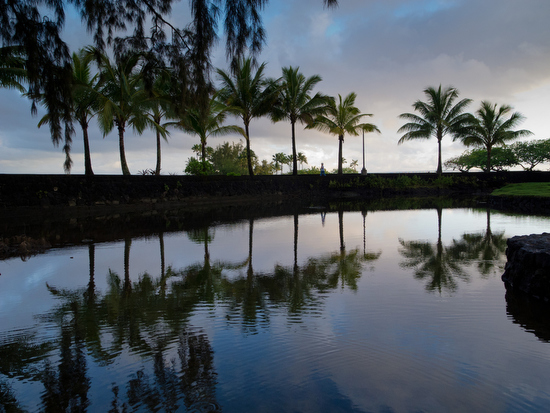
Liliuokalani Park in Hilo, Hawaii located on Banyon drive.

One of the best ways to get a job is to have a job. We have heard this comment made to people looking for jobs or career change.

Some reasons for this being said so often:
•    It’s a lot easier to explain why you want a better job than why you were fired from your last one.
•    You are already plugged in
•    They say that a friend in need is a friend to avoid.
•    You are already battle tested. Someone else’s already taken the risk and keeping you
For the freelancer having a job where you need to travel is a great time to Piggyback assignments. In essence you are just like the employed person looking for another job.

When a client is sending you around the country or globe the best thing you can do is to now leverage this into more assignments on the road.

There are some obvious reasons and not so obvious reasons to always try and piggyback assignments. 
•    Saving clients on travel expenses.
•    Great way to show to your present clients and potential clients that other clients use your services
•    You are not a needy photographer
•    Shows you are thinking of them
Stanley at Hawai'i Volcanoes National Park.

You may think of more reasons this could be a positive in your column with clients and potential clients. The key is to remember to reach out to your clients and let them know they have an opportunity to save on their budget and maybe there were some photos they would like but didn’t pursue because of the travel expenses.

You need to have a good database of clients to send these requests to and then you can make the most of an opportunity.

How many times does this turn into an assignment—well not that often. But it only takes one time here and there for the payoff to make it worth it.

This is also not just about getting a Piggyback Assignment. This is also another way to market you. Just think of this as another legitimate reason to contact a client that they will not see as SPAM or an annoying phone call.

Mix this in with your snail mail promotions, blogs, eNewsletters and phone calls. You now have one more way to reach out to your clients that will be perceived as a positive from their perspective.

A little secret I learned from my friend Ken Touchton. When you have nothing going on you can always use the Piggyback Assignment on top of your own personal trip. This is great to do if you know there is work in an area where the client is not willing to spend money on travel but you want the work anyway. This way a client will not know if you lowered your rates to get some jobs. Also, once one client gives you the assignment you only need one more in most cases to do really well.

Sunday, January 06, 2013

Business: Jot or Tittle assignment details

A tittle is a small distinguishing mark, such as a diacritic or the dot on a lowercase i or j.
If you leave out a dot or tittle you can screw things up. This has been true since biblical times and now with computers it is just as true.

Today you hear on the radio and TV the announcer saying you can find such and such business at www dot and then they give you the rest of the address. Sometimes there are many dots in that url address. You miss just one or add one too many and you get error messages.


Read the instructions

So you are really gifted and can put together anything on Christmas morning under the tree without reading the instructions.  Good for you. However, assembling something and shooting an assignment for a client is not the same thing. You forget to read the instructions sent by the client and you could be creating a mess for your client.

You may want to know why some clients send very detailed explanations. Just hire photographers for projects around the country and you will soon discover how many photographers cannot follow instructions.

Lets say you have dyslexia or just some other learning disability making this a struggle for you. This is where you must be proactive with the client.

If the client has a specific uploading site they want you to put your photos--ask them for a dry run. With computers you can save all those settings in most software so when you finish shooting an assignment you know you will deliver the photos.

Go through the instructions one by one and be sure you understand the instructions as the client wants you to understand them. This means read each detail and if it could be interpreted a couple of ways or you are not sure what they are asking then call them or email them with your clarification questions.


Sometimes the instructions are wrong

I have had numerous assignments where the client is still using the same set of instructions from 20 years ago. If you don't believe me just look at some of the listings in Photographer's Market. They still want you to shoot film and when you contact them to check on that they say no we haven't done that in years.

I had one client who wanted the highest resolution images and then so many I was shocked when they requested them all as TIFF files. It was going to take a few hours with a high speed connection to upload them. They were still dealing with lower resolution cameras and files that were quite small.  With my camera now we are taking about a 50 meg TIFF file for each photo.  Send a few hundred and you will not being going anywhere soon.

Stanley's Tips for the freelancer
  • Always ask them to send their request in writing--preferably an email is how i like to receive them.
  • Always have in writing what you are providing the client for the assignment. The best thing is to have a contract spelling this out. It protects both the photographer and the client. 
  • Spell out when payment is expected and deliverable is expected.
  • Review all instructions and ask clarifying questions. This doesn't make you look like you don't know what you are doing, but often helps to know you are paying attention to their details.
  • If you need to send them files electronically clarify how this will be done. Do they have an ftp server or do you need to provide that.
  • Do a test run with one image to be sure they get it and it is like they like it.
  • If your project has multiple days of shooting, try and give your client some images as soon as possible to be sure you and they are on the same page. Much better than shooting on and on only to find out you were not on track and they will not be paying you.
  • Many clients today may have file naming protocols due to their database system. With software like PhotoMechanic and Adobe Lightroom you can easily rename your images for them and then keep your own system.
  • Metadata is important for you and the client. If the client doesn't need any metadata you still should be putting your © information on every photo. Be sure you put something in the caption and keywords so you can search for the image.  Both the PC and Macs will search the metadata and find it for you.
  • Keep receipts and scan these and attach them to your invoice. I prefer sending a PDF with all the receipts attached in the PDF as extra pages. I also attach each receipt to the ledger in Quicken Home and Business. So if it was a VISA, AMEX or Check the receipt is scanned and attached to that transaction.  Helps for taxes later.
  • Always send a W-9 with your first job with a client. My W-9 is a PDF that I attach to the email which also has the invoice.
  • When you send an email letting them know you have sent everything to them you can attach your invoice and W-9 to this email or ask them to see if everything is OK that is delivered and then once they respond then send your Invoice then in response. This gives you two things. First you have them acknowledging everything is acceptable and they have the bill. I usually send the invoice and W-9 and ask if everything is acceptable and then I have acceptance and acknowledgment that they recieved my invoice and W-9.
You may have great photos on your camera, but you must get them off the camera and to the client. The speed and accuracy of doing this will win you a client for life. Believe me you would be surprised how many photographers do not follow through on all the instructions given to them by the client.

Those photographers who clearly follow directions make the life for the client so much better.

One agency I do work for confided in me about they have staff photographers that have never completed a project yet. A typical assignment for this agency is to take just a few of the images from a shoot and send them with a press release. The rest of the project goes into their database from the shoot to be used in their stock file system.

The staff photographer had always sent just a few images from their world travel.  Yes this photographer was being sent around the world.

The agency was always in need of their stock images for more than those press releases.

By the way even when the photos were sent they were never captioned and key worded correctly.

Needless to say the photographer lost their job.  They didn't loose their job because they didn't shoot good images--they failed to follow through.

You want to be successful--Big Clue is to follow the directions of the client.


Saturday, January 05, 2013

Don Rutledge my mentor

Don's awareness of body language is sometimes very clear-cut like here in this photograph of teacher and students. Often the body language is more subtle in Don's photographs. Body language is always important in Don's photographs.
I am processing film at the Hickory Daily Record when I get a phone call from Don Rutledge. He told me about an entry-level photographer position for the International Mission Board.

The chance to learn from Don Rutledge was one of the best opportunities in my life. While I wanted Don to look at my work, it was Don taking time to walk me through his contact sheets that helped me the most.

Don’s storytelling with his camera helped missionaries realize God's calling for them. Those impacted by his work is vast.  Just as vast as his stories are those he mentored.

Harley Shields is a Southern Baptist Home Missionary whose work place is Selawik, Alaska. Don photographed him in 1978.
Unless Don was on the phone his door was open at the office. While I worked with Don I cannot remember how many people that came by or called to ask for Don’s advice. No matter how bad their work, Don treated each and everyone with honor, dignity and respect.

He always looked for something positive to talk about with them. I learned that when Don would look through my contact sheets if he passed over a sheet then he couldn’t find something to say something positive. He was often very quiet while looking at my work early on.  He would then reach for his contact sheets to talk—rather than say my work stunk.

In 1967 Don Rutledge went inside the Arctic Circle and captured this Eskimo child playing.
What Don taught me was how important it was to not use visual gimmicks to create interest in a subject. Don taught me to learn how to compose a scene like you might see a stage in theater. When the curtain rises the composition has been done, but then the scene develops. The audience doesn’t get different camera angles; they see the subjects moving in the scene. Don helped me to understand the rise, the peak and the fall of the action. He showed me my contact sheets should show this rise, peak and fall.

"Don discovered these two youngsters who proudly displayed the results of their morning hunt. In that section of Cincinnati, rats were not particularly difficult quarry to locate," said Walker Knight.
Don then taught me how important it was to understand body language. I remember him showing me a series on a contact sheet. See the mother reaching out to the baby.  See how just before she touches the baby it is more powerful image than we she actually touches the baby. The anticipation is stronger than the actual touch. He then reminded me of Michael Angelo’s Sistine Chapel painting of the creation of Adam. Reaching of God and not touching.

Don understood how important the relationship of people to each other in the photo is the real power of the storytelling image.

In the Philippines families cluster together for meal.
Don understood that his God gave his life for a relationship with each one of us. Nothing was more important than to establish and grow relationships. All of Don’s work was to show the power of God’s love. You either see the celebration of God’s love or you feel the sadness of someone who isn’t letting God into their life.

Don helped me to realize how I could fulfill my call to ministry with the camera. Don was a pastor who realized the camera was a pulpit and the congregation wasn’t limited by the walls of a church.

Don Rutledge
My clients today tell me often how much they like my storytelling. My success is due to Don taking me under his wing and teaching me.

Some of my friends who were also mentored by Don have commented to me that they can see Don’s influence in my work. While this always brings a tear and lump in my throat it has been photographers who thank me for teaching them that makes me the proudest.

The greatest way I have to honor Don is to make photos that respect the subject and tell their story. Also helping other photographers like Don helped me is a way to pay it forward.

I can never thank Don enough for helping me to see the world through God's eyes.

Friday, January 04, 2013

Business Tip: Look for clients not subjects


How do you consume photography?

I think way too many photographer wannabees are skipping past the most basic understanding of making a living as a photographer. Who buys photography? This is a basic question that is overlooked.

You would think that photographers themselves would be one of the largest consumers of photography. However, too many photographers don't even buy photography themselves.

Now if a photographer isn't moved to spend money on photography and they are one of the most interested in the subject why are non-photographers willing to spend money on it?

Here is a big clue to you as a photographer wannabee; if you are not purchasing images on your photography interests then it is a good indicator no one else is either.

If you want to be a sports photographer you should be subscriber to Sports Illustrated, the local newspaper or some other publications that use sports photos. If your attitude is those publications are not as good as they used to be and therefore that is why you are not taking them then maybe this is an insight to a dying area of photography.


Client needs an expert

First of all for the most part you need to be somewhat of an expert on a subject to truly make money shooting it today. People can take a photograph with today's cameras themselves. They can even take a pretty good photo without our help.

Your understanding of the subject will help you to make photos that those are interested in the subject would appreciate.

When I took golf lessons the club pro started teaching me how to swing a golf club with a 5-iron.  Once I could hit this consistently straight we moved on to each of the different clubs to make minor adjustments. This is how most professional photographers end up working their entire lifetime in photography. They start with one area and master it and then transfer their photography skills to other subjects.

I started shooting for my college newspaper, which gave me a lot of access to shooting sports. While my camera skills were focusing on sports I was also majoring in social work, where I was being trained to understand body language and helping to apprehend people's situations.

After college I was able to to continue to shoot sports for a regional newspaper. I was also able to take the social work training to help me capture better moments to help tell stories in every day life of people.

After moving on to shooting for a Christian mission agency I went to seminary to get more training, which helps me today to shoot for a variety of church groups and nonprofits. I was trained to understand the nuances in theology that helped me to communicate even more specialized messaging than just taking a picture of what I see in front of me--I am helping tell a story.

What are clients buying?

You really need to know who uses photos of any subject. I wrote a blog on this earlier and here is a link to it.

This requires some investigative skills. You need to trace the life of the photo to the consumer.

Sometimes you maybe so lucky to have an eureka moment. This is when you see a need that is going unfilled by professional photographers. You also realize you are an expert as much as any other photographer could be. This is when you can capitalize on an opportunity to fill a void.

Steve Jobs did this with Apple. The times Apple came out with new products that created new markets is how they dominated. Apple was first to introduce a graphical interface for computing in the 80s. They were the first to introduce the tablet. Most importantly Steve Jobs helped understanding how all your technology works together where you main computer is the digital hub between your smartphone, tablet, iPod and the cloud.

Having a eureka moment is the flip side of a saturated market.  You see something that you could be doing that no one else is supplying. This is really what can catapult you to financial success.


Sports as an example

Once you know the audiences for your photos, you should easily be able to see if your photos are what they're using. Great example is that shots that can be used for a players page in a media guide is one of the staples in sports. A similar use for this photo would be trading cards.  Those photos are rarely so artistic that you cannot recognize the player.

When I wrote about race cars I pointed out how so many interested in NASCAR buy the opportunity to get their logo somewhere on the car.

Now the number one place for sports photos as far as income potential is a business that stands to make money from your photos. If you have such outlets then the potential for income is good.  Now if the places using photos doesn't really make money off the photos (some blogs, editorial) then they cannot pay that much if anything for photos.

As far as sports go today, you need to shoot a lot of sports where you will make almost nothing to build a portfolio to rival not just those who already have those contracts but the long list of other hopeful photographers. 

There are more photographers willing to shoot for free sports than any other subject matter that I know of in photography.  You just don't hear of photographers lining up to shoot a brides wedding for free just to get access to shooting weddings, but the number of photographers as sporting events doing it for free just to get access is ridiculous.

Many of these weekend shooters have disposable income that lets them afford better gear than many of the full-time pros. So having a 600 ƒ/4 and a 400 ƒ/2.8 doesn't make you a pro and make your images look better any more.

I can tell you a long list of places to get access to build a portfolio, but I cannot tell you a single sports venue in Atlanta that will pay you a livable wage to shoot their sports. Most all those have people already on staff or contracted. All the area high schools parents of the athletes shoot the games for free and share the photos with each other. They may pay a pro to do the team photo and some posed shots of the players in uniforms. 

Most of the pros shooting sports that make a living are shooting for the equipment manufactures in addition to some of the editorial market and the combination gives them some income.  Most of these still must shoot other things to break even.

My suggestion is to follow the money rather than just what you want to shoot.  Find those sports no one is covering and they may pay you to shoot since they cannot get good photos. 


Portfolio

I cannot tell you how many times clients have asked if I had examples of a certain subject. You see many of them knew I could shoot, but needed to help others on their team know I have done that before.

You would be crazy to create a portfolio showing every type of subject to get hired, but my point is it is just as crazy to have a portfolio of images which doesn't reflect what people are needing.

There are basically two types of photos you need in your portfolio: 1) Examples of what clients are buying and 2) Examples of things they might buy. The second type of photos are where you are showing things were not looking for, but once they see your work will want to have.


The examples of what they are buying will show how your work provides both the quality in the industry and hopefully a style that separates you from the pack of photographers.

Does your portfolio show the subjects you like shooting or does it show what clients are buying? Those making a living are showing what the customers are buying. The best photographers in the industry are doing both. They show what people are buying and it is what they enjoy shooting.


Wednesday, January 02, 2013

The Photo Package


The Package

This past New Year's Eve in front of a national television audience and a sellout crowd in the Georgia Dome, Clemson capped a dramatic come-from-behind rally with a last-second field goal to defeat LSU 25-24 in one of the most exciting match-ups in Chick-fil-A Bowl history.

While many watching it on TV were enjoying the thriller at the Dome those in Atlanta were able to participate in more than just the game that day.

We assembled a team of three photographers to cover the days events which started with the Chick-fil-A Parade at noon and ran till midnight with the trophy presentation.

photo by: Robin Nelson
Robin Nelson is a seasoned news photographer who is  accustomed to getting the story. He started our coverage with the parade. Later Greg Thompson and myself joined the days coverage and around 6:30 pm Robin left to process some of the earlier coverage that we needed later that night.  Greg and I stayed to cover the game.

Audience?

One of the first things a photographer should be aware of for a coverage is who is their audience. Too many photographers shoot for themselves and sometimes this can work, but often this is what separates the seasoned pro from the amateur.

Our audience was the Chick-fil-A internal audience. We were not producing this package for the general public.

Purpose?

One of the most important questions to ask yourself is why are you doing a coverage. Our answer to this question was to inform the internal Chick-fil-A people as to why we do the Bowl each year.

Every year we try and tell this from a different perspective. One year we told the behind the scenes coverage of what it takes to produce 30,000+ sandwiches in a day.

One common theme is always there in the photos--Branding. You see for a company to buy media time (Advertisements) to run on National TV is very expensive. Time for the Super Bowl this year on CBS is running about 3.8 million for each 30 second spot.

However when a company sponsors an event their logo goes everywhere in the event.


photo by: Greg Thompson
In the past they would take snapshots showing the logos being used. However we knew the images that help tell the story where you still see the logos take the images to a different level--Storytelling.


photo by: Greg Thompson
In the photo of the LSU player running, you can see the logo just as it might appear the next day in a newspaper or in Sports Illustrated. Do you see the difference in what else this is helping us in telling the story?

With photos that would be in Sports Illustrated the audience is seeing how Chick-fil-A brand is part of a world class event. You need world class photography to help communicate it and not a snapshot.


Photo by: Greg Thompson
In the photo of the Clemson player being tackled the logo is not sharp like in the earlier photo, but it is in the background. This helps to communicate the stewardship of the marketing department to place the logo strategically around the field in such a way that almost in every camera angle you see the logo.

More than a logo


photo by: Stanley Leary
Chick-fil-A likes to activate an event. What this means is they like to help take an event to a new level and be like the icing on the cake. They are not playing the game, but helping everyone enjoy it.

During the pre-game and post-game there is a Cow Parachute drop. As you can see from the photo the crowd loves this surprise. I remember the first time Chick-fil-A gave out the plush cows. There was a bad call, well for one of the teams fans and the cows were just flying onto the field. Now the cows they give out won't go that far as easily. It was great publicity the first time the cows were all over the end zone, but they couldn't continue that tradition.


photo by: Stanley Leary
Before the game the fans can go to FanFest to play games and just have fun. Chick-fil-A was giving out the new chocolate chip cookie for free. Just writing about that warm cookie makes my mouth water and wanting one. New Year's Resolution is not to eat so many of those this year.  They are addicting.


photo by: Stanley Leary
Go to Chick-fil-A and you will be so thrilled with the customer service you will find yourself saying thank you and when you do you will hear "My Pleasure" in response. You see one of the other things we are trying to show in our package is how the Chick-fil-A team members enjoy serving with a smile.

Chick-fil-A also enjoys supporting our troops who are serving us with the ultimate gift of service.


photo by: Stanley Leary
In FanFest the fans could play games like the Ticket Tank where they try and grab pieces of fabric to turn in for free prizes.


photo by: Robin Nelson
Pool Photographers

In large events often agencies like Associated Press will only credit the photo with the agency name. This is because the reason one photographer has a shot and another doesn't is due to the roles they have assigned.

Some photographers will be assigned to be in one corner of the track for that just in case photo.

Our team did a great job this year of covering all the days events. We split it up and also overlapped in some of our coverage.

Individual shots vs package

I believe every time we do one of these packages that the larger package is more powerful helping tell the story than the individual photos by themselves. However, the key is strong individual images.

For all those who enjoy shooting sports if you do this professionally sooner or later you will be told that you need to turn around and stop facing the field the entire game--there is a lot more going on to tell the story than the center of the field.

Now there are many photographers who make another mistake when covering a big event like the Chick-fil-A Bowl--they forget the action on the field. You need all of it for the package.

My challenge to you is to shoot all your assignments like they are to be used in a package. If you do the client has the opportunity to produce a package. You also will be giving them more options.

Tuesday, January 01, 2013

How to remain creative as a photographer

Studio Musicians

Professional artists are rarely satisfied with what they have produced. Ask a professional musician what of their work they feel like is just perfect for them and you will most likely hear nothing.

Pam Goldsmith is an emeritus winner of the 'most valuable player' award from the national academy of recording arts and sciences. Her viola playing has been heard on countless records, films and television shows. She is vice president of the American viola society and she also plays the viola d'amore. Her articles on the application of scholarly research to performance style have appeared in many journals.

Our family knows Pam because she was my brother-in-laws partner for more than 20 years. This spring our family is going to visit Pam.  Our daughter is looking forward to her first time meeting Pam and playing her viola for Pam.

The last time I was in LA I had dinner with Pam. This is when Pam shared how she was talking with her friends in the viola society and asking when was the last time they played something they liked. They all said they cannot think of one time.

Pam was listening to a piece of music on the radio and liked how the violist sounded. While listening she then heard a part of the music that gave it away--she was listening to herself. She said this was the first time she liked her work. It was by accident.

I could related to Pam's comments as a photographer.

Portrait Photographers

Imagine being a school portrait photographer and trying to remain creative. Your photos all need to be similar so there is uniformity in the yearbook. To increase their sales these school photographers have been offering variations in addition to the traditional photo.  They now have costumes and props to help increase sales.

I am pretty sure that the initial reason for the offering came from a photographer feeling bored and looked for something to offer to keep their own sanity. They came up with some variations and then the sales went up.

For most of these photographers they send out order forms where the subjects must select what they want before they even are photographed.  This helps the photographers stay on schedule. It will not take long before you realize that there is very little room for different treatments.

Common Thread

What does the professional studio musician have in common with the professional studio photographer?

The musician and the photographer are both asked to do something that has been done to death.

The very best portrait photographers and musicians in the world are paid a great deal more than the rest of the musicians and photographers.  Why is there such a disparity between the studio musician playing on all the recordings for TV, movies and radio?  Why are some portrait photographers being paid insanely amounts of money for head shots and the rest of photographers are scrapping by?

Maybe the creativity edge is in the execution of the mundane rather than the unique.


I am an amateur trumpet player. I played in school and college in many different groups. All of these musicians enjoyed recordings of the musicians at the top of the profession. One of the groups many enjoy hearing in person is the White House United States Marine Band.

The band is known for impeccable execution of music.

Excellence is Execution and not Exploitation

photo by: Don Rutledge
My dear friend Don Rutledge's photos make you always feel like the fly on the wall and you never feel like you are invading a personal space when you were not invited.

Take this photo of the young girl reading a book with the cats next to her. As you can tell she is awake and most likely aware of Don's presence. You feel like you have been allowed by the subject into her personal space like a close friend.

Many photographer I see today go after the picture rather than the story. If they get right into you face and do so maybe when you are sleeping you can sense the lack of honor dignity and respect.

photo by: Don Rutledge
Don's photos are not graphic gimmicks to pull you into the photo. They are straight forward and due to this approach the moments are so much more real and inviting to the viewer to join in the moment.

photo by: Don Rutledge
My favorite photo of all time by Don Rutledge is the Eskimo family in Alaska. You see the family as real people that even in the midst of extreme poverty you are not looking down on these people. You are enjoying a warm loving moment with a mother and her children welcoming guests to their home.

Think about it for a while, can you name just one other photo of an impoverished family where the honor, dignity and respect paid by the photographer has you enjoying them like this?  I find it so hard to think of any photos ever like this. I know they must, but they are rare.

Too many photographers are telling their stories and not the subjects. Let me show you how poor they are so you will feel sorry for them.

There is a powerful story where Jesus saw a widow give a mite at the temple for her offering. Jesus celebrated the giving not the poverty.  I think Don's photos are as powerful as Jesus telling stories to teach us about the love of God.

Tips to remain creative
  • Who are the photos for? Are they for the photographer or the client? Keep your focus first on meeting your objective and be sure it isn't focused on you.
  • Treat all your subjects with honor, dignity and respect--don't exploit them
  • While you need to try new things to see what will help you tell stories better--be sure they are not just gimmicks. To make this photo will I be grabbing a fantastic graphic image at the expense of the subjects.
  • Shoot everything you do in a way that the people will want to invite you back. Be sure not just how you act while you are there is kind, but how the photos are used will be just as kind and respectful.
  • Spend your efforts in executing flawless technical, aesthetic and moments which help tell the subjects story in the most accurate and truthful way. 
  • Be careful not to take the idiosyncrasies of a subject to make your photos stronger.
You will be surprised that doing the small things well takes a lot of creativity.  I think it takes more creativity to approach each job with the same enthusiasm you did when you first picked up the camera. While you may have done over a 100 portraits in a day, the person in front of you will be their first and only experience with you. Make this moment with them special as it was for you with the first person.