Tuesday, July 09, 2013

Rechargeable Batteries and Organization for the Photographer


I travel with these two chargers and batteries. I have a good number of the Energizer rechargeable AA and AAA batteries as well as the Eneloop, which I prefer. Here are some tips to keep you energized.

Eneloop

I recommend using these Eneloop batteries. There maybe a better battery, but I am just recommending what I use all the time a prefer.

eneloop XX batteries are the perfect choice for powering photo strobe flash lights; providing more than twice the number of flashes per recharge in less than half the time compared to conventional alkaline batteries!

PowerPax

Always store batteries with the positive and negative terminals away from each other. If batteries are stored with positive and negative terminals touching, they may begin conducting electricity idly, which will discharge them. Storing batteries in their original package will help you prevent this. You can also buy battery storage boxes from specialty storage retailers that will eliminate this potential problem.

I use the PowerPax battery holders for keeping up with my batteries and keeping the terminals from touching one another or other items in my bag.

Here is a quick video for you about their product:


Here is one caddy that will carry a complete assortment for most photographers:

A9 Pack | Battery Case $6.95

Holds: 8 - AA's, 4 - AAA's and 1 - 9V battery.
Originally designed for pilots, but also great for camping, boating, travel or at home.
Dispenses batteries with one hand for safety and convenience.
Terminal protection at both ends regardless of how the battery is inserted.
Store your batteries in a compact, easy to find caddy.


Monday, July 08, 2013

Importance of Model Release for the photographer


Why do I need a model release?

Whoever publishes a photo is the one who needs the model release. Photographers get model releases as a general rule to help out their clients.

Having a model release increases the value of a photograph, because now it can be used in more ways than without one.

What release should I use?

Here are a few ways I recommend.

Easy Release App

For my iPad and Android phone I have an App for getting releases.  If you download an App the App store then will recommend more Apps for you based on what you have already downloaded.  I got a recommendation for the Easy Release.

You don't need an iPad for this App.  You can put it on just about any Smart Phone or Tablet as long as they are Android or an iPhone/iPad.

The App generates a PDF and a JPEG of the model release.  I love this because then I can put many of these PDFs into one larger PDF and upload this to my PhotoShelter Image Database.  The client has a copy now of the model releases along side the photos.

Easy Release

Pocket Release

I personally have been using the pocket release, which I modified from the American Society of Media Photographers.  Their legal counsel came up with forms and so many photographers have been using them through the years. Click here for a link to their website which gives you all you need to know about the model and property release.


4 - up pocket release forms

I put 4 of the pocket release forms on a page and print them one 8.5" x 11" card stock and have them cut into smaller sheets.

Which language should I use?  Click here for examples.

ASMP Releases App

A "must have" for professional photographers working in all genres of the business, this free app allows you to take a photograph of the subject, customize the release for the specific licensed use of the images, sign the release and email a PDF version as necessary to photographer, agent, model and client.

In addition to the customizable ASMP forms, the app includes the stock photography industry standard releases produced by Getty Images, Inc.

Version 1.2 is now available for iOS (iPhone & iPad), with other platforms coming soon. To download it, go here.

As you use the app, ASMP would welcome any suggestions or bug reports you may have; let us know on this page.

Friday, July 05, 2013

TTL Nikon Off Camera Flash Kit

Total package cost $1,067.01
Prices based on July 5, 2013

This is just a list of what I recommend for those wanting to do off camera flash with the Nikon TTL system and using Pocketwizard radio system to fire the flashes.

You can substitute another Nikon TTL or off brand if you wish to lower the price.


$10.17 on Amazon
CowboyStudio Flashlight /Hot Shoe/Umbrella Holder with Swivel/Tilt Bracket

Here is another metal bracket option.  I own both of these and find they work equally well.


$22.49 on Amazon
Interfit Metal Umbrella Bracket with Adjustable Flash Shoe


$57.68 on Amazon
Manfrotto 5001B Nano Black Light Stand - 6.2' (1.9m)
I chose this light stand because of how small it folds up [19.3" (49cm)] for easy travel through airports.


$16.23 on Amazon
CowboyStudio 43-Inch Black and White Umbrella for Photography and Video Lighting Reflective


$418 on Amazon
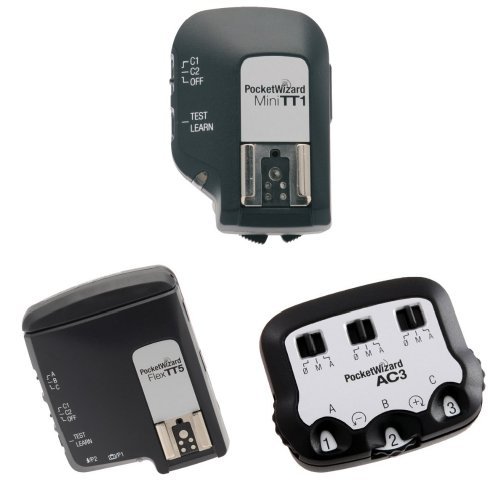
PocketWizard MiniTT1 Radio Transmitter, FlexTT5 Transceiver and AC3 Zone Controller Bundle - Nikon
The AC3 helps you control the flash power from the camera and attaches to the Mini TT1 on the camera. The TT5 fits on the flash and the light stand.

$546.95 on Amazon
Nikon 4809 SB-910 Speedlight


$17.98 on Amazon
External Flash Battery Power Pack for SD-9A Nikon Speed light SB910
Whenever you shoot with Nikon Speedlights you cannot shoot continuously forever. You need to shoot in small bursts of under 10 frames at a time to let the flash cool.  If you do not you will be sending it to Nikon for repair. The external battery will just give you more flashes is how I use it rather than to shoot faster.

Thursday, July 04, 2013

Best advice to young people in professional photography


Here is my advice to just about anyone who wants to do photography as a career. To illustrate my points I have included my coverage of the Guinness World Record for the most people dressed as cows from head to hoof by the Chick-fil-A operators in Northern Virginia this week.

Nikon D4, 14-24mm, ISO 7200, ƒ/8, 1/100 and custom white balance using the ExpoDisc
Become an expert in a subject

Become an expert on a subject and learn to provide a finished product to be competitive today, which means more than just photography.

All my clients hire me today because I know a good deal about their industry—not just photography.

I am a visual storyteller using a photojournalistic approach helping organizations build customer loyalty. My social work degree and M.A. in communications makes me uniquely qualified to help people right in their own environment, by looking at all the different aspects of their life and culture.

Nikon D4, 14-24mm, ISO 7200, ƒ/8, 1/100 and custom white balance using the ExpoDisc

You need to go to people with ideas and not wait for the phone to ring for someone to ask you to shoot their idea. The more you know about the subject and audience, the better you are positioned to come up with ideas to help your client engage their audience with content you create.

Diversify

Today I combine my photography, video, audio and writing to help put together complete packages that my clients can use right away. Too many of my colleagues just want to shoot and are no longer shooting because they expected the client to know what to do with their images.

I will use this coverage I did this week as an example of how I am using more than just "photos" as part of my business.

Nikon D4, 14-24mm, ISO 10000, ƒ/8, 1/100 and custom white balance using the ExpoDisc
Breaking down the coverage into parts

What is the story? The reason Chick-fil-A sent me to cover this story was mainly we were going to break a world record. Had I stayed only on this story track it would have been a good story, but since I have become immersed into the culture I was able to see a few elements beyond the record that made the story better.

Nikon D4, 14-24mm, ISO 6400, ƒ/8, 1/100 and custom white balance using the ExpoDisc
One photo showing everyone dressed as a cow is the obvious photo for a world record, but I knew the audience of Chick-fil-A franchisers would be asking themselve, "Can I do this in my town?"

They were giving away the signature Chick-fil-A sandwich and had even brought to the event the Chick-fil-A Food Truck to help cook all those sandwiches.

Nikon D4, 14-24mm, ISO 100, ƒ/8, 1/100 
People were showing up to this event like they do when Apple introduces a new product. They are Raving Fans of Chick-fil-A.

I was able to capture the photos showing families enjoying the event. You can see how the Chick-fil-A Cows were engaging everyone.

How do you tell the story? I used audio as the primary storytelling element. I interviewed three of the key players in the story. I led with the operator who led the charge after his marketing director came to him with the idea. My basic question to him was, "Why did you choose to do this event?"

Thinking of the audience is key. This is a best practices story. This is an idea that could be done by any of the Chick-fil-A restaurants around the USA.  What I saw was this being like a challenge to the rest of the chain to beat the record in the coming years. This is why the marketing director is being interviewed. She is the one who had to organize the event and be sure it met the guidelines of the Guinness people to count as a world record.  My question to the marketing director is, "What did you have to do to create this event?"

Nikon D4, 14-24mm, ISO 8000, ƒ/8, 1/100 and custom white balance using the ExpoDisc
Sweetening—In sound design sweetening ("to sweeten") refers to "juicing up" the video portion of a film, play, computer game software or any other multimedia project. Often this is done with string instruments.

For me the fine tuning comes in a few ways. First I was able to interview the area marketing director that added some bonus material by pointing out the event also gathered canned food for the local food bank.

The way I sweetened the interviews was I first let each of the people just answer the question. Then after they finish I help them shorten their comments to the core elements. For example I am often taking a five minute interview and brining it down to forty-five to sixty seconds.  When the marketing person first told me about contacting Guinness World  Record, she told me everything about that process. I just asked her to say she contacted them.

Music—I listened to a lot of Royalty Free music and picked something upbeat that I could use. I purchased that music and have the rights to use it with the package.

Nikon D4, 14-24mm, ISO 11400, ƒ/8, 1/100
How to rise to the top

Once the idea has been created the execution of the idea takes place. The more you are part of the creation of the idea the more valuable you become.

When the client has a project thought out and just needs it executed, they are just contacting those creatives that have portfolios that show they can do the job. If the skills are pretty common then the project will often be price driven.

After being the guy called to execute ideas for about have of my 30+ years in the business I was realizing I was doing more than executing ideas.  Pretty regularly I would go to a job and things just didn't pan out as planned by the client. It was thinking on my feet that helped me develop those creative skills.

Overtime I realized my conversations when I got those calls became different. I was asking questions of the clients to be sure we had everything in place to insure success. Those questions often caught people off guard and they realized I was more than a photographer, but an expert in their field.

After years of refining ideas for people I was developing my skills as a strategic communicator. Today I can help my clients by immersing myself into their business and helping them think strategically and come up with ideas.

It takes time to develop into a strategic thinker in the field. Start now by always asking yourself why are we doing this and how will this help the bottom line. Also learn how to deliver a complete package to your client. As long as you are just doing one part of the package you limit your opportunities.

Add at least one other skill other than photography like writing, sound, video or graphic design for example. But even more important than your communication skills be sure you know a subject so you know what needs storytelling.

Wednesday, July 03, 2013

Video showing my Digital Workflow


I recommend clicking on the far bottom right the square to make this larger on your screen.

This video will walk you through my basic steps I do with all my photos.

Stanley's Workflow
  1. Ingest to PhotoMechanic
  2. IPTC information is filled out and part of the ingesting process
  3. Select the keepers
  4. Delete all untagged images
  5. Import into Lightroom, because I am shooting RAW
  6. Select all
  7. Go to Develop Module "D" shortcut
  8. On far right go to lens correction 
  9. Click on profile and enable profile
  10. Correct for blown out highlights 
  11. Pull in blacks if necessary
  12. Export all images to sRGB JPEGs
  13. Open PM 
  14. Upload if necessary
  15. Burn DVD as needed
Here is an earlier blog posts for you on similar workflow issues:

May 25, 2013
Shooting Workflow for the Novice Photographer. These are the steps I went through yesterday teaching the camp photographers for WinShape Camps. These were photographers with all levels of skill. We wanted all of them ...
Dec 29, 2011
Step 1 - I ingest the images from my Compact Flash Card or SD Cards. My settings for the camera are RAW and I normally use the ExpoDisc to get custom white balance. I shoot in ADOBE RGB color space as well. All the ...
Jun 14, 2013
It is a stand alone image browser that is so fast for the pressroom most who use it in their workflow ingest into this program and if they need to more than crop their images then they may use PhotoShop or Lightroom to adjust ...
Feb 01, 2012
With XMP, desktop applications and back-end publishing systems gain a common method for capturing, sharing, and leveraging this valuable metadata — opening the door for more efficient job processing, workflow ...


Sunday, June 30, 2013

How to photograph 4th of July Fireworks

Nikon D3S, 14-24mm, ISO 100, ƒ/8, 8 sec
Location, Location, Location

The success of a great fireworks shot is the location. You need to know where the fireworks will go off well before they do.

You don't want to be trying to lineup your shot after they have started.  You can tweak your composition, but don't be caught not knowing where they will go off.

Consider clear view verses using foreground or surrounding to help make your fireworks stand out.  My favorite shots tend to be those iconic locations in the foreground like the Statue of Liberty  or the Golden Gate Bridge in San Francisco.


Tripod and Cable Release

I recommend using a tripod and a cable release.  This will keep the camera as still as possible during a long exposure.

This is the Nikon MC-30 that I have used for years on different Nikon Cameras.

Camera Settings

  • Manual
  • White Balance - Daylight
  • ISO 100
  • ƒ/8
  • Bulb Shutter-speed and keep open for two bursts of fireworks using cable release
My exposures were from 6 seconds to about 12 seconds on average. I typically might shoot 75 to 100 photos and only really like about 10 of those shots.

Nikon D3S, 14-24mm, ISO 100, ƒ/8, 11 sec

When to press shutter?

When you hear the boom of the fireworks, click the shutter and don't let go until the end of the second fireworks. The bursting will create those wonderful shapes. If you shoot at faster shutter speeds you just don't get the same exposure. The reason is as the bright fragments are moving you are capturing them through out the exposure, whereas the faster shutter speed would freeze them.

This is similar to photographing car lights on streets at night. By letting the cars continue to move you get a trace of the lights through the photo.

Nikon D3S, 14-24mm, ISO 100, ƒ/8, 6 sec

Friday, June 28, 2013

Make your photos 3D for interest

Nikon D4, 14-24mm, ISO 500, ƒ/10, 1/200
Too often people are isolating their subjects so much that the context is lost. If you just give a peak in the photo of things behind the subject you can create depth into the photograph.

In the above photograph I used the ally to help create depth.

Nikon D4, 14-24mm, ISO 1000, ƒ/10, 1/200
See the difference between that photo and the one below?

Nikon D4, 14-24mm, ISO 560, ƒ/10, 1/200
Here I am just capturing some individuals in this same ally. Here I faced the subject and kept the background simple.

Nikon D4, 14-24mm, ISO 320, ƒ/10, 1/200
By just letting some of the background be of the ally in the lower photo you create a little more interest beyond the subject.

Nikon D4, 14-24mm, ISO 280, ƒ/10, 1/200
I am not trying to compare the photos in terms of best expression and moments.  I am just trying to show how the composition can create more of a three dimensional photograph over a two dimensional one.

Here all the people were trying to stay in the shade and I like the photograph, but it is a little flat. The tables in front of them help, but compare this to the one below.

Nikon D4, 28-300mm, ISO 250, ƒ/7.1, 1/100
I am using the reflections in the window in the background to help create depth here.

Nikon D4, 14-24mm, ISO 2200, ƒ/10, 1/200
In the photo of the chef garnishing the food, I just have a small slither of sky in the top left hand corner of the photo. This helps with the depth as well as the reflections in the windows.

You will also notice in most of these photos I like working with extreme wide angle lens. I just love my Nikon 14-24mm ƒ/2.8 lens. By me getting close to people even where the background doesn't help create depth the lens helps bue to the perspective and puts the viewer [you] right there in the ally with me.

Nikon D4, 28-300mm, ISO 100, ƒ/7.1, 1/125

Wednesday, June 26, 2013

Photographers Need To Stay On Budget


Be ready for changes

Often after you have booked a client there will be some possible changes. Just because you quoted a price does not mean you have to keep that price if the client makes changes to the scope of the project.

"I will be more than pleased to make it happen for you. Since this is a change to what we agreed on I need your approval for the changes before we proceed," is important to say to the client. You can phrase it however you want, but you need to communicate a few things.

  1. You want them to get what they want.
  2. With changes to the original estimate there are changes to the contract.
    1. Price
    2. What is delivered
    3. Deadline
    4. Possible new expenses
  3. They must approve of the changes in writing for you to proceed.
Willingness to serve

Don't respond with no to a client unless they are asking you to do more for the same amount of money. Just tell them you need just a minute to revise the estimate to give them an idea what they will cost and any other changes they need to know.

This is why you want to estimate on a project and not give day rates. The only thing you can do on a day rate is if you have additional expenses to meet their request, otherwise when you have the time to do more for them you must.

Give yourself time to respond

It is quite common that a client might catch you off guard and don't feel bad about asking for a moment to consider their request.  

Sometimes the request may mean not just price difference, but to meet their request something else must come off the project due to time constraints. 

Sometimes I have to point out while we are running ahead of schedule for right now, but I will not know until the end of the project if I have time to add on this request. I will ask if they mind waiting to see if we have time. If they push then I let them know one of the situations we have scheduled might not get done.  I then give them the quote for the price change and wait to see if they want to proceed.

Bait and Switch

If you have given them a written estimate you do not have to worry about them feeling like you have them over a barrel when you give them the increased price quote. There are some people who are actually trying to get more out of you than you estimated. This makes them feel like they got their money's worth. 

You don't need to feel the pressure to give in to them, you just tell them the price difference and let them decide.

What happens if you forget to communicate a price difference?

You will most likely eat the cost, because you failed to communicate.

It is professional to communicate price changes before doing the work. I have watched too many freelancers turn in invoices that were higher than the quote and the relationship with the client is tarnished at best and destroyed at the worst. 

Take care of the paper work as much as you do the creative and you will have customers who will hire you again and again.

Tuesday, June 25, 2013

Flash or not to flash

Nikon D4, 70-200mm,  ISO 10000, ƒ/2.8, 1/800 with Nikon SB900 on camera flash fired at slow sync
While at first glance this photo is quite acceptable the main light is now my flash and not the stage lighting.

Nikon D4, 70-200mm, ISO 2500, ƒ/2.8, 1/100
The second shot is available light and shot only 1 minute prior to the flash shot. This is around 9 pm and on one of the longest days of the year, so there is still some sunlight as the sun sets.

There is not as much "Stage Light" as there will be after the sun sets.

Nikon D4, 70-200mm, ISO 2200, ƒ/2.8, 1/320 with fill flash from SB900.
Here I went to the other side of the stage and shot a similar comparison of the flash and no flash.

Nikon D4, 70-200mm ISO 12,800, ƒ/2.8, 1/400
The one reason I was using the flash to begin with is the singer Marc Broussard's hat is casting a nasty shadow and most of the time his eyes are hard to see.  You can see the shadow in the second available light shot.

While the flash fixed this issue as long as it was on my camera it just ruined the mood of the stage lighting.

Nikon D4, 70-200mm, ISO 12800, ƒ/2.8,  1/100
While I now decided to shoot the rest of the performance with available light I now had another problem the light on the lead singer's face only looked good occasionally   Most all the time the light looked like this when he sang.  You see a bright spot on his chin and his eyes are in a shadow.

Nikon D4, 70-200mm, ISO 12800, ƒ/2.8,  1/80
Now to get the best photos of the lead singer Marc Broussard I had to pick the best moments where the light and the emotion came together. I think I have this here when Marc looked up into the light and also the emotion in his face worked really well.

Now you know why so often a spot light is used to follow the main character on a stage with stage lighting. You also can see why many theaters have foot lights. These are lights on the floor of the stage at the front aimed up at the actors to get rid of the shadows under hats and those with deep set eyes.

When there is still not enough light at ISO 12800

I have been in the darkest places like Swayze's Venue in Marietta.  Here the punk band moved around so much that I needed flash.

Nikon D4, 14-24mm, ISO 4000, ƒ/5.6, 1/60
Here is an earlier post in case you want to see when I do use flash and how I used it off camera: http://blog.stanleyleary.com/2012/08/nikon-d4-iso-12800-still-not-enough.html.

Monday, June 24, 2013

High ISO is King for Night Events

Nikon D4, 14-24mm,  ISO 12,800, ƒ/2.8 & 1/125
Available Light

I try my best to always look at the light that is present and go with it before I use a flash.

When Nikon introduced the Nikon D3 the ISO on that camera went to 6400 with no trouble. Then Nikon bumped it up again with the Nikon D3S to ISO 12,800.

My newest Nikon D4 ISO goes to 12,800 comfortably and if you really need it you can bump it all the way to Hi-4 (ISO 204,800).  The Nikon D4 has other improvements as well with focusing and especially in video.

Nikon D4, 14-24mm,  ISO 12,800, ƒ/2.8 & 1/125
In the photo here of singer Marc Brousard singing at the People's Fest at Atlantic Station the lighting for the stage was very minimal as compared to other music events. For most other major music events at Chastain Park Amphitheater or Verizon Wireless Amphitheater you could easily shoot people on the stage with ISO 400 or 800.

This is important because for the bigger venues you can actually own a much cheaper camera than you need to capture the event when the light is low.

This is true in sports as well. When you are photographing an NFL game at night the light on the field is much better than when you are shooting in a small town at their high school Friday night football game.

Nikon D4, 70-200mm,  ISO 12,800, ƒ/2.8 & 1/100
Do you need to go and buy a Nikon D4 for $6,000 without a lens to take photos?  If you want the very best ISO 12,800, but Nikon even makes point and shoot cameras that will go to ISO 12,800.

If you want to shoot events like the People's Fest at Atlantic Station as I did this past Saturday night then you need a high ISO camera.  Minimum of ISO 6400 in my opinion will just barely work before you need to add a flash.

Nikon D4, 70-200mm,  ISO 12,800, ƒ/2.8 & 1/125
For the photo of the couple I am hand holding a 70-200mm lens at 1/25 and vibration reduction technology is helping, but if they move they would not be in focus.  The light from the stage and surrounding shops is helping light them, but barely.  ISO 6400 would have me shooting at 1/10 of second.  I doubt seriously that I would have gotten this shot without the ISO 12,800.

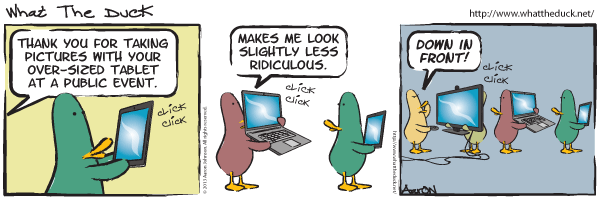
http://www.whattheduck.net
With the recent dismissal of the entire photo department at the Chicago Sun-Times we can see the times are changing. But there is no way an iPhone given to a reporter will capture the photos I was getting. Also, just to own the Nikon D4 will not get the same results.

You have to know how the camera works and how to make it work for you to get the best photos.

To remain competitive you need to have the best gear to capture the type of photos of the subjects you want to get paid to shoot. If you don't have the best possible the guy that is able to show a better image because of their gear will get the job.

Remember, it is the photographer with the best images of the subjects that will get the job and not the most expensive gear.

All this is to say, your images decide if you get hired not the gear, but your gear can hold you back to get good images. If you have great gear and not good images then you still want get the jobs.