Showing posts with label Recruiting Photography. Show all posts

Tuesday, June 26, 2012

Lighting a conference room


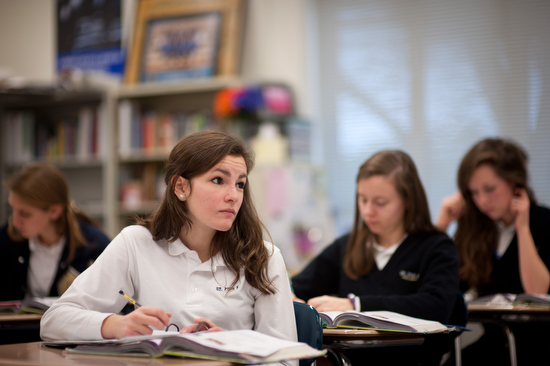
When the ISO needs to stay low I will often light a conference room. A few years ago I owned the Nikon D2X camera.  This camera most people felt comfortable shooting up to ISO 800 with little noise, but above that was a concern.

While I could have shot these photos with the room light, there are a few things you would have to take into consideration. First of all mixed lighting. While the lights in the room with fluorescent, the room also had a large window where some daylight was spilling in.

For me the easiest solution was to over power the room lights just a little and clean up the color.

I put the lights down to 1/8 power to insure they would all fire. I didn't want to put a radio remote on every light. So I have a PocketWizard Plus II receiver on one light while I am triggering it with the PocketWizard Plus II transmitter. If I put the lights all the way to the lowest setting sometimes they do not always fire.

I was pleased overall with the results.  Good skins tones and colors throughout the photo. This was important because I wanted to show the diversity in the classroom, and if not careful some of the people would of been just a silhouette rather than seeing the skin tones that we do here.


Thursday, April 26, 2012

Recruiting photography for school that looks natural


The cry of focus groups when they review most educational recruiting pieces seems to always say they want natural looking photos and not setup.

The problem is not setting up photos or trying to just grab what you can to get a natural look, it is hiring the right photographer. Also, it is a team effort of the school setting up the situations by having students, teachers and the right situations with enough time for moments to become "REAL."

Focus groups need the right questions
After having spent the last twenty plus years as a photographer shooting pure photojournalism, where you capture what happens in front of the camera to shooting for advertising pieces, where there are stylists arranging everything in a photo; my experience says most focus groups are asking the wrong questions.

“Do you like the photo?” is not as good of a question to see if the photo was successful as a question like “What did you learn from the photo?” You can even have a photo again on a questionnaire from your recruiting materials and ask, “Does the photo help you see what a typical dorm room looks like?” You could even have a follow up question “What could improve the photo to show you a dorm room?”

The reason I have come to this place about evaluating photos is my experience with truly “real” photographs. I have spent many years shooting “photojournalism” for magazines, newspapers and wire services. You do not change a thing in these photos and you do everything you can use composition, lens choices, lighting and timing to communicate the mood and reality of a situation.

Often a photojournalist’s photos are not “pretty” pictures. Photographers will even use their composition to create more conflict to add to the mood of the photo. Having a focus group evaluate war photos with the typical questions we ask “Did you like the photos?” will give you results which would say the photographers were not successful.

Often what you get by just grabbing shots here and there.

The difference with some planning and adding a light to the scene can make.
Make your photographic coverage strategic

How can you know the right moment to take a picture unless you have a fairly clear idea of what the subject means and what you are after? When you are interested in a subject, you want to learn more about it. You dig below the surface values to the truth beneath. That way you get to know it intimately and are able to photograph it understandingly.

Why are we taking this photo? Are we trying to show teacher to student ratio? Are we trying to show what a dorm room looks like? Are we trying to show diversity and how well everyone gets along on the campus?  You need some understanding of what you are trying to accomplish.

Understanding does not necessarily mean a technical knowledge of the subject. 

It is about seizing the right moment. It might be setup or as in the case I just floated into a meeting and shot.

Understanding is interest, sympathy, curiosity, the human element of the equation.

Are you photographing who you are or what you want to be?
While photojournalism will give you “real” photos, sometimes reality for recruiting will keep your institution on the same path rather than to where you would like to be.

This is where what I call the “sitcom” photography works best. We all know the sitcom isn’t real, but it can create such a reality we are all tuning in to see “Who shot JR?”

Spontaneous moments in a hall with two guys who are obviously close friends will communicate diversity better than sometimes setting something up.  However, it needs to be prevalent on your campus or you will not capture it just because you have a photographer there. Plan for creating moments and letting the photographer have time to just capture things along the way.

This is the type of photography where the school has determined where they want to go and then create communications pieces to help them attain the goal. For example if you want to be more diverse in the future, you will need to show diversity. If you keep it real, you would then research to find those situations where diversity exists already. Then you would photograph those situations and play them prominently in your piece.

While this is setup, I worked hard to get the expressions to sell that they are a community with diversity.
As one person put it “You don’t want to be the lone raisin in a bowl of milk.” If everyone works to help the school to become more diverse it can be done.

As you can see there are a few ways to communicate your message using photographs. The ideal scenario is to have “reality” photos. If you had a photographer go to everything you did this year—then maybe you would get the reality you need.

Shooting at The Citadel and a Roman Catholic high school is easy as compared to the clothing problems introduced in most other schools. 
Sometimes “reality” isn’t what you want to show. The student wearing another competing schools T-Shirt. A student with major over weight issues or skin problems can detract from the message. This is why so often we re-create reality like the sitcom. If properly planned, you will tune in and want to know more about your school.
Capturing joy of students makes students want to come to a place like The Citadel, where they will spend a lot of time being told what they will do.
Photographs are made of light, mood, texture, form, and line. The value of techniques lies in how they are used. Techniques by themselves are barren. To come alive with meaning, they must be employed interpretively. This is where I come in. Give me a call and let’s make your recruiting photos—REAL.

Friday, January 20, 2012

Creating images that recruit new students

Check out the slide show


Colleges and schools hire me to help them recruit new students. There are a few reasons I hear over and over why I am chosen.

Capturing a moment

Every school I have photographed used someone before me.  Many of these photographers were very competent. They had great exposures, good composition and nice light, but the photos just were boring.

To get the "moment" requires the photographer to take more than a couple of photos of any situation.  You need to connect with the subject and get to where you can anticipate them.  I might notice a teacher who walks over to a student and bends over to get close to hear them and see what they need.  They may only do this for 20 - 30 seconds.  If I miss them doing this once I can then move quickly to get into position the next time by seeing a student raise their hand.  I am moving before the teacher to get to the place to capture the "moment."

I like this image because I feel like the student is engaged in the subject and enjoying their time in school. (Nikon D3s, ISO 6400, f/5.6, 1/100, 28-300mm)
Color Correct 

Here is a great example of how many photographers shoot inside.  See the greenish color cast in the photo.


This photo is color correct and the skin tones look more natural.  The above photo is not color corrected.  (Nikon D3S ISO 2500, f/5.6, 1/100, 28-300mm)
When someone has really screwed up you can see banding of color in the photo.  This is when shooting under fluorescent or sodium vapor lights you get bands across your photos.  I am aware of the problem and make adjustments in how I shoot to avoid color issues with my photos.

Context

You need to do more than just get closeup photos of people's faces showing them enjoying themselves.
I like including posters on the walls to help give an idea what the students are studying.  It helps also communicate more than just they are in a classroom.  (Nikon D3S, ISO 1600, f/5.6, 1/100, 28-300mm)
One-on-One

I like this because the teacher and student one-on-one time is more than just two people it is about a teacher who cares and enjoys helping the student.  I like the student expression because they are serious and need help.  (Nikon D3S, ISO 5000, f/5.6, 1/100, 28-300mm)
One of the most important things colleges and schools report is the teacher to student ratio.  It is important to show students do interact with the teachers and not just being lectured to in the class.  This requires you to wait for those moments.  If you are like some people you just stick you head in take a couple snaps and leave.  You would miss so much by just documenting.

Engaging

Students need to be shown challenged by the course work and not bored.  However, in pre-school it can be fun to show a child yawning.  Sometimes humor is cute and just as engaging.  In older grades it isn't quite as cute.

The body language of the student shows deep thought and interest in the class. (Nikon D3S, ISO 4000, f/5.6, 1/100, 28-300mm)
Individualism

I look for moments where I can show the student is still independent and comfortable in being independent in their work and thoughts.

Using a very shallow depth-of-field helps to isolate this student. (Nikon D3, ISO 720, f/1.6, 1/100, 85mm f/1.4)
Using a shallow depth-of-field, I can make the student pop out from the other students. I see how this helps show they are an individual and yet also part of the class.  If you just crop everyone else out you do not have the same visual communication taking place. (Nikon D3, ISO 200, f/1.4, 1/125, 85mm f/1.4)
It is about communication and not pretty pictures

Too many photographers are trying to just make art and not communicate. For a photograph to communicate the photographer had to know what they were trying to communicate or it will often fail.This doesn't mean communication photos are boring.  It just means they need to communicate a message. They can do this and be just as much a fine art piece.

This is why I studied social work in my undergraduate and then did my masters in communication in the education department.  I wanted to understand how to use visuals to tell a story.

When you look to hire a photographer, look for someone who understands what education is about.

Saturday, April 23, 2011

Which photos would you use?

perplexed
Figure 1 - I like the body language of the student taking a biology test.  I also like that the background with the body parts is behind her.  The dish in front has tissue she is having to identify.

Sometimes the only way is to show folks. I believe many of my clients hire me over and over because of what I deliver as compared to my competition.

I want you to look at these situations and see the before and after treatment that I often do with lighting to give my clients a choice.  I often will shoot available light and many times I find that adding a light to part of the scene can enhance the photo.

interacting
Figure 2 The student seems more engaged than the student in Figure 3 and interested in the subject due to her pointing with the pen to the different parts of tissue.
lacking
Figure 3 While this student maybe be thinking about the parts like the lady in Figure 2 she is not visually showing the same interest in the subject.

Lighting can help create a mood.  The client sometimes isn’t sure what look they are going for in terms of mood, so I give them some choices.

disinterest
Figure 4 With her hands by her side and not on the paper like the student in Figure 5 she looks at a loss for the topic.

interested
Figure 5 The one eye engaged with the model, lips are tight, the fingers tightly grasping the pencil all are communicating she is in control of this content.

Which of these did you like the best and why? You can comment on them below. I would be interested in your thoughts as to which one you might choose and why?

available2
Figure 6 Shooting with just the room lights.
available
Figure 7 Adding flash and colors to the room.

flash
Figure 8 Adding a flash to the women helps to separate them from their surroundings.

no flash
Figure 9 You eye is not as drawn the to subjects as in Figure 8 since their faces are in the shadows.

a
Figure 10 Good color and pop is achieved with a flash off camera.

c
Figure 11 The subject is more like a silhouette and faceless as compared to Figure 10.

1
Figure 12 The whole room was given a boost of light with the flash to give a greater dynamic range which makes the color pop.

22
Figure 13 With just the light in the room the subjects have strong back lighting from the window which causes a flair which diminishes the colors.


23
Figure 14 With flashes raising the light value on the subjects and less light on the background, helps direct the viewer to what they are doing and increase the pop factor.


conductor
Figure 15 The stage lighting on the conductor makes him standout against the darker house lights in the background.

sac
Figure 16 A flash is used on this back lit subjects to draw your attention to their faces.
Go back and look closely at the color and compare those with flash and the one without flash.  Do the ones with flash have much punch and color?  I think so, but do you see it?