Thursday, August 20, 2015

Throw Back Thursday tips for copying old photographs


Throw back Thursday

If you are on social media you know that today people post old photos and remember loved ones. This is a photo of me and my little sister with our great grandmother "Mama Benfield".

Our family had a print of this and this is how I made a copy of the photo.


I put the photo on a table and using a tripod put the camera parallel to the table. I put two hot shoe flashes off to the sides at 45º to the table. Got a good exposure and custom white balance.

The reason for the custom white balance is to counter act any color bounce from the room.

Then I just took a stack of photos and copied away shooting in RAW.

My grandfather R. Knolan Benfield

My grandmother Emma Hartsell Benfield

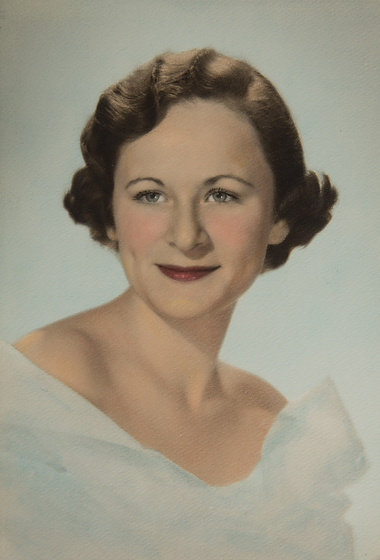
My mother Bonita Benfield Leary

My sister Emma and my Dad David Leary with me

My sister Emma, my grandfather "Daddy B" and grandmother "Nana B"
I brought all the photos into Lightroom. Kept them in color and made adjustments using the sliders. Here is the first photo.


After I made all the adjustments using Temp and Tint even for contrast control then I switched the photo to Black and White before exporting.


The good news with all this copy work is now they are digitized and searchable.


After I exported the images as JPEGs I opened them with PhotoMechanic, which I prefer over Lightroom when working in metadata and identified each photo in the caption. Now for the first time we know when for example my mother had this photo taken of her.

Now on PC or Mac when you search for "Bonita Leary 3rd Grade" this photo will pop up in the search even if you don't have the software to see the embedded text.

As you scan old slides, negatives and then make copies of your prints be sure to add the text so they are searchable and in the future your family will know the who, what, where, why and when for the photos. This will make them even more valuable to the generations that come after us.

Tuesday, August 18, 2015

Why Photography/Photojournalism is an Awesome Career

Nikon D4, 14-24mm, ISO 160, ƒ/8, 1/100
This simple photo of Claudio Cesar Aguirre who is helping run a Chicken Coop in San Esteban, Olancho, Honduras helped to get funds for micro loans to help the community change. Now people are living longer healthier lives and are better educated.

Yes there are countless examples of where photos have changed the course of history from the civil rights movement, help to change public opinion on the Vietnam War, help to end the apartheid in South Africa and recently has the public upset about ISIS.

Do you want to make the world a better place to live? If you are a person that sees injustice happening to people and feel people need to do something then this might be the best job you could ever have.

People become doctors, lawyers, social workers, nurses and many other professions to make a difference in people's lives.

What if instead of being a doctor taking care of patients you were the researcher in pharmacy and came up with a cure for a disease? Think about how your discovery would help more people than you could have ever seen in your lifetime.

What if instead of being a defense attorney you became an elected official and changed policy? You could impact far more than one person at a time.

Being a photographer has that kind of compounded interest impact. You can't go all over the world and share the story one-on-one, but your photos can. Many of my photos have been seen by literally millions of people. Not all the photos have the impact I wish, but many have and will.

John Howard Griffin having lunch with shoe shine man in New Orleans for his research for the book Black Like Me. photo by Don Rutledge 1959
Over fifty years ago, John Howard Griffin published a slim volume about his travels as a “black man.” He expected it to be “an obscure work of interest primarily to sociologists,” but Black Like Me, which told white Americans what they had long refused to believe, sold ten million copies and became a modern classic. Read more ... 
The book Black Like Me had a great deal of impact due to the photos that Don Rutledge made of Griffin traveling the South. This helped to make his claims real. That work had a profound affect on the Civil Rights Movement.

photo by Dorothea Lang February 1936
Another photo still having impact on how we see poverty and the depression.

The photograph that has become known as "Migrant Mother" is one of a series of photographs that Dorothea Lange made of Florence Owens Thompson and her children in February or March of 1936 in Nipomo, California. Lange was concluding a month's trip photographing migratory farm labor around the state for what was then the Resettlement Administration. In 1960, Lange gave this account of the experience:
I saw and approached the hungry and desperate mother, as if drawn by a magnet. I do not remember how I explained my presence or my camera to her, but I do remember she asked me no questions. I made five exposures, working closer and closer from the same direction. I did not ask her name or her history. She told me her age, that she was thirty-two. She said that they had been living on frozen vegetables from the surrounding fields, and birds that the children killed. She had just sold the tires from her car to buy food. There she sat in that lean-to tent with her children huddled around her, and seemed to know that my pictures might help her, and so she helped me. There was a sort of equality about it. (From: Popular Photography, Feb. 1960).
Spinner in Vivian Cotton Mills, Cherryville, N.C. photo by Lewis Hine
Lewis Hine's photographs of children working as slave labor in plants was instrumental in changing the child labor laws in the United States.


"Eugene Richards's wrenching photographic study of the culture of cocaine in three inner-city neighborhoods gives faces to some of the victims of addiction. It provides a shocking and heartrending picture of the damage inflicted by the drug."
--Charles Hagen, The New York Times  
"Eugene Richards's seventh book, Cocaine True, Cocaine Blue, reaffirms his position as the premier chronicler of the dark side of American life he is the true heir to the mantle of the legendary W. Eugene Smith."
--American Photo
Early in his career Eugene Richards was a social activists that realized the power of the camera to influence change more than he could do alone.

Check out his website to see more compelling stories about our culture. 


Sebastião Salgado is another photographer using photos to make the public pay attention to crisis. One of his books Workers is very powerful imagery that makes you wonder about the progress we have made with technology. Salgado is a UNICEF Goodwill Ambassador. 

He began work as an economist for the International Coffee Organization, often traveling to Africa on missions for the World Bank, when he first started seriously taking photographs. He chose to abandon a career as an economist and switched to photography in 1973, working initially on news assignments before veering more towards documentary-type work. Salgado initially worked with the photo agency Sygma and the Paris-based Gamma, but in 1979, he joined the international cooperative of photographers Magnum Photos. He left Magnum in 1994 and with his wife Lélia Wanick Salgado formed his own agency, Amazonas Images, in Paris, to represent his work. He is particularly noted for his social documentary photography of workers in less developed nations.

Cornell Capa, founding director of the International Center of Photography, introduced the idea of the “concerned photographer” in the mid-20th century and maintained that cameras could catalyze necessary change rather than just preserving an image of the situation that needed it. 

I believe most photojournalists are social advocates at their heart. They care for those who they photograph and share those stories with the world with the hopes that change takes place by the story being told.

Gear needed

One could do a great deal with a smart phone today. They could take photos and then write text to go long with the photos and post them to a blog on the internet and reach the world. Many will choose a better camera and a computer to do this even more effectively to tell stories.

Training Needed

It isn't enough to have equipment you need to know how to use the gear and how to get the most out of your gear.

Besides technical knowledge of how to use your gear to capture and write your stories you need a deeper knowledge. You need to know the subject like an expert in that field, so that you understand the story enough to know what is the essence of the story that needs to be told.

You need to understand the the techniques of storytelling. This takes a great deal of time to master from a mentor and coach.

You need to have a good understanding of your audience. You need to know how to peak their interest and move them beyond the emotions of laughter and tears to action. 

"Revolution"by the Beetles

You say you want a revolution
Well, you know
We all want to change the world
You tell me that it's evolution
Well, you know
We all want to change the world

Do you want to change the world? Then it takes commitment and real passion. Your first step should be to find a workshop or even better a college where you can learn the skills of photography and take courses on the subjects that you want to impact the most.

Don Rutledge had an undergraduate degree in psychology and started work on his masters as well. Dorothea Lang studied art at Columbia University. Hine studied sociology at the University of Chicago, Columbia University and New York University. He became a teacher in New York City at the Ethical Culture School, where he encouraged his students to use photography as an educational medium. 

Eugene Richards received a BA in English from Northeastern University plus graduate studies at the Massachusetts Institute of Technology were supervised by photographer Minor White.

Salgado initially trained as an economist, earning a master’s degree in economics from the University of São Paulo in Brazil.

Summary

Picking up a camera and just shooting away and posting to social media will not get the results. You need strong images with a storyline to engage your audience. The moral of this blog post is go and enroll in workshops, a college program and plan on your first attempts as part of the learning. To become a master you must put in the time.

All the examples went on for college degrees which helped them prepare to change the world. Go and do likewise.

Sunday, August 16, 2015

Window Light shooting with Fujifilm X-E2 & Nikon 85mm ƒ/1.8G

Fujifilm X-E2, Nikon 85mm ƒ/1.8G, Nikon AI Mount Lens to Fujifilm FX Mount Camera Adapter, ISO 2500, ƒ-wide open, 1/500
Window light is not all the same when it comes to shooting portraits.  Having your subject face directly towards the window give you a very flat light, similar to your on camera flash. The second photo the subject is looking straight to the window.


In the first photo the subject is about 45º angle from the window.

Fujifilm X-E2, Nikon 85mm ƒ/1.8G, Nikon AI Mount Lens to Fujifilm FX Mount Camera Adapter, ISO 5000, ƒ-wide open, 1/500
Notice how the face has more shape from the light coming from the side rather than straight on to the face?

Fujifilm X-E2, Nikon 85mm ƒ/1.8G, Nikon AI Mount Lens to Fujifilm FX Mount Camera Adapter, ISO 5000, ƒ-wide open, 1/500
Here the window is directly behind the subject. The room is kicking the light back to help fill in the shadows. You are very close to creating a silhouette like below.


Just because the subject has window light doesn't mean it is great. It is the direction of that window light that makes a HUGE difference.

My suggestion is to do some test shots where you shoot moving the subject and you. Then before you do the real shots, pull them up on your computer and examine them. Then pick the few angles you liked the most and recreate those lighting conditions and shoot away now looking for great expressions.

Friday, August 14, 2015

Sigma 120-300mm ƒ/2.8 DG OS HSM | S shooting Friday Night High School Football

Nikon D4, Sigma 120-300mm ƒ/2.8 DG OS HSM | S, Sigma TC-2001 2x, ISO 10000, ƒ/5.6, 1/2000

Gallery of images from the game


My daughter's high school had their first football pre-season game tonight. Roswell High School played cross town rival Johns Creek high school.

In the first photo Roswell High School's #1 full back Sheldon Evans runs for touchdown while being pursued by John's Creek #3 defensive back Jack Somers and #36 defensive back Bryce McCain.

This was shot at 8:03 pm or about 20 minutes before sunset. The Sigma 120-300mm ƒ/2.8 DG OS HSM | S with the Sigma TC-2001 2x attached was locking in on focus quickly and holding steady with the Nikon D4.

Nikon D4, Sigma 120-300mm ƒ/2.8 DG OS HSM | S, Sigma TC-2001 2x, ISO 3600, ƒ/5.6, 1/2000
This was shot at 7:43 pm with the sun dipping behind trees so indirect sunlight is hitting the players from the open sky.

Nikon D4, Sigma 120-300mm ƒ/2.8 DG OS HSM | S, Sigma TC-2001 2x, ISO 7200, ƒ/5.6, 1/2000
As you can see having the Sigma TC-2001 2X converter was helping me reach down field. This gave me a 600mm, which was working really well for the high school game. You can get so much closer to the sidelines than you can in college or pro games.

Nikon D4, Sigma 120-300mm ƒ/2.8 DG OS HSM | S, Sigma TC-2001 2x, ISO 6400, ƒ/5.6, 1/2000
Here I am in the end zone and the player is crossing the 50 yard line. I am not zoomed in all the way at all. I am at 410mm.

I love shooting from the end zones because I am more likely as you are seeing in the photos to see the faces of the players because this is the direction the offense is going. If I am cover the defense then I would be on the opposite end zone and getting the defensive players faces.

Nikon D4, Sigma 120-300mm ƒ/2.8 DG OS HSM | S, Sigma TC-2001 2x, ISO 12800, ƒ/5.6, 1/2000
You can see the expressions on the faces of the players and show the ball and the defense at the same time. Here I captured a moment that I am sure the coaches will be talking to the offense about protecting that ball more than they are doing here.

Nikon D4, Sigma 120-300mm ƒ/2.8 DG OS HSM | S, Sigma TC-2001 2x, ISO 12800, ƒ/5.6, 1/2000
I love these type of photos where you see the defense doing all they can to stop the offense and also showing the athleticism of the players.

One of the photographers showed up tonight with the new Sigma 150-600mm contemporary lens. I would love to see what she got and even more which I could have tested it out. With todays cameras high ISOs I think shooting Friday Night Lights in small community football fields is possible.

I couldn't be more pleased with the Sigma 120-300mm ƒ/2.8 DG OS HSM | S, and Sigma TC-2001 2x combination. I did use the new 1.4X converter as well, but preferred the 2X to get down field.

Thursday, August 13, 2015

Photographers self-sufficiency is another word for poverty

Nikon D2X, Sigma 70-200mm f/2.8 EX DG APO OS HSM, ISO 400, ƒ/2.8, 1/1600

Self-sufficiency is another word for poverty.


I read that and immediately bristled, but then as I listened more to Matt Ridley's comment the more I realized he was right.

Listen to Matt here:


The more we work for each other the better off we are.


The key to how much work you get is directly dependent on how much networking you have done. What you learn from networking is two things that is extremely important to you being able to pursue your passion of photography.

What you do must benefit others


No matter how nice you are and how much you care no one cares. What matters is how those things which are inside you move you to action. You are measured by what you do and not by what you think.

I am reminded of the story where Jesus cursed the fig tree for not producing fruit [Mark 11:12-25]. That was the purpose of the tree.

People will not buy what you produce unless it benefits them.

David Wong wrote:
Either you will go about the task of seeing to those needs by learning a unique set of skills, or the world will reject you, no matter how kind, giving, and polite you are. You will be poor, you will be alone, you will be left out in the cold.
Does that seem mean, or crass, or materialistic? What about love and kindness -- don't those things matter? Of course. As long as they result in you doing things for people that they can't get elsewhere.
Nikon D2X, Sigma 70-200mm f/2.8 EX DG APO OS HSM, ISO 400, ƒ/2.8, 1/400

Sell the Dream


No matter how passionate you are about something, nobody cares about it simply because you do.

I love to watch Shark Tank the TV show. each week I hear many who have ideas that after you hear them they are not really marketable.

If you want clients or customers, you need to be concerned with why they should care about what you’re doing, even when you’re doing what you love. Don't be so in love with your passion and busy doing it that you forget to look up and show others why they should care as much as you do.

Your challenge is to persuasively communicate the gift of your passion, your mission and your unique value.

Nothing succeeds like success


One of the best ways to get people to get excited about what you offer is to show them your success. This is how many NGOs get their support. Here is the problem and here is a success story where we have made a difference. They then will go on to show how there are many more to help and need your support.

Here is a great example that I helped Honduras Outreach produce this past year.


Summary: Don't focus on being self-sufficient. Focus on being a service to your fellow man. The key to your success is to not just find your passion, but finding out how this benefits other people. Once you have this nugget you are well prepared to promote what you can do for others.

Wednesday, August 12, 2015

The Organic Process Professional Photographer

Nikon D2X, Sigma 18-50mm f/2.8 EX DC, ISO 400, ƒ/2.8, 1/5000
This "Chicken Man" was on the road between Tenkodogo and Ouagadougou in the country of Burkina Faso, West Africa. These are "free range" chickens that they tie their feet together to take them to market.

Instead of ordering "free range" chickens off the menu they are called "bicycle chicken." They get that name as you can see on how they are brought to market.

We hear today the benefits of eating natural organic food. We think of organic as natural process.

Nikon D2X, Sigma 18-50mm f/2.8 EX DC, ISO 400, ƒ/2.8, 1/400
Mergers and acquisitions, which is inorganic growth, is an aggressive approach to growing a business. While most photographers are too small to think of merging or acquisitions the aggressive approach to business is what is hurting their growth.

When you start a small business, you must focus on growing your customer base, reinvesting profits in new assets for greater income, and improving productivity to increase your bottom line. All of these efforts are examples of organic growth. In a nutshell organic growth is focused on preplanning and being prepared for the future.

Nikon D4, 14-24mm f/2.8G ED, ISO 125, ƒ/14, 1/250
Photographers need to operate their business like a farmer. He prepares the ground, plants the seeds, weeds the fields, waters the crop and when storms are predicted does what they can to protect the crop. The percentage of the farmers time is in the preparation versus the harvest.

Advice for the photographer


  • Dream first of what you hope for
  • Think of all the steps necessary for you to reach that dream
  • Invest your time and energy in getting the things you need to make the dream a reality
  • Create your action plan
  • Execute the plan
Couple major insights from the farmer. There is a season for planting and a season for harvesting. The farmer clears the fields when they first start. They may have to clear trees and brush as well as remove rocks and stones from their fields before they can plow the fields to prepare the ground for the seeds.

In West Africa the farmer is so poor they cannot buy fertilizer. It costs more than they will get out of the harvest. Many of these farmers will plant two seeds in field because if they get enough rain then one of the plants will thrive, but if it is a dry season the other plant will do better.

Nikon D2X, Sigma 18-50mm f/2.8 EX DC, ISO 100, ƒ/5, 1/500
This farmer here working the fields in Koudougou, Burkina Faso.  This is part of the bible school where they not only teach theology, but farming to help the pastors feed their families while they minister as a bi-vocational pastor.

Photographers may need to be bi-vocational as well today.

Overnight Success


You will look like an overnight success only if you are prepared. There are some things in your dream that you will try and force to happen. We all do this and then we slowly learn that sometimes the problem was we have been planting seeds in the fall and not the spring or we were trying to harvest in the spring rather than the fall.

Here are a few things to help you become that overnight success.

  1. Have an elevator speech ready [earlier blog on elevator speech]
  2. Have ideas ready for clients – Don't just show your portfolio, do some research and have some ideas that you can pitch to them when that opportunity presents itself.
  3. Prepared replies – Think about those situations that a client may ask you to do something and how you should respond. The more you can anticipate issues the better you will come off when they come up.
You have heard of Natural Leaders–Well they are really those who have invested a lot of time on the front end. You may have also heard of those who are "Good Natured." Well most likely they have thought about situations enough to one know how to respond or to understand how a situation isn't a problem to begin with anyway. You know how to go with the flow because you have thought enough about things prior that your response is actually well thought out.

This is a really key thing to understand. You need to know enough about your industry to be able to know how to be very flexible and when to take those "organic moments" and speak into them. 

A farmer who has plans to put the seeds into the ground one week and realizes that if they move it up a few days they can take advantage of the rain verses loosing days because they were delayed.

The photographer who has invested some time into thought about their business is prepared like the farmer. So the question is how well prepared are you?


Tuesday, August 11, 2015

Is your photography website scalable from Desktop to Mobile?

60 Percent Of Internet Access Is Mostly Mobile

This was the headline and graph showing how the rest of the world is consuming the web excluding the UK and the USA. Here is a link to that story.


I pulled the report on my website.


This is some of the numbers of visits to my website and the main discovery is that 56% are using a laptop or a desktop to look at my website.

My website up until this past weekend worked great for anyone using a desktop/laptop to connect with my website. However, 44% were visiting using mobile or a tablet. On the mobile the website wasn't very friendly.


Now if you are viewing this blog on your mobile device then you are already seeing like the above photo. I realized I needed to make my main website mobile friendly, but also still a great experience if using a larger device.

Now my website looks like this on a mobile device.


Now in the corner I have a pull down menu which is being used widely through the web.


Many times people may go first to your website with their mobile device and then come back later on a larger screen laptop or desktop. I still need to engage them because sometimes they are looking for someone like me and I don't want them to pass over me because my website isn't mobile friendly.

IMPORTANT FACT


In February 2015, Google announced that the mobile-friendly update will boost the rankings of mobile-friendly pages -- pages that are legible and usable on mobile devices -- in mobile search results worldwide. (Conversely, pages designed for only large screens may see a significant decrease in rankings in mobile search results.)

The role out of this change was April 21st this year.

Are you mobile friendly with your website?

I am using the website builders from Godaddy and PhotoShelter to build my websites that makes them scalable from desktop to ipad to mobile device.  You can do this using a more traditional approach like Dreamweaver, but I have found these online designers are simpler to use.

Here is the link to see PhotoShelter website templates and designs. $10 a month for a mobile friendly website.

Here is the link to see Godaddy website templates and designs. $6 a month for a mobile friendly website.

Sunday, August 09, 2015

Nikon AF 60mm f/2.8 D Micro on Fuji X-E2 and Nikon D750

Nikon AF 60mm f/2.8 D Micro
I have had this Nikon AF 60mm f/2.8 D Micro for a while and use it occasionally. I just got curious today as to what this would do on my Fuji X-E2.

I pretty much knew the results I was getting with my Nikon full framed cameras, but just shot the Nikon D750 to show you the difference in the crop factor more than anything. All the photos where shot as close as the lens would focus.

Fuji X-E2, Nikon AF 60mm f/2.8 D Micro, ISO 200, ƒ–wide open, 1/8
Since the lens is attached to my Fuji X-E2 with the Nikon G AFS lens to Fujifilm Fuji X-Pro1 X-E1 Adapter Aperture Control Ring I wasn't really sure what the exact ƒ-stop was due to the extension tube factor. I probably added a stop.


This was the setup. I shot the photo using the 10 second timer delay.

Fuji X-E2, Nikon AF 60mm f/2.8 D Micro, ISO 200, ƒ–closed down, 8 sec

You can see the photo is better than a one-to-one ratio. I only shot two photos with the lens. One wide open and one closed all the way down.

Now to get a comparison for the crop factor here are the Nikon D750 photos.

Nikon D750, Nikon AF 60mm f/2.8 D Micro, ISO 100, ƒ/5, 1/15
The extension tube put the lens further from the film plane on the Fuji and thus created an even shallower depth-of-field than the Nikon D750. The second factor is the cropped affect.

Nikon D750, Nikon AF 60mm f/2.8 D Micro, ISO 100, ƒ/57, 6 sec
You can also see the exact ƒ-stops and notice that even with the D750 shooting one ISO slower than the Fuji the shutter was open a lot longer due to the extension tube.


I was using a tripod to keep the camera still. With the Nikon D750 I was using the Nikon ML-L3 Wireless Remote Control Infrared to trigger the camera. I chose the "Remote mirror-up" setting and this lets you lock the mirror up and then take a photo. You press it once and the mirror locks up and then a second time to take the photo. Here is an earlier post on this technique.

If you have other lenses for a DSLR then get a converter and see what those lenses can do. The cool thing with a mirrorless is you can see what you are getting and also get the lens critically focused since you can see the results before you click the shutter.

Friday, August 07, 2015

Updating My Websites


I am in the process of updating my websites and thought I would share some of my thoughts about this process.

You can click on the thumbnails of the websites I have posted here to see them in action. I still have to change some domain names and make a few more administrative changes to make it all work, but I am almost there.

My website www.StanleyLeary.com works pretty well, but the main thing it lacks is the mobile design that the new website has built into it.


My blog has been hosted by blogger and has had the mobile function for a while. I see no real reason to update this, except I will decide if I want to redo the links on it or just eliminate those and point people back to my main website.

With websites, blogs and even social media the navigation is extremely important. I need the function to work or the form [Design] will be totally useless.


I have been told and read many opinions on when you should have a separate website. Most recommend it when you start to add too many services. The website does better for brand building to have it simple.

I created my workshop website separate from the main website. You can get to it from the main website, but this helps build these workshops as a separate business that I am running.


I am also maintaining a social media presence in a few spots which you can find from my main webpage on the lower left hand corner or by just searching for me on most of the social media outlets.


It is taking a while to build a brand presence throughout the web. The more places I am located the higher my SEO making it easier for me to be found by those looking for my services.


A few things I am learning slowly is how important it is to keep all the websites simple and clean. Find the niche for each of these websites and then feed them content to help drive more potential customers my direction.

SUMMARY


While I am not changing my websites everyday, they are always being updated. The only thing constant with being relevant today as a professional communications expert is continuous quality improvement. This means I am always looking for a way to improve. Sometimes I take risks that fail and other times I see the positive results.

Those who are truly successful are those who embrace the need for continuous change in their lives.