Showing posts with label AC-3. Show all posts

Wednesday, October 12, 2016

Flash On OR Flash Off

Nikon D5, Sigma 24-105mm f/4 DG OS HSM Art Lens, ISO 28800, ƒ/4, 1/250
To flash or not to flash that is the question? In the photo above this was done without a flash.

Nikon D5, Sigma 70-200mm f/2.8 EX DG APO OS HSM, ISO 5000, ƒ/4, 1/100–(2) Alienbees B1600s, Pocketwizard TT1 w/ AC-3 and TT5 w/ AC-9
Now I have an Alienbees B1600 behind them and one in front. While technically the one with flashes is better I still am not really satisfied with the flash. Due to restrictions on where I could put the flash I just never could get what I would call a natural look.

Nikon D5, Sigma 24-105mm f/4 DG OS HSM Art Lens, ISO 14400, ƒ/4, 1/250
The biggest difference with these two photos is where the minister is standing. The lighting is designed to hit him on the face and not the people on the front row. So here the available light is quite acceptable.

Nikon D5, Sigma 70-200mm f/2.8 EX DG APO OS HSM, ISO 5000, ƒ/4, 1/100–(2) Alienbees B1600s, Pocketwizard TT1 w/ AC-3 and TT5 w/ AC-9
No question that here I was able to achieve the "natural light look" with the strobes. The major difference between the two photos is the dynamic range appears greater with the strobes.

Nikon D5, Sigma 70-200mm f/2.8 EX DG APO OS HSM, ISO 5000, ƒ/4, 1/100–(2) Alienbees B1600s, Pocketwizard TT1 w/ AC-3 and TT5 w/ AC-9
While the photos where the lighting can be made to look natural look best with the flash I find the flash is announcing that I am there shooting. This makes people look at me much more and basically limit the number of natural expressions.

Nikon D5, Sigma 70-200mm f/2.8 EX DG APO OS HSM, ISO 14400, ƒ/2.8, 1/100
I love the moment here with the little girl during a chapel service. The reason for those who are wondering about the blue light, it is from the stained glass window on the right of the frame.

Nikon D5, Sigma 70-200mm f/2.8 EX DG APO OS HSM, ISO 6400, ƒ/2.8, 1/100
As you can see from these photos it isn't always easy to choose to use flash or not. With today's cameras having such high ISO capabilities you can get more acceptable images without a flash than we could just a few years ago.

To flash or not is often up to the photographer and how it fits into their style of photography.

Sunday, January 31, 2016

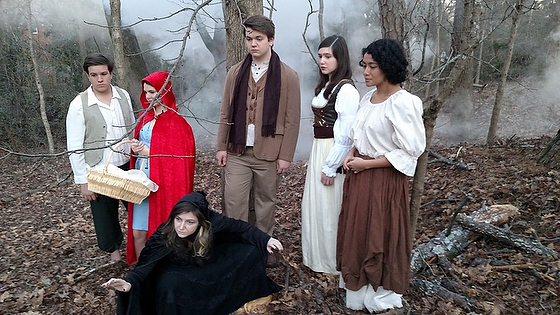
Creating the promotional poster for a theater production

Nikon D4, Sigma 24-105mm f/4 DG OS HSM Art Lens, ISO 1250, ƒ/8, 1/50
Just the other week I teased you with some test shots. These are some of the final shots from our shoot.
Editorial Note: Due to the contract signed to put on the play we cannot promote the name of the play until February 23rd. Another theater company is putting it on right now and has rights to PR and Advertising in our market.
Now to give you a feel for the before and after here is a shot my wife took on her phone.


Yes we are shooting during the daylight. So you cannot get this photo with your smart phone or for that matter any camera.

This is about lighting and controlling it.


This is me earlier setting up 3 Alienbees B1600 flashes with CTO gels on the lights. The camera is white balanced for tungsten. This means wherever the flashes orange light hits will be neutral tone and give good skin tones. All the available daylight will now be blue.

Nikon D4, Sigma 24-105mm f/4 DG OS HSM Art Lens, ISO 2500, ƒ/6.3, 1/8000
For the individual cast member shots I just used one Flash off to the side about 45º right of the camera and about 45º above the cast members head.

You should notice the the shutter speed is 1/8000. To make this work I am using the PocketWizard TT5 on the flash with an AC-9 adapter plugging into the phone cord connection on the Alienbee B1600. This will let me shoot at any shutter speed. This is call high speed sync.

I have the PocketWizard TT1 transmitter with the AC-3 which lets me control the power of the flashes from the camera remotely. I just turn up or down the power from -3 to +3 in 1/3 increments.

There are three groups A, B, C and two Channels 1 & 2. Each flash was on a different group setting and all were on the same channel to fire at the same time.

Nikon D4, Sigma 24-105mm f/4 DG OS HSM Art Lens, ISO 2500, ƒ/5.6, 1/5000

Nikon D4, Sigma 24-105mm f/4 DG OS HSM Art Lens, ISO 2500, ƒ/7.1, 1/5000

Nikon D4, Sigma 24-105mm f/4 DG OS HSM Art Lens, ISO 2500, ƒ/6.3, 1/8000

Nikon D4, Sigma 24-105mm f/4 DG OS HSM Art Lens, ISO 2500, ƒ/6.3, 1/8000

Nikon D4, Sigma 24-105mm f/4 DG OS HSM Art Lens, ISO 2500, ƒ/6.3, 1/8000
Now we moved the group around in our backyard trying different locations and lighting.

Nikon D4, Sigma 24-105mm f/4 DG OS HSM Art Lens, ISO 1600, ƒ/5, 1/8000
Now the biggest changes from my test shots, which you can see in the earlier blog post was 1) Costumes, 2) Makeup & 3) smoke machine.


As you can see here we had to really work to get the right shot with the smoke. Often it was overpowering the photo.

Here is a view of the photo without the strobes going off.


Now you know how sometimes they film those night time scenes in so many movies.

Saturday, October 31, 2015

Working with a recording artist Sydney Rhame

Nikon D4, Sigma 120-300mm ƒ/2.8 DG OS HSM | S, AC-9, AC-3, PocketWizard Mini TT1, TT5, Paul Buff Vagabond, Alienbees B1600, ISO 320, ƒ/2.8, 1/640
Today I was privileged to work with Sydney Rhame who was on The Voice this year. To get those chairs to turn as she did you have to be comfortable in front of the camera.

Sydney on iTunes.

Here is her Facebook fan page


Sydney needed little direction. I just needed to spend a little time before we started asking what she was looking for in her photos.

This is one of my favorite photos today. I used the high speed sync using he Pocketwizard TTL system with the Alienbees. This let me shoot at 1/640 shutter speed. Here is the lighting diagram.


The trick was to take a few test shots until I was able to get the rich colors in the background balanced with the flashes.


The photo on the left [ISO 100, ƒ/2.8, 1/500] and the right [ISO 320, ƒ/2.8, 1/400]. I also dialed the flash down in power on the right.

This is what I call experimenting to get the look you are wanting.

Nikon D4, Nikon 85mm ƒ/1.8G, AC-3, PocketWizard Mini TT1, TT5, Paul Buff Vagabond, Alienbees B1600, ISO 100, ƒ/1.8, 1/640
I also like to have subjects bring a variety of outfits and let us try a few looks.


This is the setup where I have main light on her face and separate light to just add a little kicker in the back.

Nikon D4, Sigma 120-300mm ƒ/2.8 DG OS HSM | S, AC-9, AC-3, PocketWizard Mini TT1, TT5, Paul Buff Vagabond, Alienbees B1600, ISO 320, ƒ/2.8, 1/640
For this photo I took the white umbrella off the light behind Sydney to give a little more kick on the hair.


I also believe you really mix up the backgrounds and looks when you are helping someone with things like model portfolios, PR kits for musicians and actresses.

Nikon D750, Nikon 85mm ƒ/1.8G, ISO 100, ƒ/4, 1/200–Alienbees and Softboxes
Here is more of a traditional headshot.


Now to give a different look that this I just shot with the available light with the same setup.

Nikon D750, Nikon 85mm ƒ/1.8G, ISO 1250, ƒ/1.8, 1/200
I believe we were getting some variety throughout the photo shoot. As Sydney and I got more comfortable with each other the expressions just got better and better.

Nikon D750, Nikon 85mm ƒ/1.8G, ISO 100, ƒ/4, 1/160
While backing up and showing more of Sydney gave a different look, my favorites where up close where you can see her eyes.


Nikon D750, Nikon 85mm ƒ/1.8G, ISO 1250, ƒ/1.8, 1/200
When shooting at ƒ/1.8 her eyelashes are not even in focus, just her eyes.


Now shooting at ƒ/4 gave a little bit more depth-of-field.
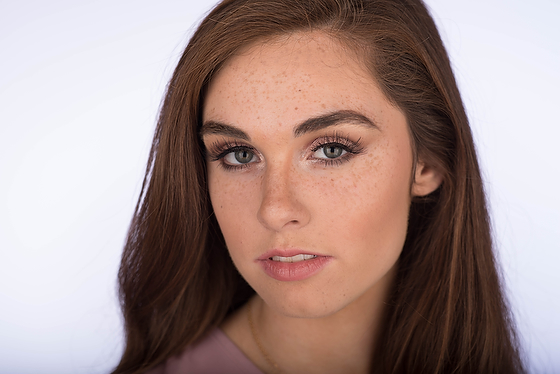
Nikon D750, Nikon 85mm ƒ/1.8G, ISO 100, ƒ/4, 1/200

While the shallow depth-of-field looks great it is difficult to get all your photos in focus.

Going for "look" can sacrifice great "moments"


Because you choose to want that silky smooth BOKEH means that you will be tossing out photos just because they are not sharp where you need them to be. Therefore you may lose the best "moment" because the "look" is more important to you.

This is one of the reasons I am not shooting at wide open all the time. I prefer to stop down just a bit to get some leeway allowing me to more likely not to toss out the great "moment" because I missed the focus due to such a shallow depth-of-field.

Use flash outside


By using the strobes outside on an overcast day I was able to help the subject pop and not look flat due to the natural light.

Using high speed sync let me shoot at wide apertures and just crank the shutter speed up to control the available light.

Monday, October 26, 2015

Learning to manage expectations

Nikon D750, AF-S NIKKOR 28-300mm f/3.5-5.6G ED VR, ISO 10000, ƒ/5.6, 1/250
The one thing that helps to calm my fears for an assignment is seeing what the client has gotten in the past from other photographers. I also love it when they tell me how they felt about that coverage.

The best thing you can do before you take on an assignment is to find out what the expectations are of the client for the project. I call this calibrating your creative juices.
Nikon D750, AF-S NIKKOR 28-300mm f/3.5-5.6G ED VR, ISO 12800, ƒ/5.6, 1/160
Before shooting this wedding the parents of the groom showed me the brides sister's wedding coverage from two years ago. I knew after seeing the other photographer's work what the standards for their wedding were for their photographer.

They were happy with the photos. I made mental note of the style and then decided to meet that and then to put my own touches onto the images. I was just adding icing to the cake.

Nikon D4, Nikon 85mm ƒ/1.8G,  ISO 2800, ƒ/1.8, 1/100
My strength is finding moments like these here. Capturing the "True Love" of a bride and groom is what I loved doing with this wedding.

Nikon D750, AF-S NIKKOR 28-300mm f/3.5-5.6G ED VR, ISO 100, ƒ/5.6, 1/60–Pocketwizard AC9 to combine with my Pocketwizard TT5 and then using the phone cord plug into the back of the Alienbees B1600.
I also love making the light look better when needed.

Do you know the expectations of your client? Are you able to not just meet those expectations but give them some images that take the coverage up a notch or two?

Monday, October 12, 2015

Pocketwizard AC9 a Game Changer with Alienbees High Speed Sync 1/8000

Nikon D4, Nikon 85mm ƒ/1.8G, ISO 125, ƒ/1.8, 1/1250
Today for the very first time I was shooting with my Alienbees outside with shutter speeds above 1/400. That is all I could sync before using my Pocketwizards and plugging into the Alienbees with an 1/8 plug.

I bought the Pocketwizard AC9 to combine with my Pocketwizard TT5 and then using the phone cord plug into the back of the Alienbees B1600.


With this combination I could shoot up to 1/4000 on my Nikon D750 and up to 1/8000 with my Nikon D4.

Nikon D750, Nikon 85mm ƒ/1.8G, ISO 1000, ƒ/1.8, 1/4000
As you can see here is the D750 with Flash @ 1/4000.

Nikon D750, Nikon 85mm ƒ/1.8G, ISO 1000, ƒ/1.8, 1/4000
This is with no flash outside. So you can see how much the flash really helps.


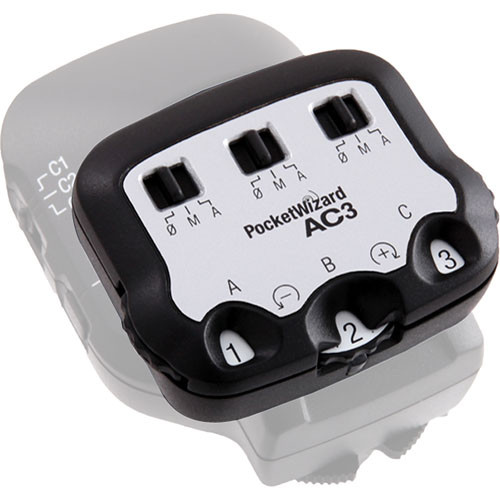
Now with the AC3 on top of the Pocketwizard Mini TT1 you can control the power of the Alienbees.

Here is the chart of how that would work:

  • +3 = Full Power
  • +2 = 1/2 Power
  • +1 = 1/4 Power
  • 0 = 1/8 Power
  • -1 = 1/16 Power
  • -2 = 1/32 Power
  • -3 = 1/32 Power
You also have the 1/3 increments also to use in between. 


So here is the basic setup I was using. Here is the list of gear:
  • 2 - Alienbee B1600s
  • 2 - Vagabond Mini
  • 2 - Cowboystudio 7’ 4 Section Portable Adjustable Stand
  • 2 - Westcott 2001 43” Optical White Satin Collapsible Umbrella
  • 2 - Pocketwizard AC9
  • 2 - Pocketwizard TT5
  • 1 - Pocketwizard Mini TT1
  • 1 - Pocketwizard AC3
  • Nikon D4
  • Nikon 85mm ƒ/1.8

I pack the lighting gear all into this Seahorse SE-920 with padded dividers. This is a really super basic kit that I can fly with to jobs where I need something a little more powerful and now capable of still shooting at ƒ/1.8 to get that great BOKEH.


Sunday, September 13, 2015

Nikon D750 vs Fuji X-E2 with Sigma 120-300mm

Nikon D750, Sigma 120-300mm ƒ/2.8 DG OS HSM | S, Sigma TC-2001 2x, Nikon SB-900, Nikon SB-800, PocketWizard Transceiver TT5, PocketWizard Mini TT1, AC-3, ISO 10000, ƒ/8, 1/320
The last time I shot this I did it from shooting inside the house looking through a window. This time I am outside shooting.

The other reason I did this again is the weather was incredible at my home today. We woke up to 50º F and it got to about 69º F at the hottest today. Wonderful time to just sit and watch a bird feeder.

Fuji X-E2, Sigma 120-300mm ƒ/2.8 DG OS HSM | S, ISO 6400 ƒ/-not sure, 1/180–off-camera flash using the Neewer TT850 flash & Neewer 433MHz Wireless 16 Channel Flash Remote Trigger with flash at 1/32 Power
First I must say I can only manual focus and I never really got the focus perfect with the Fuji. I would approximate where the hummingbird would be whereas with the Nikon I was able to auto focus.


This is the actual setup with the Fuji. The only difference is the flashes were switched out with the Nikon system.

Nikon D750, Sigma 120-300mm ƒ/2.8 DG OS HSM | S, Sigma TC-2001 2x, Nikon SB-900, Nikon SB-800, PocketWizard Transceiver TT5, PocketWizard Mini TT1, AC-3, ISO 10000, ƒ/8, 1/320
I believe the wings are more frozen with the Neewer flash than with the Nikon due to flash duration.

Fuji X-E2, Sigma 120-300mm ƒ/2.8 DG OS HSM | S, ISO 6400 ƒ/-not sure, 1/180–off-camera flash using the Neewer TT850 flash & Neewer 433MHz Wireless 16 Channel Flash Remote Trigger with flash at 1/32 Power
Now to make up for the ability to lock in on focus I used a high aperture with the Fuji. To do this I just rotated the Nikon to Fuji converter. I can only guess as the aperture, but most likely around ƒ/16 or higher.