Monday, September 21, 2015

Workshops Help Photographers Navigate the Precariat Class

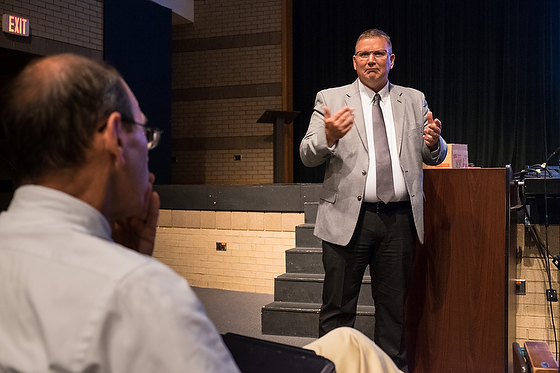
Fujifilm X-E2, FUJINON XF 18-55mm, ISO 6400, ƒ/5.6, 1/90

Business of Photography Workshop 

presented by Todd Bigelow


This past weekend for two solid days Todd Bigelow shared from his perspective business tips to the American Society of Media Photographers Atlanta Chapter. ASMP believes that if everyone is fully informed about the business of photography that this will help photographers know how to run a successful business.

The meeting was hosted by The Creative Circus. The Creative Circus mission is to graduate the best-prepared, most avidly sought-after creatives in the marketing communications industry. Unlike traditional college programs their emphasis is on portfolios and really good ones. The teachers are all working professionals as opposed to many professors who have been mainly in academia.

ASMP wanted to be sure that these students not only have a great portfolio but understand how to run a business.

Todd Bigelow believes in the 80/20 rule where 20% of how to be successful is your portfolio and the other 80% is your business practices.

There were about 23 people taking the class. The majority of the class was made up of very successful photographers with more than 20+ years in the industry. Why were they taking the class you might wonder?


Nikon D750, AF-S NIKKOR 28-300mm f/3.5-5.6G ED VR, ISO 12800, ƒ/5.6, 1/20

While photographers are not required to do continuing education to maintain a certificate–everyone taking this class understands that continuing education keeps them up on the latest ideas in the industry. 


Photographers join the Precariat Class


In sociology and economics, the precariat is a social class formed by people suffering from precarity, which is a condition of existence without predictability or security, affecting material or psychological welfare as well as being a member of a proletariat class of industrial workers who lack their own means of production and hence sell their labour to live. Specifically, it is applied to the condition of lack of job security, in other words intermittent employment or underemployment and the resultant precarious existence. The emergence of this class has been ascribed to the entrenchment of neoliberal capitalism.

– Wikipedia
Todd Bigelow introduced me to the term Precariat, which was a great description of how my career had felt for many years. Photographers are not the only ones going through this, but we have joined other professions with this sense of unpredictability.

Nikon D750, AF-S NIKKOR 28-300mm f/3.5-5.6G ED VR, ISO 5000, ƒ/25, 1/40

Classmates become the professor


It is quite common at all the workshops I attend that the other class participants will often chime in with expertise that is just as helpful and sometime even more than the main instructor.

Annalise Kaylor who has more than a decade of experience as a social media strategist and content marketing consultant was taking the class as well. She was able to help the class understand some of the social media realm and even gave some great examples of how photography is now used to help companies.

One such example was a well known company that used a photograph with their social media buy of 2 million dollars for a one week use on social media.

We all learned how much photography was not just helping tell stories, but being used to gather data that helps companies then to do a better job of marketing and selling this information. Just imagine if you had the names of the people who are hiring photographers for projects. You could cut down on that 80% business and spend a lot more time on the 20% of photography and increase it.

Another person taking the class was Mitzie Goldman who was a CPA and was able to add information about taxes.

When we talked about working with NGOs besides my own experience we had Gary S Chapman who has specialized in this for his entire career since the late 1970s.

I mention these classmates as just a small part of what everyone contributed in class. When you take workshops like this you will learn not just from the instructor but from those taking the class. I think of this as the serendipitous bonus factor of continuing education. Sometimes these tidbits you pick up that you had no idea might happen sometimes are the best part of the class.

Workshop opportunity I offer


This January 9 – 16, 2016, I am running a workshop with my friend James Dockery in Chiapas, Mexico.

Café Justo is a coffee grower cooperative based in Salvador Urbina, Chiapas, Mexico. You will work with one of the coffee farmers to capture their story of how the coffee cooperative help to change their lives.

This workshop is designed for photographers who want to add to their skill set multimedia. We will teach you how to create the storyline, capture your subject telling their own story using audio/video, create video/stills to accompany that story and then how to put it all together using Adobe Premier Pro.

One of the most difficult parts of storytelling is access to a great story. We have put in place everything to help you tell a great story in an exotic location.

Register before the end of October 2015 and save $200.

Audio for DSLR Filmmakers

Another great opportunity for workshop is the one ASMP/Atlanta is hosting with Michael Schwarz on Audio for DSLR Filmmakers. Michael shows how to get the best quality audio while shooting DSLR video. Microphone selection, placement, recording directly to camera or with a digital recorder are critical to creating compelling motion projects. Michael explains, step-by-step, simple, best practices for shooting multi-camera interviews.

Here is a link to that 2 hour program on November 4, 2015.


Thursday, September 17, 2015

Love of photography can cloud your judgement

Nikon D4, Sigma 120-300mm ƒ/2.8 DG OS HSM | S, Sigma TC-2001 2x, ISO 12800, ƒ/5.6, 1/1250
There are two things I love to shoot more than anything else: Sports & Humanitarian subjects.

Both of these subjects are like an adrenaline rush for me to cover.

Nikon D750, AF-S NIKKOR 28-300mm f/3.5-5.6G ED VR, ISO 1400, ƒ/5.6, 1/100
I am not alone and find that both of these subjects have photographers lining up in a row to shoot them for free just to have the chance to do so.

Here is a big clue to your brain cells–ANYTHING that people are willing to do for free requires you to be the very best there is to make a living at it.

The odds of you being a professional sports photographer earning all of your living doing this full-time maybe more difficult than playing the sport professionally. The reason is simple, since so many people want to stand on the sidelines and will do whatever it takes to do it even if it is for free.

In sports we call these jock sniffers. Well that may sound crude but they just want to be close to the action.

Not sure what we call them if they are willing to do whatever it takes to do humanitarian photography for free, but there are so many of these folks out there it is scary.

In a Facebook group there was a comment/question about covering missionaries for church organizations. Here is a small snippet:
The missions organization pays you little or in some cases NOTHING for your work after all is said and done. There are some of us who can walk away with photos worthy of National Geographic. I ask you, is it fair and right for missions groups to get all the benefits of having talented photographers shooting for them while the photographers get little or nothing to show for it? 

Here was my response


There are basically three types of mission organizations. 


1. The William Carey model of mission societies where people give to the society and then the society hires missionaries and pays them as staff is one model.
2. Each person raises their own funds. They have their supporters give to the organizations that endorse them and they take a percentage [usually 10%] but this gives people a tax write-off. So the entire organization raises their own support. Campus Crusade works this way for the most part.
3. There is often a blending of the two models where a small support staff that might be staff but the majority raise their own support.

So if the person who hired you to work on the project is raising their own support then I think you don't really have a case in the traditional sense in their eyes.

The problem in missions is when everyone is not operating on the same model.

I have a capitalistic freelance business. I find clients who I charge for my services. I either must make enough to subsidize my missions photography or I must charge to cover my costs.

In My Humble Opinion


I think there are way too many unqualified “missionaries” who are able to convince people to give to their cause. They are great fund raisers and not necessarily great “missionaries.”

I think the movement away from the William Carey Mission Societies to each person crowd funding is basically funding those who are fund raisers and not missionaries by skill set.

The problem also has been that many “missionaries” in the William Carey Mission Societies were not good at communicating their work when people visited them on the mission field. Many visiting the missionary would think they were not doing enough. Often the visitor would think they did as much good as these seminary trained missionaries. In some cases this was true, but many times the lack of understanding of cultural differences played into the equation.

You cannot change these models, but you must be aware of them and decide for yourself how you will respond. You can create your own 501c nonprofit and crowd source for example and have people give to the communications efforts of missions work around the world.

You can go and be a tentmaker who makes most of their money like Paul one of the first missionaries and author of much of the New Testament did as a tentmaker/missionary.

You can find those organizations that have set aside budget to hire you because they value true expertise and understand how this will help their missions objectives.

After more comments where people still felt like they should be paid by those organizations who often are all raising their own funds, I thought I needed to add some more thoughts. Here they are for you.


I don't think you will get very far with feeling people should pay you when they are raising all their funds.

If you need to be paid then just state that and if they want to work with you they will find a way. If they don’t then move on. This is true with even clients who offer you money but it is below your cost of doing business–you must walk away.

There is another aspect to the discussion other than pay versus fund raising.

RESULTS


Those photographers who are able to tell stories effectively and in the process help organizations communicate why they are needed and why they need supporters to give to their cause they will be pursued and paid.

Too many who want to do “missions” or “humanitarian” are more in love with themselves traveling and getting paid to take photos. They are not ones who really believe in a cause. Their work is average and not what people will want to share in social media. They don’t have followings. They are irrelevant with their work, but in their own minds they are legends.

MORE THAN A STORYTELLER


You cannot just be a great storyteller these days alone. You must also be one who connects with the audience. There are photographers that when they “Tweet” they are communicating with more than 100,000 followers. They are a media outlet themselves. The reason they have so many followers is they are communicating in a way that it appeals to the audience.

They have an audience and when they share people get involved and those who are blessed to have them working for them benefit. Many organizations will hire them just for the access to their audience.

TRUE SUCCESS


You need to have outstanding work today. That is a given. But you need so much more. You must understand the entire process of a crisis needing people to get involved. You understand what it takes to engage that audience and you are part of a team helping them to understand all that must take place with your work to make it successful.

Those photographers who are running successful businesses are more likely to help a missions or humanitarian agency than a photographer struggling to get by. The reason is simple–they know you must make good business decisions for something to be successful.

SUMMARY


ANY PROFESSION where people are willing to do something for FREE there will always be those who at the very pinnacle of that profession can earn a living. Here are some professions you find many people doing for free all the time:

  • Music
  • Theater
  • Sports
  • Humanitarian 
  • Photography
To get paid and earn a living you must not just be the best technically. There are many amateur golfers who can out drive many on the tour. There are many musicians who are technical wizards with an instrument. 

Those who get paid are the total package. In photography that means you understand better than your client how you can best help them. You also understand everything that needs to happen for your ideas to create a real impact for the client. You are able to communicate and work with a client to achieve those goals. 

You also understand the business of the profession and understand what you need to charge to make a living. You are able to convince people you are the solution to their problems and that they need to pay you to help them achieve their goals.

You are also a person that exudes a confidence that makes people know you have their back and are on their team.

You can own all the very best gear available. You can have the best portfolio there is in the profession. But if you don't know what business you are in and what problems you are solving for others you will never make it.

Don't fall in love with what you get to do in a profession, fall in love with how you love to solve other people's problems and it just happens that photography is part of the solution.

Community Journalism with Fujifilm X-E2

Fujifilm X-E2, FUJINON XF 18-55mm, ISO 6400, ƒ/3.6, 1/50

Community Journalism


Last night at my daughter's high school the county had an informational meeting about the planning for schools in our county. I took my Fuji X-E2 camera with me just in case I wanted to use it.

There were less than ten people in attendance. No real reason to have a meeting you would think, but this is how a lot of meetings happen every day in our communities that have major long term impact on our communities.

Fujifilm X-E2, FUJINON XF 18-55mm, ISO 6400, ƒ/3.2, 1/30
Those who show up and speak up are the ones they hear from and they must assume this is the will of the community because they asked them for their feedback and this is what they get.

Those in attendance at the Fulton County Schools Educational Space Standards Community Meeting were able to hear how the county has hired outside experts in educational space to help the county set those educational standards that then the designers and architects will use to help in implementing changes to improve our schools.

They will now have the WHY part of the process answered if anyone asks why they were making these changes. Also when the changes recommended come up against budget restraints everyone will know what they are falling short of doing.

Fujifilm X-E2, FUJINON XF 18-55mm, ISO 6400, ƒ/4, 1/18
So imagine you go to one of these meetings in your community. Do you think a photo with some explanation would be a great way to communicate with your friends through social media?

Fujifilm X-E2, FUJINON XF 18-55mm, ISO 6400, ƒ/4, 1/18

Suggestion


Next community event you go to be sure and take some good photos and add some text as a caption. This can help us build stronger communities.

Tuesday, September 15, 2015

Crisis: Providing prints on location


Crisis Situation


I was asked if I could provide prints onsite for a client. Let me just say I hate making prints with inkjet printers through the years and some of the other solutions were just too expensive to justify.

If you have owned one and done any amount of printing you most likely have had to clean the heads due to getting banding across prints. This just was so time consuming for me.

When I had this request the very first thing was feeling the emotions of stress.

Solution


I first went to my friend for the past 20+ years Pete Casabonne. Pete manages PPRPix. Through the years I have worked with doing all of my printing from when I worked for Georgia Tech as staff photographer and through today with all of my clients.

Talking with Pete and then by doing some research on my own I found the Epson PM225 PictureMate Charm Compact Photo Inkjet Printer for $199.

To set up the Charm the first time, you simply slide the four-color ink cartridge into the slot in the back of the printer. Next, you rotate the handle back and out of the way, open the top cover to turn it into an input tray, and open the front cover to turn it into an output tray. Then load paper in the paper tray, plug in the power cord, and you're ready to print from a memory card, using the control panel and tiltable LCD on the top of the printer, or from a PictBridge camera.

If you want to print from a computer instead (or also), simply run the automated installation from the supplied disc, and plug in a USB cable. From the time you open the box, you should be ready to print your first photo within 10 minutes at most—or far less if you don't need to install the driver on a computer.


For glossy photos, the cost works out to just 25.3 cents each, based on the $37.99 (direct) price for a print pack with enough ink and paper for 150 photos. For matte photos, the cost is 32.3 cents per photo, based on a $32.29 (direct) price for enough ink and paper for 100 photos.

More important, the combination of fast speed, low cost per page, and high-quality prints that are both rugged and long-lived puts the Charm way out in front of its competition, and earns it a spot as PC Magazine Editors' Choice for 4- by 6-inch dedicated photo printers.

I will be writing my review of it's performance after using it in a Photo Booth in a couple weeks.

PRODUCT HIGHLIGHTS


  • 5760 x 1440 dpi
  • Print 4.0 x 6.0" Photo in 37 Seconds
  • Print from Memory Cards
  • Borderless Prints
  • 2.5" Color LCD Preview Display
  • Portable, Weighs only 7.9 lb
  • Dry, Scratch, & Water-Resistant Prints
  • Grab the handle and take PictureMate Charm to parties, events, the office, even your vacation getaway
  • Smudge, water and fade resistant photos
  • With on-board photo editing you can crop, enhance, remove red-eye and more
  • Choose from various layouts and print in black-and-white, color or sepia
  • Print stacks of photos at an everyday, low print price
  • Compatible with any digital camera
  • The Charm operates for hours on a single battery charge (with optional rechargeable battery)
  • Print wirelessly with the optional Bluetooth adapter

This is a screen shot of the Epson Easy Photo Print software that will let you print from your computer.


Once you select your images you can then crop and make small adjustments and choose if you want index print [contact sheet], borderless or bordered prints and more adjustments.

I prefer shooting RAW and editing all my images using Adobe Lightroom. Once you install the printer driver then you are just picking the Epson PictureMate as your printer.


In Adobe Lightroom Print Module go down to the Print Job tab and select Printer.


On the lower left pick the "Print Settings" and then this will pop up where you pick the EPSON PictureMate PM 225.

Tethered Shooting


I will use my Nikon D4 to shoot photos of people at a Photo Booth wireless. I will use my CamRanger to sync to my Macbook Pro. Here is an earlier blog post on how that works.

Here is how you then setup Lightroom to have those images automatically appear so you can immediately edit/print the images.


Simple Photo Frame Effect - Add a Custom Border with Text or Image


Here is a great video to help you create text. To add logos and text I create those in PhotoShop and then select graphic instead of text. Little practice and you will be doing this with ease. Watch this video for a walk through on the steps.


Sunday, September 13, 2015

Nikon D750 vs Fuji X-E2 with Sigma 120-300mm

Nikon D750, Sigma 120-300mm ƒ/2.8 DG OS HSM | S, Sigma TC-2001 2x, Nikon SB-900, Nikon SB-800, PocketWizard Transceiver TT5, PocketWizard Mini TT1, AC-3, ISO 10000, ƒ/8, 1/320
The last time I shot this I did it from shooting inside the house looking through a window. This time I am outside shooting.

The other reason I did this again is the weather was incredible at my home today. We woke up to 50º F and it got to about 69º F at the hottest today. Wonderful time to just sit and watch a bird feeder.

Fuji X-E2, Sigma 120-300mm ƒ/2.8 DG OS HSM | S, ISO 6400 ƒ/-not sure, 1/180–off-camera flash using the Neewer TT850 flash & Neewer 433MHz Wireless 16 Channel Flash Remote Trigger with flash at 1/32 Power
First I must say I can only manual focus and I never really got the focus perfect with the Fuji. I would approximate where the hummingbird would be whereas with the Nikon I was able to auto focus.


This is the actual setup with the Fuji. The only difference is the flashes were switched out with the Nikon system.

Nikon D750, Sigma 120-300mm ƒ/2.8 DG OS HSM | S, Sigma TC-2001 2x, Nikon SB-900, Nikon SB-800, PocketWizard Transceiver TT5, PocketWizard Mini TT1, AC-3, ISO 10000, ƒ/8, 1/320
I believe the wings are more frozen with the Neewer flash than with the Nikon due to flash duration.

Fuji X-E2, Sigma 120-300mm ƒ/2.8 DG OS HSM | S, ISO 6400 ƒ/-not sure, 1/180–off-camera flash using the Neewer TT850 flash & Neewer 433MHz Wireless 16 Channel Flash Remote Trigger with flash at 1/32 Power
Now to make up for the ability to lock in on focus I used a high aperture with the Fuji. To do this I just rotated the Nikon to Fuji converter. I can only guess as the aperture, but most likely around ƒ/16 or higher.


Friday, September 11, 2015

Solve a problem, then start the business


"Don't start a business. Find a problem, Solve a problem, The business comes second." 

– Robert Herjavec, Shark Tank


Too many photographers are trying to start a photography business and fail because they are not solving any problems.

If you are thinking of starting a photography business or you have started one and are struggling then I want to encourage you to stop and spend some time answering these questions. 

Establish the need for your solution

What is the basic need? You focus on the need that’s at the heart of the problem instead of jumping to a solution. 

Example: Businesses and individuals have a very difficult time telling their stories [elevator pitches]. It is so difficult for many businesses to explain what they do without using pictures to help tell their story.

What is the desired outcome? Here don't focus on a solution but on solving the problem. 

Example: Improve the engagement/communication of businesses with clients.

Who stands to benefit and why? It is critical for you to understand why the industry hasn't already addressed this. 

Justify the need

Does this fit with your own strategy? Your solution should generate economic development and opportunities for local businesses. It needed to involve something that people would buy, because it is fulfilling a need.

What are the benefits and how will you quantify your success? Maybe shooting stories for nonprofits will help them raise more funds to accomplish their goals. So you are able to find out how much money they raised before you helped them and then afterwards. This will also help you later sell your success to other businesses.

How will you be sure your solution is carried out? You need to take ownership for the success of the project. That means you need to be sure the client understands everything that needs to take place for your solution to be a success. I have gone so far as to do the social media publishing and putting packages up on YouTube and Vimeo and even written blogs for clients. You must be sure the plan is executed or it will look like not just a failure for the company, but you as well.

Explore the problem


What has been done before by your clients or potential customers? You need to understand why other solutions have not worked well.

What solutions have others with your skills offered? Important to know how to differentiate what you are offering compared to other companies.

What is stopping them from acting? Many times there are restraints that your clients are dealing with making it very difficult for them to act. Do they have the funds to even afford this solution? Sometimes there are outside factors that keep them from using your services. For example how do you tell a story which if the people were identified could put their lives in danger?


Write your problem statement and solution


A clear description of the problem helps people grasp the issue. You need to address why other solutions that have been done to address the issue are failures. 

You will need to outline the necessary steps/elements necessary for the success of the solution you are proposing. This will include your action plan to not only produce your product but who needs to be involved and when in the process.


The notion that you just get your portfolio in front of people and they will hire you will have little success today. You are just a commodity and this makes it quite difficult to compete in today's market place.

Knowing how to ask clients a question that makes them think is key. When they realize they don't have an answer is when you have an opportunity to provide one for them. You must establish the need for your services. This means they are not getting those needs met somewhere else.

Remember you need to be helping others by solving their problems or your services are not needed.

Wednesday, September 09, 2015

Are you a photojournalist who finds themselves suffering from depression?

Nikon D3, Sigma 70-200mm f/2.8 EX DG APO OS HSM, ISO 1000, ƒ/8, 1/160

Since we cannot change reality, let us change the eyes which see reality. – Nikos Kazantzakis


These are a few sentences I found interesting a few years ago in article by Rev. Peter M. Wallace.
There has never been a more challenging time in [fill in the blank]. Everyone is scrambling to find the right way to connect to an audience that has fractured and fragmented to numerous different platforms. 
And yet the reality some fail to acknowledge in this midst of this chaos is that the need or function all these declining institutions used to fulfill remains. People are simply choosing different ways, different platforms, to meet these needs.
Nikon D2X, Sigma 18-50mm f/2.8 EX, ISO 100, ƒ/14, 2 sec
It has been easier for me to focus on an institution and set my path in life to get to it as a destination. So many of my friends who wanted to work for Sports Illustrated or National Geographic were focused on the institution and not the need or function that these institutions were serving.

Sports Illustrated just let go of their staff photographers and through the years National Geographic has shrunk their staff as well.

I had focused on working for The Commission Magazine. It was the flagship printed piece for missions for the Southern Baptist denomination I was once apart of years ago.  While I did get there and worked on the magazine for a short time I never really got to be one of the main photographers for the magazine. They would do 3 or more major stories a year.

During the financial crisis of the late 1980's the agency had to make cuts to balance the budget and I was let go.

Nikon D2Xs, Sigma 120-300 mm f/2.8 DG EX APO IF HSM, Sigma 2X, ISO 400, ƒ/5.6, 1/3000
I went into a major depression. My first marriage fell apart. I had continued to push forward realizing I needed more skills to add to my resume and I went to seminary and got my masters in communications.

Upon graduating none of the missions agencies were hiring so I found a job at Georgia Tech. All the while I was there for ten years I was seeing this as a temporary job on my way to my original dream. Still no openings through the years that I could find.

Nikon D2Xs, Sigma 120-300 mm f/2.8 DG EX APO IF HSM, ISO 400, ƒ/5.3, 1/2000
Slowly I was coming out of depression, but I still was finding that my dreams were not becoming reality. My skills had improved dramatically and I was thrilled to be working, but all the time I never felt like I was fulfilling my purpose.

Maybe you find yourself in this same spot as I did. Today I too find I drift into this depression. My friend Gary Chapman spoke at the Southwestern Photojournalism Conference a few years ago and introduced me to the book Who Moved My Cheese?: An Amazing Way to Deal with Change in Your Work and in Your Life. For Gary the photography stock market was his cheese. He had built a library of images at Getty and other smaller agencies and each month could expect a pretty decent check. That check started to shrink. Soon all he was seeing was just crumbs each month rather than the large block of cheese he was used to experiencing.

As a storyteller I learned early on that one of the biggest mistakes we make when trying to tell our stories is focusing on what and the how. When someone comes back from a overseas trip where they went to help out a NGO and they were so moved by the experience that when you ask them to tell you the story they end up giving you a timeline of their experience. They tell you what and how they did their work.

What is missing is too often the WHY.  Once you hear the why you are more likely to stay engaged. Many Christians who are fed up with their churches will say they are followers of Jesus today. They choose to focus on Jesus rather than the institution.

Maybe the reason so many of us are depressed and feeling like someone moved our cheese is we have been focused on these institutions more than we should have been. The key to our purpose might be wrapped up better in focusing on the need that these institutions were fulfilling. Focus on WHY these institutions were founded.

Due to corruption and many other man made mistakes many people have left the church. In a Gallup poll they reported that "Most Americans Say Religion Is Losing Influence in U.S. But 75% say American society would be better off if more Americans were religious."

You see the need still exists. People are looking for what faith brings to their lives.

When we are no longer able to change a situation - we are challenged to change ourselves.  – Viktor E. Frankl


Maybe the reasons we are struggling in this profession is we have been too focused on institutions and not enough on the reason WHY these institutions existed from the get go.

Photojournalist Job Description

The primary role of the photojournalist is to be a visual storyteller.  By photographing, editing, and presenting images, they tell a story in a way that no other media can.  Some photojournalists will work for a local publication, while others will travel nationally or abroad, sometimes putting themselves in constantly changing or even dangerous situations.  The subject matter can vary greatly, from local civic issues, national political races to social unrest in a foreign country.  Many photojournalists are freelance photographers and sell their photos to various organizations around the world.  The photographs serve the purpose of enhancing the story for the reader or viewer.

As you can see the role of the photojournalist isn't limited to an institution. It is just a matter of having stories to tell and finding the audience that needs to see them.

Tuesday, September 08, 2015

Perspective changes the view of the game

Nikon D4, Sigma 120-300mm ƒ/2.8 DG OS HSM | S, Sigma TC-2001 2x, ISO 12800, ƒ/5.6, 1/1250
To get this photo I am in the end zone on my knees shooting down the field with what is a 600mm lens. I am actually shooting up to the players face.

Nikon D4, Sigma 120-300mm ƒ/2.8 DG OS HSM | S, Sigma TC-2001 2x, ISO 12800, ƒ/5.6, 1/1600
What is obvious in the comparison is I am no longer on the sideline shooting the game. I moved to the press box, which is where much of the TV coverage is shot from of the game.

The perspective changes how the players appear to the audience. I believe when you are down low and shooting up at the players you give them the sense they are like the Roman gods where they tower over men.

Nikon D4, Sigma 120-300mm ƒ/2.8 DG OS HSM | S, Sigma TC-2001 2x, ISO 12800, ƒ/5.6, 1/1250
I think shooting from the lower angle is much better most of the time, but there are times that the different perspective helps.

On those close calls the TV will go to multiple angles to see which one the angles gives a better angle on the play. This is why most major news services have many photographers covering the game so they will have a better chance of having the play covered in case one angle just doesn't show the game play as well as needed to help the audience understand the call.

Nikon D4, Sigma 120-300mm ƒ/2.8 DG OS HSM | S, Sigma TC-2001 2x, ISO 12800, ƒ/4.5, 1/1250
This is one of those plays from the game where you want to see another angle to verify the touch down.

When I shot the game from different perspectives I wanted to capture the branding of Chick-fil-A from different views. While the shooting from down low on the players from the field is a great perspective, had I stayed with that angle only I would have missed this photo.

Nikon D4, Sigma 120-300mm ƒ/2.8 DG OS HSM | S, Sigma TC-2001 2x, ISO 12800, ƒ/5.6, 1/1250
This is a great scene setter because I now know which game this was and that is due to the logo in the middle of the field.

Nikon D4, Sigma 120-300mm ƒ/2.8 DG OS HSM | S, Sigma TC-2001 2x, ISO 12800, ƒ/5.6, 1/1250
My suggestion is to always get down low when shooting sports as one of your main angles, but always mix in some other angles to help give your audience a different perspective of the game.

Sunday, September 06, 2015

Shooting the Chick-fil-A Kickoff Game with Nikon D4 and Sigma 120-300mm w/ 2X converter

Nikon D4, Sigma 120-300mm ƒ/2.8 DG OS HSM | S, Sigma TC-2001 2x, ISO 12800, ƒ/5.6, 1/1250
I wanted to share some of the photos I captured from the Chick-fil-A Kickoff this year where Auburn defeated Louisville 31 to 24.

Nikon D4, Sigma 120-300mm ƒ/2.8 DG OS HSM | S, Sigma TC-2001 2x, ISO 12800, ƒ/5.6, 1/1600
There are a couple things that helped me get some what I thought nice moments.

Camera Settings:  To see these go to blog post on them here 


  • Custom White Balance with ExpoDisc
  • AUTO ISO
    • ISO range 100 - 12800 on Nikon D4
    • Minimum Shutter Speed 1/2000 – The shutter will drop below 1/2000 once the ISO maxes out at ISO 12800
  • Continuous High Shutter Release
  • Focus
    • Continuous
    • Focus Point Selection – 21-point dynamic-area AF
    • Focus Tracking with Lock On set to 4
    • AF activation and choose "AF-ON only." This means when I press the shutter it will not focus the lens.  It will only fire the camera. 
    • To focus I am using the AF-ON button on the back of the Nikon D4.
Nikon D4, Sigma 120-300mm ƒ/2.8 DG OS HSM | S, Sigma TC-2001 2x, ISO 12800, ƒ/5.6, 1/2000
A few of the other photographers who are used to shooting night games at the Georgia Dome all were using their teleconverters since this was a daytime game. The arena has what is like a large white sheet over the dome giving a diffused daylight across the field.

Nikon D4, Sigma 120-300mm ƒ/2.8 DG OS HSM | S, Sigma TC-2001 2x, ISO 12800, ƒ/5.6, 1/1000
The lights they use for night games were on as well for the game. So my White Balance was 4250º Kelvin and +29 Magenta.

Nikon D4, Sigma 120-300mm ƒ/2.8 DG OS HSM | S, Sigma TC-2001 2x, ISO 12800, ƒ/5.6, 1/1600
I enjoy shooting from the end zone as much as I can so using the Sigma 120-300mm ƒ/2.8 DG OS HSM | S with the Sigma TC-2001 2x gave me a 240-600mm ƒ/5.6 lens.

It was ultra quick at locking in on focus and tracking players as they moved across the field.

Nikon D4, Sigma 120-300mm ƒ/2.8 DG OS HSM | S, Sigma TC-2001 2x, ISO 12800, ƒ/5.6, 1/1250
To get this and many of the photos you are seeing I was tracking with a player and would start shooting just about the time say a pass was to hit their hands and motor drive through in case of anything like miss to catch could happen.

Click on image to see larger version
Here is the take on that particular image above. Everyone of the images was sharp and usable.

Nikon D4, Sigma 120-300mm ƒ/2.8 DG OS HSM | S, Sigma TC-2001 2x, ISO 12800, ƒ/5.6, 1/1000

Before the "Big Game" shoot the "Small Game"


What I am recommending is to go to the community recreation center in your town or local high school and shoot with the same gear getting used to it. If you rent a camera or lens, pick it up so maybe you can squeeze in a Friday night game before the "Big Game" on Saturday or Sunday.

Missed shots are more related to how well you know your gear than anything else. Be sure you are getting all you can out of the gear. Don't blame the gear when it might be your knowledge of how to use your gear is really the problem.

Friday, September 04, 2015

Fujifilm X-E2: Capturing the stories of our lives

Fujifilm X-E2, FUJINON XF 18-55mm, ISO 400, ƒ/7.1, 1/600
One of the best things that the camera phone has helped us do is capture ourselves in our pictures. Capturing a moment with a horse that Keziah met on her trip around The Big Island of Hawaii is something that she wants to keep for herself but also share with her friends.

Quality of a photograph is what drives people to buy those cameras. The other thing that is driving many camera purchases today is size of the camera.

Fujifilm X-E2, FUJINON XF 18-55mm, ISO 500, ƒ/6.4, 1/500
Some of the students I was teaching in Hawaii went on trip around The Big Island and everyone had their DSLR cameras. They give great results when used properly and with the lens choices are far superior to their smart phone cameras.

Fujifilm X-E2, FUJINON XF 18-55mm, ISO 2500, ƒ/7.1, 1/500
Tomorrow I will be lugging around my Nikons as I shoot the Chick-fil-A Kickoff Game between Auburn and Louisville. The Nikon D4 is just the perfect sports camera and lets me shoot more than 90 frames at 10 FPS continuously in the RAW setting before the buffer slows the camera down. The XQD memory card is so fast and the buffer so good that I can get those big plays without having to miss moments because the camera isn't capable of keeping up with the action.

However the downside to the gear is it's size and weight. By the end of the day I will collapse more from carrying all this gear for more than 12 hours. I will be covering the pre-game Fan Zone till the Trophy presentation.

For travel photography I cannot think of a better system than the Fujifilm X-E2. It is small and compact. I have great lenses to use with it and at the end of a long day as I traveled around The Big Island of Hawaii I wasn't tired and worn out. I was energized from the experience.

Fujifilm X-E2, FUJINON XF 18-55mm, ISO 400, ƒ/6.4, 1/1700
I only carried the Fujinon XF 18-55mm and the 55-200mm with the one body. I stuck the 55-200mm in my vest pocket and just continued to relax and enjoy my time.

Fujifilm X-E2, FUJINON XF 55-200mm, ISO 6400, ƒ/5, 1/110
I was able to capture the Island Breeze Luau from the back with the 55-200mm due to the image stabilizer to keep the photos sharp.

Fujifilm X-E2, FUJINON XF 18-55mm, ISO 1250, ƒ/4, 1/500
Unless you are shooting sports for a living I think the Fujifilm X-E2 is a great camera. The lenses they make for the system are incredibly sharp and the images are incredibly sharp.

Fujifilm X-E2, FUJINON XF 18-55mm, ISO 200, ƒ/8, 1/680
This past year I attended two funerals where a video was produced helping to tell the story of the people who had passed away. The use of photos all through the pieces to help tell their stories was quite moving.

It reminded me there were some things I hadn’t known about them and I loved them even more for learning them.

Fujifilm X-E2, FUJINON XF 18-55mm, ISO 6400, ƒ/5, 1/480
This is a moment I also cherish of Karen Walker having parakeets on her hand at a store we stopped by on our trip.

Fujifilm X-E2, FUJINON XF 18-55mm, ISO 200, ƒ/3.6, 1/180

Tips for Capturing the stories of your life


  • Carry your camera with you–Since you cannot take photos if you don't have your camera be sure to buy a camera that you would want to lug around with you. Fuji X system cameras are my vote for just such a camera.
  • Spend a lot of time just soaking in and listening to people. You don't need to be shooting every minute, but be sure you have some photos that you can then add the text to later that you can preserve these stories for you to have for years to come.
  • Archive your photos. I put captions with every photo I take. Some are just a few words to help me remember. 
  • Display the stories. Find a format where you can display those stories. 
    • Maybe you just use something like Instagram where you post your photo and then put a caption which tells the short story.  
    • Blogging about your journey's might be another way to preserve those stories. My friend Bill Bangham is doing that on his blog here.
    • Maybe create a book as I have done many times for trips, special events and family stories. Here is link to some of my books.
    • Create videos with your voice over and pictures. Here are some of my packages.
Most important is take the time to listen to people and honor them by helping to remember their stories through pictures and their words.